Quick Answer
Cockroaches keep coming back after pest control in Dubai mainly because eggs survive the first treatment, hidden nests never get touched, and new roaches keep entering from drains, AC ducts, or a neighbouring unit. A single spray only kills roaches that are out in the open — the ootheca (egg case) a female carries or hides can protect 20–40 unborn nymphs from surface sprays, and Dubai’s warm, humid apartment towers give reinfestation routes that a single-unit treatment can’t seal. Lasting results need an Integrated Pest Management (IPM) approach: gel baiting at the nest, insect growth regulators to break the breeding cycle, sealed entry points, and — in shared buildings — coordinated treatment with neighbours or the building management.
Key Takeaways
- One visit rarely finishes the job. Most cockroach problems need 2–3 follow-up treatments spaced 2–4 weeks apart to catch nymphs hatching from eggs that survived the first round.
- Eggs are the real enemy, not adults. A German cockroach ootheca can hold 30–40 nymphs and is resistant to many surface sprays and fogging.
- Dubai apartment living creates a “shared infestation” problem. Roaches travel between units through drain pipes, shared risers, wall voids, and AC duct gaps — treating only your unit is like bailing water on one side of a leaking boat.
- Insecticide resistance and bait aversion are real and increasing. Some German cockroach populations now taste common glucose-based gel baits as bitter and avoid them, which is why product rotation matters.
- Sanitation alone won’t fix an existing colony — but poor sanitation guarantees a new one starts, even after a perfect professional treatment.
- Always confirm your provider is Dubai Municipality-approved. This is both a legal requirement for pest control operators in Dubai and a practical filter for quality — approved companies use registered products and must follow documented, repeatable protocols.
1. It’s Not Your Imagination: Reinfestation Is Extremely Common in Dubai
If you’ve paid for professional cockroach pest control in Dubai and are still seeing roaches two or three weeks later, you are far from alone. Cockroach-related complaints are consistently among the most common pest issues raised across Dubai’s residential communities — driven by the emirate’s year-round warmth, high-rise plumbing systems, and dense apartment living.
The uncomfortable truth pest companies don’t always explain clearly: a single treatment visit interrupts an infestation, it doesn’t end one. Cockroaches didn’t survive roughly 300 million years by being easy to eliminate in one pass. Understanding why they come back is the fastest way to stop blaming yourself (or your cleaning habits) and start fixing the actual cause.
2. The Core Biological Reasons Cockroaches Return
2.1 Egg Cases (Oothecae) Survive What Adults Don’t
Female cockroaches carry or deposit a hardened egg case called an ootheca. Depending on the species, one case can protect 20 to 40 developing nymphs, and it is built to resist moisture loss, physical damage, and — critically — many surface-contact insecticides. A treatment that kills every visible adult can leave several intact egg cases behind furniture, inside cabinet joints, or in wall voids. Two to eight weeks later, those eggs hatch, and the homeowner sees “new” cockroaches that a technician never actually missed — they just weren’t born yet.
2.2 Cockroaches Are Built to Hide From Sprays
Cockroaches display a behaviour entomologists call thigmotaxis — a strong preference for tight spaces where their body touches a surface on multiple sides at once (inside hinges, behind skirting boards, in appliance motor housings). This is precisely where a broad perimeter spray cannot reach. Daytime sightings are actually a warning sign: healthy colonies stay hidden and nocturnal, so seeing roaches in daylight usually means the hidden population has outgrown its harbourage and is being forced into the open.
2.3 Bait Resistance and “Glucose Aversion” Are Growing Problems
Two separate resistance mechanisms make some infestations harder to solve than they were even five years ago:
- Insecticide resistance: Repeated use of the same active ingredient allows resistant individuals to survive and pass that trait on, especially in populations exposed to frequent over-the-counter sprays before a professional is ever called.
- Glucose aversion: A genetic trait found in a meaningful share of German cockroach populations causes them to perceive glucose (used in many gel baits) as bitter rather than sweet — so they simply avoid baits that should attract them.
This is why a bait that worked perfectly in one Dubai building can fail in the next block over, and why professional providers rotate active ingredients and bait formulations rather than repeating the same product indefinitely.
3. Why Dubai Specifically Makes Reinfestation More Likely
Dubai’s climate and building stock combine in ways that genuinely change the pest control equation compared with cooler, low-rise markets.
| Dubai-specific factor | Why it matters for cockroaches |
|---|---|
| Year-round heat and humidity | Cockroaches breed continuously with no seasonal die-off, so populations rebuild faster after treatment than in temperate climates. |
| High-rise apartment living | Shared drain stacks, risers, and wall voids give roaches a direct route between units on the same and adjacent floors. |
| AC duct networks | Central and split AC systems create voids and condensation points — a warm, moist highway roaches use to move and hide. |
| Frequent tenant turnover | Furniture, boxes, and second-hand items moving in and out of buildings are a common (and often unnoticed) entry route. |
| Dense food & retail ground floors | Restaurants, cafés, and grocery units in mixed-use towers can act as a constant source population for residential floors above. |
The practical implication: treating only your own apartment in a Dubai tower can be like patching one hole in a shared roof — if the source infestation is in a neighbouring unit, a void, or a ground-floor food outlet, roaches will simply migrate back in.
4. The Top 7 Reasons Pest Control “Didn’t Work” — And What Actually Fixes Each One
| # | Reason it looks like treatment failed | What’s really happening | The real fix |
|---|---|---|---|
| 1 | Roaches appear 1–3 weeks after treatment | Eggs laid before treatment are hatching on schedule | Scheduled follow-up visit(s) timed to the hatching window, not a one-off spray |
| 2 | Roaches near the kitchen sink or bathroom | Untreated moisture source is still attracting new arrivals | Fix leaks, dry standing water, treat drains specifically |
| 3 | Roaches only appear at night, few seen in day | Colony is intact but undisturbed — sprays only hit the surface | Gel baiting placed inside cracks/voids, not just perimeter spraying |
| 4 | New sightings after a neighbour’s renovation or move-out | Disturbed units flush roaches into adjoining apartments | Coordinated or building-wide treatment, sealing shared entry points |
| 5 | Bait stations appear untouched | Possible bait/product resistance or glucose aversion | Rotating active ingredients and bait matrices |
| 6 | Roaches return in the same spot every time | An unclosed structural gap (pipe penetration, AC line, cabinet void) | Physical exclusion — caulking, mesh, sealant — alongside chemical treatment |
| 7 | Infestation was severe/long-standing before first treatment | A single visit can’t clear a mature, large colony | Contracted plan with 2–3 scheduled follow-ups and monitoring |
5. German vs. American Cockroach: Why Species Identification Changes the Plan
Not all “cockroaches keep coming back” problems are the same problem. The two species most common in Dubai homes and commercial units behave differently, and a plan built for one will underperform against the other.
| Feature | German Cockroach (Blattella germanica) | American Cockroach (Periplaneta americana) |
|---|---|---|
| Typical size | Small, ~13–16 mm, tan/light brown | Large, ~35–40 mm, reddish-brown |
| Preferred location | Kitchens, behind appliances, cabinets | Drains, basements, parking areas, ground floors |
| Reproduction speed | Very fast — main reason for rapid indoor rebound | Slower, but travels further and enters from outside |
| Typical entry route | Already indoors (boxes, furniture, adjoining units) | Drains, sewer connections, ground-level gaps |
| Best control approach | Gel baiting + IGR, targeted at harbourage | Drain treatment, exterior perimeter, exclusion |
Expert tip: If you’re mainly seeing small tan roaches in the kitchen, the priority is baiting and sealing — not more spraying. If you’re seeing large reddish roaches near a drain or ground floor, the priority is drain and exterior treatment.
6. What a Properly Run Cockroach Treatment Looks Like in Dubai
A treatment plan built to actually stop reinfestation — rather than just knock down visible roaches for a week — should include:
- Inspection first, chemicals second. A technician should identify species, locate harbourage, and check moisture sources before applying anything.
- Gel baiting at the nest, not just spraying open floor space.
- Insect growth regulators (IGRs) to prevent nymphs from maturing into breeding adults, breaking the reproductive cycle rather than just killing what’s visible today.
- Drain and void treatment, especially in kitchens and bathrooms.
- A documented follow-up schedule (commonly 2–4 weeks after the first visit, then a check at 6–8 weeks).
- Exclusion advice — sealing gaps around pipes, AC lines, and skirting boards.
- A written service report listing chemicals used, concentrations, and areas treated — required for Dubai Municipality compliance and useful if you ever need to escalate a recurring issue to building management.
7. Prevention Checklist: What You Can Do Between Visits
- Store all food (including pet food) in sealed containers, not open bags or boxes
- Wipe down stovetops, counters, and grease traps daily — even light grease residue is a food source
- Fix dripping taps and leaking appliance connections promptly
- Dry the area under and behind the fridge, washing machine, and AC condensate line
- Take out kitchen rubbish daily; don’t let bins sit overnight
- Inspect delivery boxes and second-hand furniture before bringing them inside
- Seal visible gaps around pipes, baseboards, and cabinet backs with caulk
- Avoid mixing random over-the-counter sprays with your professional provider’s treatment — this can interfere with gel baits and contribute to resistance
- Keep the follow-up appointment even if you “don’t see any roaches” — this is when hatching nymphs are caught
- Report repeat infestations within weeks of treatment to your building management, especially in shared towers
8. When to Call Building Management vs. Your Pest Control Provider
If you’re seeing cockroaches again within a few weeks of a properly completed treatment (all follow-ups attended, prevention checklist followed), the likely source is external to your unit — a neighbouring apartment, a shared riser, or a ground-floor commercial unit. In that case:
- Report it to building/facilities management and request a building-wide inspection, not just another unit-level treatment.
- Ask your pest control provider whether they offer coordinated multi-unit treatment for towers — this is far more effective than repeatedly treating one apartment in isolation.
9. How Eco Guardians Approaches Recurring Cockroach Problems in Dubai
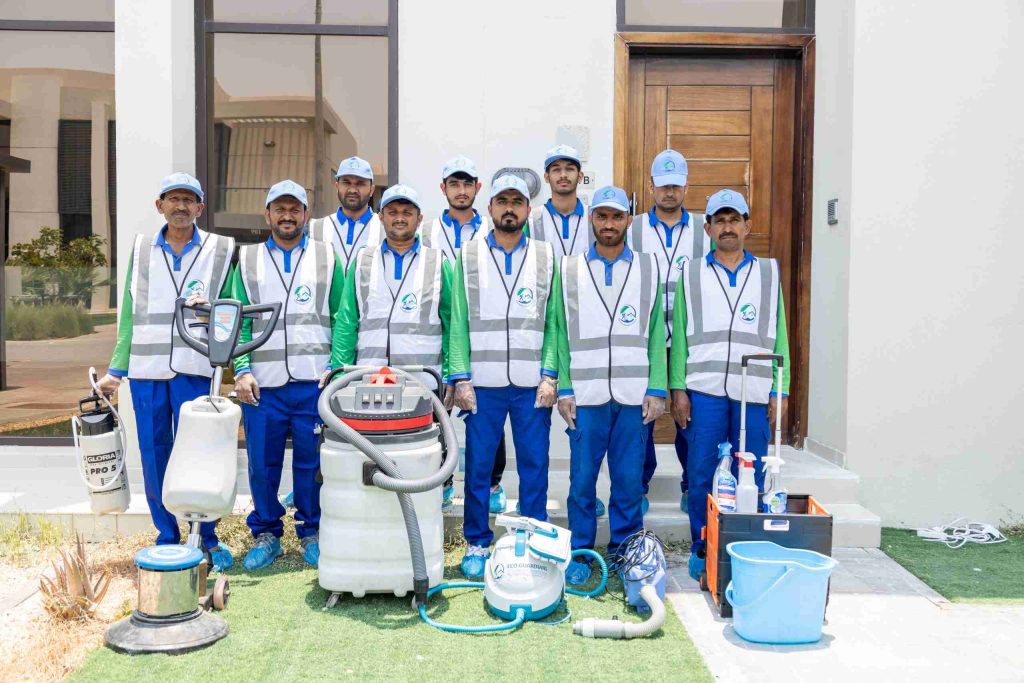
At Eco Guardians, our cockroach pest control Dubai process is built around the reasons infestations return, not just the reasons they start. Our approach for Dubai apartments, villas, and commercial units includes inspection-led species identification, gel baiting and IGR application at the nest rather than open-space spraying, drain and void treatment, and a documented follow-up schedule. As a Dubai Municipality-approved and ISO-certified provider, we also offer contract-based cockroach control for ongoing protection in shared buildings, and we frequently coordinate with facilities management teams in towers across Dubai Marina, Downtown Dubai, Jumeirah Lakes Towers, and Jumeirah Village Circle where shared-infestation issues are especially common.
If your reinfestation is tied to grease, food residue, or a kitchen that hasn’t had a deep clean in a while, pairing treatment with our deep cleaning services or kitchen deep cleaning removes the food source that keeps attracting new roaches even after a colony is cleared. For units recovering from a severe infestation, our disinfection and sanitization services address bacteria and allergen residue that lingers on surfaces after the roaches themselves are gone. Because cockroaches and rodents often share the same entry points and moisture sources, it’s also worth checking our >rodent control guidance if you’ve noticed both issues at once.
Book a Dubai Municipality-approved cockroach inspection with Eco Guardians →
10. Frequently Asked Questions
Why do cockroaches keep coming back after pest control in Dubai? Mainly because egg cases (oothecae) survive the first treatment and hatch weeks later, hidden nests in voids or behind appliances aren’t fully reached by surface sprays, and new roaches keep entering from drains, AC ducts, or neighbouring units in shared buildings.
Is it normal to see more cockroaches right after spraying? Yes, this is common and usually temporary. Treatment can flush roaches out of hidden harbourage as they try to escape the chemical, which can make activity look worse for a few days before it drops off.
How long does it take to fully get rid of cockroaches after treatment? Most professional treatment plans need 2–3 visits over 4–8 weeks to break the egg-to-adult cycle completely, rather than a single visit resolving everything immediately.
Can cockroaches come from my neighbour’s apartment? Yes. In Dubai’s high-rise buildings, cockroaches travel through shared drain stacks, wall voids, and AC duct gaps, so an untreated neighbouring unit or a ground-floor food outlet can reinfest an apartment that was already treated.
Why are cockroaches so hard to get rid of permanently? Their egg cases resist many sprays, they hide in tight spaces sprays can’t reach, some populations have developed bait or insecticide resistance, and they reproduce quickly enough to rebuild a population from very few survivors.
Does cleaning alone stop a cockroach infestation? No. Sanitation removes food and water sources that attract new roaches, but it does not eliminate an existing colony hiding in voids, cracks, or drains. Cleaning and professional treatment work together, not as substitutes for each other.
What is the difference between German and American cockroaches in Dubai homes? German cockroaches are small, tan, reproduce quickly, and usually stay in kitchens and cabinets. American cockroaches are larger, reddish-brown, prefer drains and ground-level areas, and typically enter from outside rather than breeding as fast indoors.
Why do bait stations sometimes not work? Some cockroach populations have developed resistance to specific active ingredients, and a documented share of German cockroach populations exhibit “glucose aversion,” avoiding glucose-based gel baits. Professional providers address this by rotating bait formulations and active ingredients.
Should I use over-the-counter sprays alongside a professional treatment? It’s best to avoid this. Random over-the-counter sprays can repel roaches away from professionally placed gel baits, reducing their effectiveness, and can contribute to resistance over time.
How do I know if my pest control company is Dubai Municipality-approved? Ask for their Municipality approval/license and technician Pest Control ID, and request a written service report listing the products, concentrations, and areas treated. You can also verify approved companies through Dubai Municipality’s Public Health Pest Control Section.
Do cockroaches in Dubai carry health risks? Yes. Beyond contaminating food and surfaces, cockroach allergens are recognised by health authorities as a trigger for asthma and allergy symptoms, particularly with prolonged indoor exposure.
What should I do if cockroaches keep returning even after multiple treatments? Confirm all recommended follow-up visits were completed and prevention steps followed, then ask your provider about species identification and bait rotation. If the source appears to be a neighbouring unit or shared area, report it to building management and request a building-wide inspection.
Is a pest control contract better than a one-time treatment for cockroaches? For apartments in shared towers or properties with a history of reinfestation, a contract with scheduled inspections and follow-up treatments is generally more effective than a single visit, since it accounts for the egg-hatching cycle and ongoing entry risk from the building itself.
Learn more about the US EPA’s guidance on public health pests. Read the EPA’s Introduction to Integrated Pest Management (IPM). Dubai residents can verify licensed providers through the Dubai Municipality Public Health Pest Control Section.