Quick Answer
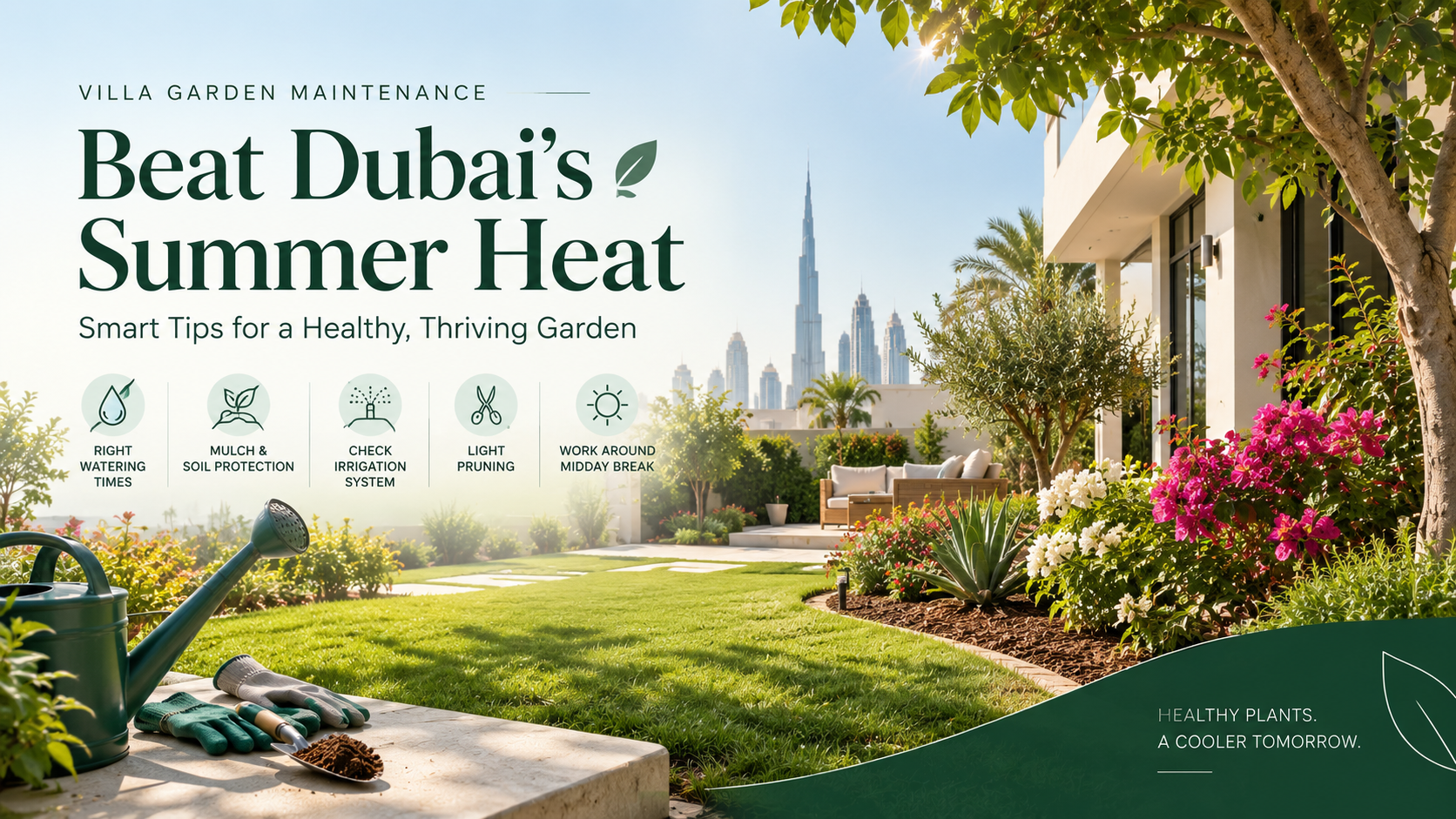
Villa garden maintenance for Dubai’s summer heat centers on protecting roots from extreme soil temperatures, cutting evaporation losses, and shifting nearly all outdoor work to the early morning or evening. Water deeply before 8am or after 6pm, since DEWA specifically recommends this window to reduce evaporation loss. Apply a thick layer of mulch around beds and trees to keep roots cooler and hold moisture longer. Check irrigation lines weekly for leaks and clogged drippers, since summer heat causes plastic fittings to crack more often than in cooler months. Prune lightly rather than heavily, since major pruning during peak heat stresses plants that are already working hard to survive. Finally, schedule any outdoor labor around the UAE’s midday break rule, which bans outdoor work under direct sunlight from 12:30pm to 3pm between June 15 and September 15 for worker safety.
Key Takeaways
- Villa garden maintenance during Dubai’s summer heat depends on watering timing more than watering volume. Early morning or evening irrigation cuts evaporation dramatically compared with midday watering.
- Mulching is one of the most effective, lowest cost steps for Dubai villa gardens, since it can reduce soil surface temperature and slow moisture loss significantly.
- Irrigation systems need weekly summer checks, not seasonal ones, because heat accelerates wear on drip lines, connectors, and sprinkler heads.
- The UAE’s Occupational Heat Stress Prevention Policy bans outdoor work under direct sunlight from 12:30pm to 3pm daily between June 15 and September 15, which applies to gardening staff and landscaping contractors as much as construction crews.
- Drought tolerant, native, and adapted plants such as ghaf, bougainvillea, and desert rose handle Dubai summers far better than imported ornamentals that need constant babying.
Why Dubai Summer Heat Is Different for Gardens
Dubai regularly sees midday temperatures above 45 degrees Celsius during peak summer, and surface soil temperature can climb even higher under direct sun. This creates real stress for root systems, since roots that sit close to the surface effectively cook in place if left unprotected. In addition, humidity swings between coastal and inland areas change how fast water evaporates, so a watering schedule that works in Dubai Marina may not suit a villa in Arabian Ranches or Al Barsha. Because of this, villa garden maintenance in summer needs a different approach than the cooler months, not just more frequent watering.
Watering Schedule for Dubai Villa Gardens in Summer
Best times to water
Water early in the morning, ideally before 8am, or in the evening after 6pm. DEWA specifically advises watering during these hours to reduce evaporation loss, and this single change often does more for plant health than increasing water volume. Avoid watering in the middle of the day entirely, since water sprayed under direct sun evaporates before it reaches the root zone.
How deep and how often
Water deeply rather than lightly and frequently. Deep watering encourages roots to grow downward, where soil stays cooler and more stable. Shallow, frequent watering instead trains roots to stay near the hot surface, which makes plants more vulnerable during heat waves. Most established Dubai villa gardens need watering every day or every other day in peak summer, while young plants and container pots often need daily attention.
Irrigation System Checklist for Summer
- Inspect drip lines and sprinkler heads weekly for cracks, leaks, and clogged emitters, since summer heat causes plastic fittings to fail more often
- Adjust irrigation timers seasonally rather than leaving them on a year round setting, since summer demand is significantly higher than winter demand
- Use light sprinklers rather than heavy jets during evening watering to reduce runoff and evaporation
- Position sprinklers so water lands on soil and plants, not on pavement or walls
- Consider Treated Sewage Effluent for irrigation where available through Dubai Municipality supply, since this reduces demand on potable water
- Run a leak test periodically by checking the water meter after shutting off all irrigation, since a moving meter indicates a hidden leak
Mulching and Soil Protection
| Mulch Type | Benefit | Best Use |
|---|---|---|
| Wood chips | Retains moisture, moderates soil temperature | General beds and around trees |
| Gravel or stone mulch | Low maintenance, suits xeriscape design | Drought tolerant and desert style gardens |
| Organic compost mulch | Adds nutrients while retaining moisture | Vegetable patches and flowering beds |
| Straw mulch | Lightweight, breaks down quickly | Temporary cover for new plantings |
Apply mulch in a layer roughly 5 to 7 centimeters deep, and keep it a few centimeters away from plant stems and tree trunks to avoid rot. Since Dubai’s soil is naturally sandy and drains fast, mulch plays an outsized role in keeping moisture where roots can actually use it.
Plant Selection: What Survives Dubai Summers Best
| Plant Type | Heat Tolerance | Notes |
|---|---|---|
| Ghaf tree | Excellent | UAE’s national tree, extremely drought tolerant once established |
| Bougainvillea | Excellent | Thrives in full sun, minimal water once established |
| Desert rose | Excellent | Ideal for pots and small garden beds |
| Date palm | Excellent | Classic Dubai landscaping choice, low water once mature |
| Lantana | Very good | Continuous flowering, tolerates heat and poor soil |
| Hibiscus | Good with regular water | Needs more consistent watering than the options above |
| Imported temperate shrubs | Poor | Often struggle without heavy shading and daily watering |
If your garden currently leans heavily on imported ornamentals, consider gradually replacing the most heat stressed plants with adapted species. This reduces both water bills and the amount of emergency intervention needed during heat waves.
Shade and Heat Protection for Vulnerable Plants
Young trees, newly planted shrubs, and potted plants benefit from temporary shade cloth during the harshest weeks of summer. Position shade cloth to block the intense afternoon sun while still allowing morning light through. Move container plants to shaded courtyards or covered patios where possible, since pots heat up faster than in ground soil and can cook roots from the outside in. For lawns, raise the mower blade height slightly during summer, since longer grass blades shade the soil and roots better than a closely cropped lawn.
Pruning and Plant Care During Peak Heat
Keep pruning light during summer rather than undertaking major structural cuts. Heavy pruning removes leaf cover that plants rely on for shade and moisture regulation, which adds stress precisely when plants are already working hardest to survive. Instead, focus on removing dead or diseased growth and leave major shaping and structural pruning for the cooler months between October and March.
Pest and Disease Watch in Summer
Heat and humidity swings can also invite pest pressure in villa gardens, particularly around irrigation lines where moisture collects. Watch for signs of termite activity near timber garden structures, fences, or pergolas, since termite infestation signs often become more visible during warmer months when colonies are most active. Standing water from irrigation runoff can also attract mosquitoes, so check for pooling water after every watering cycle and adjust sprinkler placement if you spot it.
Working Hours and Worker Safety
Anyone doing physical garden work outdoors, whether a homeowner or a landscaping crew, needs to plan around the UAE’s Occupational Heat Stress Prevention Policy. This rule bans work under direct sunlight and in open areas from 12:30pm to 3pm daily between June 15 and September 15. Schedule irrigation checks, mulching, planting, and pruning either before this window or after it, both to comply with the rule where it applies to hired staff and to avoid unnecessary heat exposure for anyone working in the garden.
Complete Summer Villa Garden Maintenance Checklist
- Water deeply before 8am or after 6pm, never during midday hours
- Inspect irrigation lines and sprinkler heads weekly for leaks or clogs
- Apply or refresh mulch to a depth of 5 to 7 centimeters around beds and trees
- Check for signs of heat stress on plants, including wilting, leaf scorch, or dropped leaves
- Set up temporary shade cloth for young trees and vulnerable plants
- Raise lawn mower blade height to protect soil and roots
- Keep pruning light and limited to dead or diseased growth only
- Move potted plants to shaded areas where possible
- Schedule any outdoor labor outside the 12:30pm to 3pm midday break window
- Check for standing water after irrigation cycles to prevent mosquito breeding
- Consider replacing heat stressed imported plants with drought tolerant species
Expert Tips
Above all, resist the temptation to water more often just because it feels hotter outside. Overwatering in sandy Dubai soil often drains straight past the root zone without helping the plant, while also wasting water and money. Instead, focus on watering deeply and less frequently, paired with good mulch coverage. Additionally, group plants with similar water needs together, since mixing thirsty and drought tolerant species in the same bed usually means overwatering one or underwatering the other. Finally, if your villa uses a shared irrigation system with neighbors or a community landscaping team, confirm who is responsible for weekly leak checks, since this responsibility often falls through the cracks in shared compounds.
Frequently Asked Questions
1. What is the best time to water a villa garden in Dubai during summer? Water before 8am or after 6pm. DEWA specifically recommends this window because watering during peak heat causes significant evaporation loss before water reaches the roots.
2. How often should I water my garden in Dubai summer? Most established gardens need watering every day or every other day during peak summer, while young plants and potted plants often need daily watering due to faster soil drying.
3. Why does my irrigation system need more frequent checks in summer? Heat accelerates wear on plastic drip lines, connectors, and sprinkler heads, so leaks and clogs happen more often in summer than in cooler months. Weekly checks catch problems before they waste water or stress plants.
4. Can I use treated sewage effluent to water my villa garden? Yes, where available through Dubai Municipality supply. Using treated sewage effluent for irrigation reduces demand on potable water, which is a recommended conservation step during summer
5. Which plants survive Dubai’s summer heat best? Ghaf trees, bougainvillea, desert rose, and date palms handle Dubai summers well once established, while many imported temperate shrubs struggle without heavy shading and daily watering.
6. How deep should mulch be in a Dubai garden? Roughly 5 to 7 centimeters deep, kept a few centimeters away from plant stems and tree trunks to avoid rot while still retaining moisture and moderating soil temperature.
7. Should I prune my garden heavily before summer starts? No. Keep pruning light through summer, since heavy pruning removes the leaf cover plants use for shade and moisture regulation. Save major structural pruning for the cooler months between October and March.
8. Why is my lawn struggling even though I water it regularly? Mower height matters as much as watering. Cutting grass too short in summer removes the shade blades provide to soil and roots, so raising the blade height often helps more than adding extra water.
9. Can gardeners legally work outdoors during Dubai’s hottest hours in summer? No, not during the restricted window. The UAE’s Occupational Heat Stress Prevention Policy bans outdoor work under direct sunlight from 12:30pm to 3pm daily between June 15 and September 15, and this applies to landscaping and gardening staff.
10. When is the best time of day to schedule garden maintenance visits in summer? Early morning or late afternoon into evening, both to align with the midday work restriction and to avoid unnecessary heat exposure for anyone working outdoors.
11. Does the midday break rule apply to homeowners doing their own gardening? The policy specifically targets employers and outdoor workers, but the underlying heat safety logic applies to anyone working outdoors, so homeowners should follow the same early morning or evening timing for their own safety.
12. How can I tell if my plants are heat stressed rather than underwatered? Heat stress often shows as leaf scorch, curling, or wilting even shortly after watering, whereas underwatering typically causes gradual, consistent wilting that improves quickly once water is applied.
13. Should potted plants be treated differently from garden beds in summer? Yes. Pots heat up faster than in ground soil and can effectively cook roots from the outside, so moving containers to shaded courtyards or covered patios helps significantly during peak summer.
14. What pest issues should I watch for in my villa garden during summer? Watch for termite activity near timber garden structures and standing water from irrigation runoff, which can attract mosquitoes. Both issues tend to increase during Dubai’s warmer months.
15. Is it worth replacing existing plants with drought tolerant species? For gardens that struggle every summer despite consistent care, gradually replacing the most heat stressed plants with adapted species such as bougainvillea or desert rose usually reduces both water use and maintenance effort long term.
Related Eco Guardians Services
Eco Guardians’ landscape services in Dubai cover full seasonal garden maintenance, including the irrigation and plant care steps outlined in this guide, while the home gardening services option suits villa owners who want ongoing, hands on care rather than a one time visit. For irrigation specific concerns such as leaks, clogged drippers, or system upgrades, the dedicated irrigation services team can inspect and repair drip lines and sprinkler systems directly.
Villa owners unsure where to start can also book a session with the gardening consultancy services team, who can assess plant selection and watering schedules specific to your property. Since termite activity near garden structures is worth ruling out during summer, it pairs well with a check from the termite control team, and villa owners handling broader upkeep alongside garden care can review civil maintenance services for structural repairs. To get a fixed quote for your garden, contact Eco Guardians directly.
Sources and Further Reading
- DEWA Sustainability and Conservation Tips
- DEWA Irrigation Tips for Water Conservation
- MoHRE Occupational Heat Stress Prevention Policy, the Midday Break
This article offers general guidance for villa garden care and does not replace advice from a licensed landscaping professional or the official guidance published by DEWA and MoHRE. To book seasonal garden maintenance, contact Eco Guardians or call +971 56 752 6970.