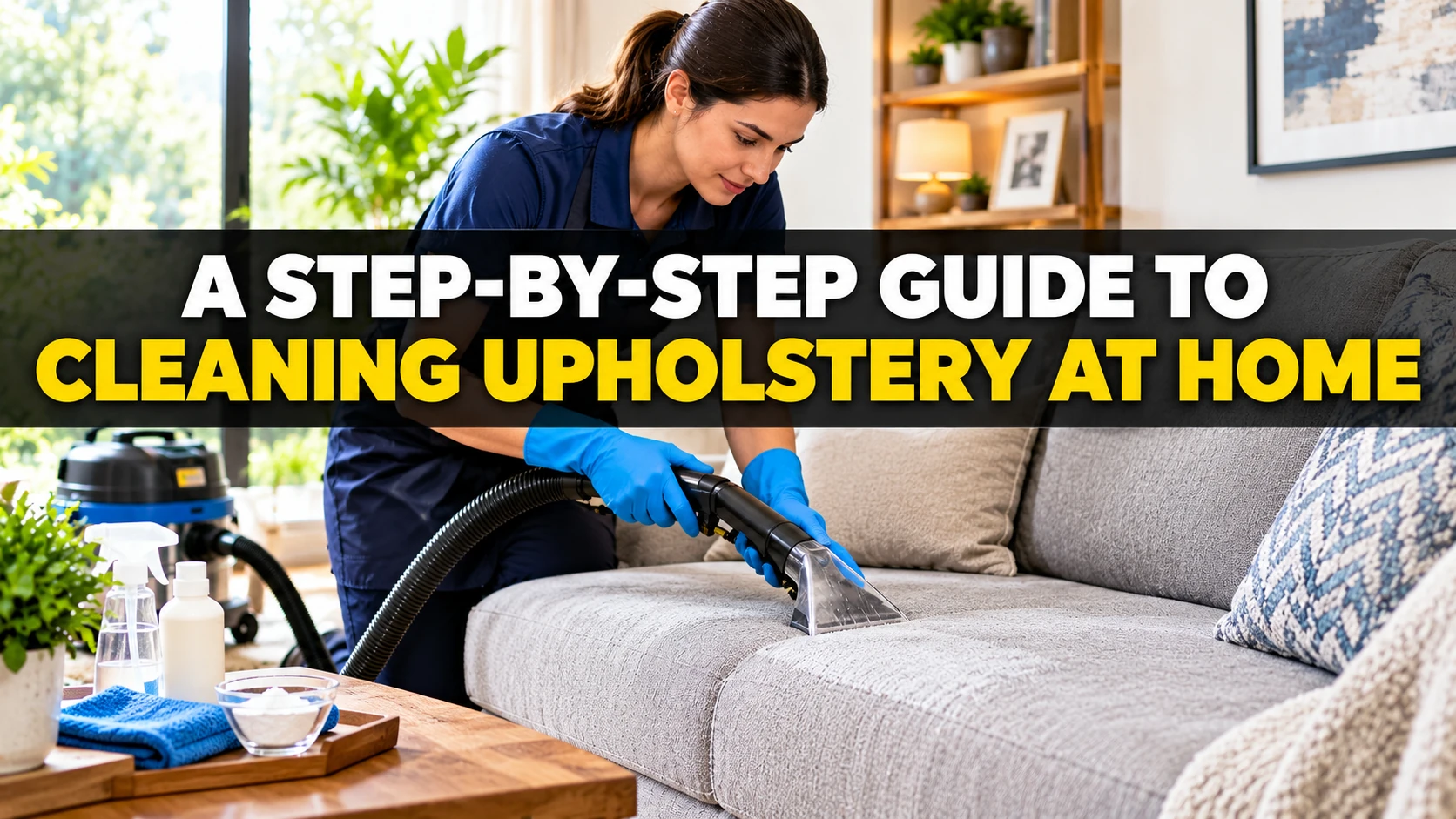
A splash of red wine at a Friday brunch, a muddy paw print after a walk, a fine film of desert dust on every cushion: upholstery takes a beating in Dubai homes. This is A Step-by-Step Guide to Cleaning Upholstery at Home that works for apartments in JVC and the Marina, villas in Mirdif and Arabian Ranches, and everything in between. You do not need industrial equipment or a chemistry degree. You need the right order of steps, a little patience and a clear sense of when to stop and call someone.
If you are wondering how to clean upholstery without shrinking the cushions, leaving water rings or voiding a warranty, this upholstery cleaning guide walks you through every stage the way professionals do it. At Eco Guardians, our team has seen the same avoidable mistakes in homes across the city, so we have built this guide around them. If a job turns out to be bigger than a weekend project, our Furniture Cleaning Dubai service is there to help.
By the end, you will know how to read a care tag, how to make a homemade upholstery cleaner, how to remove stains from upholstery, how to dry everything fast in Dubai’s humidity, and how to keep your sofa fresh for years.
What You Will Learn in This Upholstery Cleaning Guide
- How to identify your fabric and decode the W, S, WS and X cleaning codes
- The tools, upholstery cleaning products and safety gear worth having
- Dry preparation, spot treatment and deep cleaning, step by step
- How to remove odors from upholstery, including pet and oud smells
- How to dry upholstery after cleaning in Dubai’s AC-heavy, humid homes
- How often to clean upholstery, and when to hire a professional upholstery cleaner
Why A Step-by-Step Guide to Cleaning Upholstery at Home Matters in Dubai
Upholstery is one of the most overlooked surfaces in a home. We vacuum floors weekly, yet armrests, seat cushions and sofa backs often go months without attention. Here, a few local factors make the problem worse.
- Dust and sand: Fine particles settle into the weave and act like sandpaper on fibres every time someone sits down.
- Constant air conditioning: Cooled indoor air slows evaporation, so damp fabric takes longer to dry.
- Humidity in summer: Trapped moisture invites mildew and musty smells.
- Busy households: Kids, pets, guests and majlis gatherings mean frequent spills.
- Rental contracts: Tenants want their security deposit back, so stained furnished-apartment sofas are a real worry.
Regular upholstery cleaning does more than make a sofa look good. It supports hygiene, reduces dust mites and dander, and extends furniture life. Skipping it means grime breaks down fibers from the inside, and stains become harder to shift each month.
Quick Overview: Steps to Clean Upholstery at Home
| What to Do | Time Needed |
|---|---|
| Identify the fabric and read the care code | 5-10 minutes |
| Gather tools, solutions and safety gear | 10 minutes |
| Dry preparation: vacuum and groom | 20-30 minutes |
| Spot-treat stains | 15-45 minutes |
| Deep clean the whole piece | 30-60 minutes |
| Rinse, neutralise and extract moisture | 15-20 minutes |
| Dry, fluff and protect | 4-12 hours |
| Protect the fabric | 10-15 minutes |
| Set a maintenance schedule | Ongoing |
Step 1: Identify Your Upholstery Fabric and Cleaning Code
Before you touch a bottle or brush, find out what your sofa is made of. Skipping this detective work is the quickest route to shrunken cushions and a voided warranty. Knowing this first is the foundation of A Step-by-Step Guide to Cleaning Upholstery at Home.
Find the Fabric Care Label
Look for the care tag under removable cushions, beneath the frame or along the seam of the seat deck. Car seats usually have a label near the base. The manufacturer’s instructions and fabric code tell you exactly what the maker approves.
Understand the Upholstery Cleaning Code (W, S, WS, X)
| Code | Meaning | What You Can Use |
|---|---|---|
| W | Water-based | Mild dish soap, water-based upholstery cleaning solution, hot-water extraction |
| S | Solvent only | Dry-solvent cleaner; keep water away |
| WS | Water or solvent | Start with water-based methods first |
| X | Vacuum or brush only | No liquids at all; call a professional |
This is the answer to “what does the W, S, WS or X tag mean on furniture?” and it is the single most important step in fabric sofa cleaning.
Spot Fabrics That Need Professional Care
Silk, velvet, wool, linen blends, antique pieces and high-pile fabrics can shrink, watermark or lose their pile very quickly. If the fabric crushes when pressed or feels loosely woven, take a photo and leave it to an expert. If you live in a rental, remember that you are responsible for furniture you do not own, so caution pays.
Run a Hidden Patch Test
A patch test, also called a colourfast test, protects you from nasty surprises.
- Mix your cleaning solution as directed.
- Blot an inconspicuous area, such as the back or underside, with a white cloth.
- Wait about 15 minutes.
- Check for colour transfer, fuzzing, shrinkage or stiffness.
- If nothing changes, carry on.
Step 2: Gather the Right Tools, Upholstery Cleaning Products and Safety Gear
Nothing kills momentum like hunting for a missing nozzle mid-clean. Stock your kit before you start, and you can move from vacuum to final blot without detours. Read the care label first, and if the piece is large or delicate, our Furniture Cleaning Dubai team can take over at any point.
Essential Equipment
- Vacuum cleaner with an upholstery nozzle or turbo brush
- Crevice tool for seams, piping and tufting
- Soft-bristle brush
- White microfibre cloths (coloured cloths can bleed)
- Two buckets and a measuring jug
- 500 ml spray bottle
- Plastic spoon or blunt scraper for solid spills
- Lint roller and an optional fabric shaver for pilling
- Optional: portable carpet and upholstery cleaner, or a steamer
- Fan and, in humid months, a dehumidifier
Best Upholstery Cleaner Options: Homemade vs Store-Bought
The best upholstery cleaner depends on your fabric, your stain and your comfort level. Here is how the main options compare.
| Option | Best For | Watch Out For |
|---|---|---|
| Mild dish soap and warm water | Everyday soiling on W or WS fabrics | Too much soap leaves residue |
| White vinegar solution | Odours, light stains | Avoid on delicate or unknown fabrics |
| Baking soda | Dry odour absorption | Needs thorough vacuuming afterwards |
| Enzymatic cleaner | Pet urine, vomit, protein stains | Allow full dwell time |
| Dry-solvent cleaner | S-coded fabrics | Ventilate; keep away from heat |
| Commercial upholstery shampoo | Machine extraction | Use half the dose the label suggests |
| Plant-based, non-toxic cleaner | Homes with kids and pets | Check fabric compatibility |
Proven DIY Upholstery Cleaning Solutions
If you prefer a homemade upholstery cleaner, these are the recipes we see work best on water-safe fabrics.
- Mild soap mix: 1/4 teaspoon gentle dish liquid in 1 cup warm water
- Vinegar deodoriser: 1/2 cup white vinegar, 1 cup warm water and 1 tablespoon dish soap
- Bicarb booster: baking soda sprinkled on dry fabric, left 15 minutes, then vacuumed
- Rubbing alcohol (above 70%): for ink or grease on suitable fabrics
- 3% hydrogen peroxide: only on light, colour-fast fabrics, dabbed sparingly
These are DIY upholstery cleaning solutions, not magic. Always do a patch test first.
Safety Gear and Chemical Safety
- Nitrile gloves and protective specs
- Mask or open windows when using solvents or peroxide
- Old sheet or drop cloth to protect floors
- A small fan to disperse fumes and speed drying
- A metal bin with a tight lid for solvent-soaked rags, to limit off-gassing
Never mix bleach and ammonia-based cleaners. The combination releases toxic chloramine gas. For general guidance on keeping your home’s air healthy while you clean, see the US EPA’s indoor air quality resources.
Step 3: Dry Preparation to Clean Upholstery Like a Pro
Any dry soil left in the weave turns into dark sludge the moment moisture arrives. That is why professionals always start dry. This is also where most people can clean upholstery like a pro without any special equipment.
Vacuum Method
Fit the upholstery nozzle and start at the top. Work down in slow, overlapping strokes about 5 cm apart. Use the crevice tool along piping, buttons and tufting, where grit hides. Two passes in opposite directions beat one hurried sweep. In Dubai, where fine dust settles daily, this step alone makes a visible difference. It is also the core of surface-clean upholstery.
Remove Lint, Pet Hair and Pilling
- Press a sticky lint roller over seats and arms.
- Sweep a slightly damp rubber glove in short flicks to lift fur and dander.
- Glide a battery fabric shaver lightly over pilled areas, never lingering in one spot.
Pre-Groom and Raise the Pile
Brush gently with a soft-bristle brush in the direction of the fabric nap. This lifts fibres and lets your cleaning solution penetrate evenly instead of skating over a dusty crust.
Step 4: Spot-Treat Stains the Right Way (Upholstery Stain Removal)
Ignore isolated stains and they wick back to the surface after the main clean, leaving dingy halos. Spot clean upholstery first, so your deep clean can focus on general soiling.
The Golden Rules of Stain Lifting
- Blot, never rub. Rubbing frays fibres and pushes pigment deeper.
- Work from the outside in. Start at the edge and move toward the centre.
- Act fast. Fresh stains lift far more easily than set ones.
- Use less liquid than you think. Overwetting is the root of water rings.
How to Remove Stains from Upholstery: Stain-by-Stain Chart
| Stain | First-Aid Method |
|---|---|
| Coffee or tea | Mist the vinegar mix, then blot with a white microfibre cloth |
| Red wine | Flood lightly with sparkling water, sprinkle table salt, wait 5 minutes, scrape or vacuum, then blot with the vinegar mix |
| Grease or food oil | Cover with baking soda or cornflour for 10 minutes, vacuum, then dab with rubbing alcohol on a cloth |
| Ballpoint ink | Touch a cotton bud soaked in isopropyl alcohol to the spot, turning the bud often |
| Pet urine | Enzymatic cleaner, 10-minute dwell, blot; finish with vinegar mix |
| Blood or milk | Cool water only, 15-minute dwell; heat sets protein |
| Mud | Let it dry fully, vacuum, then treat the residue |
How to Remove Red Wine from Upholstery
Speed matters. Blot up as much as you can, lightly flood with sparkling water, cover with table salt and wait about five minutes. Vacuum or scrape off the salt, then blot with a vinegar-and-dish-soap mix. Repeat until the cloth comes away clean.
How to Remove Ink from Upholstery
Use a cotton bud with isopropyl alcohol and touch only the mark. Move to a clean section of the bud as it picks up ink. Do not saturate the fabric, and test on a hidden area first.
Use Heat and Dwell Time Wisely
Warm, not hot, solutions work best. Aim for roughly body temperature, about 37 °C. Keep protein stains such as blood and milk cool and extend dwell time. Cover treated areas with cling film to prevent premature drying while the product works.
Rinse and Blot to Prevent Halos
Once the stain lifts, mist plain water and blot until your towel shows no detergent or pigment. Fold to a fresh section after every press. This neutralises residue that would otherwise attract dirt.
Step 5: Deep Clean Upholstery (Choose the Right Method)
Spot work done, it is time to even out colour, remove hidden grime and prevent tide marks. These upholstery cleaning methods all share one rule: control the moisture and extract thoroughly. To deep clean upholstery safely, match the method to your cleaning code.
Method A: Hand-Cleaning (Bucket and Cloth) for W or WS Fabrics
- Fill one bucket with the mild soap mix and another with plain warm water.
- Dip a white cloth and wring until merely damp.
- Wipe a 60 x 60 cm panel using light circular motions.
- Rinse the cloth in the clean bucket and repeat until suds run clear.
- Blot with a dry towel before moving on, to avoid soaking foam cushions.
This is also the easiest way to approach couch cleaning at home and how to clean a couch with vinegar and dish soap: use the diluted mix sparingly, never pour it.
Method B: Shampoo Extraction with a Portable Carpet and Upholstery Cleaner
Can you use carpet cleaner on upholstery? Often yes, provided the care label says W or WS and the machine has an upholstery tool. A portable carpet and upholstery cleaner injects solution and pulls dirty water back out.
- Use only half the detergent dose the bottle suggests. Excess soap invites re-soiling.
- Work top to bottom: one slow wet pass, then two dry passes with the trigger released.
- Edge the wand along seams and buttons.
- Empty the recovery tank when the suction pitch changes.
- Clean the whole cushion or panel, not just the stain, to avoid water rings.
This method is a form of hot-water extraction, widely used for deep cleaning upholstery.
Method C: Steam Cleaning Upholstery
Is steam cleaning safe for upholstery? On suitable fabrics, yes. A vapour steamer releases a fine, hot mist that sanitises and refreshes with very little water. Glide the head steadily and wipe moisture with a microfibre cloth as you go. Steam will not shift oily marks, and it can damage some delicate fabrics, so read the label first. For routine refreshes of kids’ furniture, it works well.
Method D: Dry-Solvent Cleaning for S-Coded Fabrics
Mist an isopropyl-based upholstery cleaning solution onto a folded white cloth, then dab. Never pour directly onto the fabric. Solvent evaporates quickly, so ventilate well and keep heaters and candles away. Brush gently once dry to restore the nap.
Method E: Professional-Grade Extraction
Truck-mounted extraction and commercial-grade treatment dry faster and remove deeper soil than home machines. We cover when it is worth booking later in this guide.
Step 6: Rinse, Neutralise and Extract Residual Moisture
Soap left in the weave becomes a dirt magnet. A good rinse is what separates a clean sofa from one that is dirty again in a week.
- Light rinse: Mist plain warm water, or 1 tablespoon vinegar in 1 litre of water, over a 60 cm panel. Blot with clean towels until the cloth stays colourless.
- Final extraction: Use the machine’s suction-only pass, or press folded microfibre towels firmly into the fabric until they emerge barely damp.
- Neutralise (optional): For extra softness, re-spray the vinegar mix, wait 60 seconds, then make one final suction pass to reset the fabric.
Step 7: How to Dry Upholstery After Cleaning (Dubai Edition)
Drying is where many Dubai homeowners go wrong. Air conditioning cools the room but does not move enough air across fabric, and humid summers slow evaporation further. Damp upholstery invites mildew, rusted zips and ugly watermarks. Understanding how to dry upholstery faster protects everything you have just done.
How to Dry Upholstery Faster
- Place a fan about 30 cm away on medium, aimed across the fabric.
- Stand loose cushions upright on their edges, and flip them halfway through.
- Run the AC on a lower temperature to reduce humidity, and add a dehumidifier in humid weather.
- Open a window in winter and spring when the outdoor air is drier and cooler.
- Avoid direct midday sun on dark or delicate fabrics, which can fade colour.
Expected Drying Time
| Condition | Typical Drying Time |
|---|---|
| Light hand-clean, fan on, AC running | 3-5 hours |
| Machine extraction, fan on | 4-8 hours |
| Humid summer day, no fan | 12+ hours |
| Thick foam cushion, heavily wetted | Up to 24 hours |
Times vary with fabric, thickness and room conditions. Give upholstery at least 4 to 6 hours to dry completely before sitting on it.
Groom the Nap and Restore Texture
When the fabric is about 80% dry, brush the fibres in their natural direction. This prevents crunchiness and keeps the pile plush.
Step 8: Protect Your Upholstery After Cleaning
Once fully dry, apply a fabric protector to slow future staining. A stain-repellent or water-repellent finish makes spills bead up so you have time to blot. Scotchgard-type protectors are one example, and many performance fabrics list their own recommended product on the care guide.
- Test the protector on a hidden area first.
- Spray evenly from the recommended distance and allow full curing time.
- Use washable throws on high-traffic seats.
- Reapply after every deep clean, or as the manufacturer advises.
Step 9: Set an Upholstery Cleaning Schedule
Freshly cleaned upholstery only keeps its showroom look with small, regular habits. Here is a simple upholstery cleaning schedule.
| Task | How Often |
|---|---|
| Vacuum seats, backs and armrests | Weekly (more often with pets or heavy dust) |
| Spot-treat spills | Immediately |
| Rotate and flip cushions | Every two weeks |
| Deep clean | Every 6-12 months (every 2-3 months with pets or kids) |
| Professional cleaning | Annually, or as the warranty requires |
How Often to Clean Upholstery
How often should you clean upholstery? As a baseline, vacuum weekly and deep-clean once or twice a year. Increase the frequency if you have pets, young children, allergies or a lot of guests. Always follow the manufacturer’s care recommendations, since some require professional cleaning every 12 months to keep the warranty valid.
Daily Habits That Prevent Stains
- Keep drinks on trays and coasters
- Take shoes off at the door
- Blot spills immediately
- Use washable pet throws on favourite seats
- Sprinkle baking soda on dusty-smelling cushions, wait 15 minutes and vacuum
How to Clean Upholstery for Specific Fabrics and Furniture
Not every fabric reacts the same way. Here is how to adapt the steps.
How to Clean Microfiber Upholstery
Microfibre is popular for its soft feel and stain resistance, but it is picky about water. Check the code first. Many microfibre sofas are S-coded and prefer a dry-solvent cleaner. If yours is W or WS, use a barely damp cloth and the mild soap mix. Brush the nap when dry to remove stiffness and watermarks. This is also how to clean a microfibre sofa safely.
How to Clean a Fabric Sofa (Cotton, Linen Blend and Polyester)
For everyday cotton and polyester, vacuum, spot-treat and hand-clean with the mild soap mix. Linen blends shrink easily, so use minimal moisture and always dry quickly. This is the most common scenario for fabric sofa cleaning at home.
How to Clean Leather Furniture
Leather needs a different approach.
- Vacuum with a soft brush attachment.
- Wipe with a barely damp microfibre cloth. Never soak leather.
- Use a pH-balanced leather cleaner, then follow with a leather conditioner.
- Avoid vinegar, rubbing alcohol and harsh solvents, which can dry and crack the finish.
- Keep leather away from direct sun and AC vents to prevent fading and drying.
How to Clean Velvet, Silk and High-Pile Fabrics
These are the riskiest fabrics for DIY. Velvet crushes and watermarks easily, and silk can stain permanently. Vacuum gently, blot spills lightly and call a professional for anything deeper. If the tag says X, do not use liquids at all.
How to Clean “X” Coded Fabric
Vacuum and brush only. For stains, a professional upholstery cleaner is the only safe route.
How to Clean Outdoor Performance Fabric
Brands such as Sunbrella, Outdura and Crypton make indoor/outdoor and stain-resistant fabrics, so they often tolerate more cleaning. Their makers publish their own care guides, so follow them. Many are mildew-resistant, fade-resistant and moisture-resistant, but harsh cleaners can strip the protective finish, so a fabric guard may need reapplying. Always follow the manufacturer’s guidance before using bleach on any fabric. This is useful for Dubai balconies and patio furniture.
How to Remove Odors from Upholstery
Smells are as common a complaint as stains. How you handle them depends on the source.
Cleaning Upholstery with Baking Soda
Baking soda absorbs odours from dry fabric. Sprinkle a light, even layer, wait 15 minutes (or longer for stronger smells) and vacuum thoroughly. It is a simple, low-cost odour neutraliser.
Cleaning Upholstery with Vinegar
A diluted white vinegar solution deodorises and helps break down some residues. Use it sparingly on colour-fast W or WS fabrics, and expect the vinegar smell to fade as it dries.
How to Get Odours Out of Furniture After Smoke, Oud or Bakhoor
In many Dubai homes, oud, bakhoor and shisha leave smoky odours that cling to fabric. Ventilate the room, vacuum thoroughly, apply baking soda, and use a fabric refresher. For heavy smoke, a professional deep clean will reach the padding where odours settle.
Pet Stains on Upholstery and How to Remove Pet Urine from Sofa
Pet accidents need an enzymatic cleaner, because it breaks down the proteins in urine that cause odour crystals to return.
- Blot up as much as possible.
- Saturate lightly with enzyme detergent.
- Allow a 10-minute dwell, or longer as directed.
- Blot and extract.
- Finish with the vinegar mix if the fabric allows.
- Dry fully with a fan.
Vacuum fur and dander first, and remember kitty litter and outdoor debris can hide in crevices.
Water Stains on Upholstery and How to Avoid Water Rings
Water stains on upholstery are usually caused by overwetting just one spot, leaving a tide mark around the edge as it dries.
- Clean the whole cushion or panel from seam to seam, not just the mark.
- Use distilled water for the final mist if your tap water leaves mineral marks.
- Blot well and speed up drying with a fan.
- If a ring has already formed, lightly mist the entire panel evenly, blot and dry.
Common Upholstery Cleaning Mistakes to Avoid
- Soaking the fabric: causes watermarks, mildew and damaged padding
- Rubbing stains: spreads pigment and frays fibres
- Skipping the patch test: the cause of most colour bleed and shrinkage
- Using too much detergent: soap residue becomes a dirt magnet
- Ignoring the care code: especially X-coded and S-coded fabrics
- Mixing cleaning products: never combine bleach and ammonia
- Drying too slowly: invites mildew in Dubai’s humidity
- Sitting down too soon: crushes the pile and transfers dirt
Health, Safety and Eco-Friendly Cleaning
A sparkling sofa should not cost you your air quality or your furniture warranty.
- Ventilate the room well, especially with solvents or peroxide.
- Choose plant-based, non-toxic cleaners where fabrics allow, particularly in homes with babies and pets.
- Replace single-use wipes with microfibre cloths and refillable bottles.
- Keep children and pets out of the room until fabric is dry.
- Take date-stamped photos of your DIY steps and keep receipts of any approved products. Some warranties require proof of care.
Eco-friendly cleaning is simply cleaning that works without unnecessary chemicals. At Eco Guardians, we favour gentle, effective methods, and we apply the same thinking to every home we visit.
When to Call a Professional Upholstery Cleaner
DIY is great, but it has limits. Hand the job to professional upholstery cleaners when:
- The tag says X, or the fabric is velvet, silk or antique
- You are dealing with large blood or bio spills, or chronic pet accidents
- Smoke, oud or mildew odours have reached the padding
- You have a large majlis or several seating sets to refresh before Ramadan or Eid
- Your warranty requires professional care, or the sofa is an expensive designer piece
- You are moving out and a landlord will inspect the furniture
- Your own attempts have left water rings or marks
What Professionals Bring
- Commercial-grade treatments for ink, wine and odours
- Professional steam clean and truck-mounted or portable extraction for faster drying
- Insurance cover and a workmanship guarantee
- Same-day booking and per-seat pricing in many cases
Upholstery Cleaning Cost in Dubai
Upholstery cleaning cost and upholstery cleaning price vary with the number of seats, fabric type, stain severity and add-ons such as odour treatment or protection. Ask for a fixed quote based on photos, and compare what is included. If you are searching for local upholstery cleaners, look for trained technicians, clear pricing, guarantees and reviews. When you are ready to book a cleaner, our Furniture Cleaning Dubai team at Eco Guardians can assess your furniture and recommend the safest method.
DIY vs Professional: Quick Comparison
| Factor | DIY at Home | Professional |
|---|---|---|
| Cost | Low (basic supplies) | Higher, but fixed per job |
| Best for | Light soiling, fresh spills | Deep soil, odours, delicate fabrics |
| Risk | Higher if fabric is unknown | Low, with insurance and guarantee |
| Drying time | Slower | Usually faster |
| Warranty safety | Depends on you | Documented service |
Quick Guide by Household Type
| If You Are… | Focus On | Smart Tip |
|---|---|---|
| A busy parent | Fast, child-safe stain removal | Keep a stain kit and non-toxic cleaner ready |
| A pet owner | Enzymatic cleaner, fur removal, odour control | Vacuum weekly and use washable throws |
| A renter | Deposit protection | Photograph the sofa on move-in and clean before move-out |
| A villa or majlis host | Large seating sets, oud and coffee stains | Schedule before Ramadan and Eid |
| A designer-sofa owner | Warranty and delicate fabrics | Follow the care tag and use certified professionals |
| A holiday-home host | Fast turnaround | Use washable covers and a quick-dry routine |
Beyond the Sofa: Caring for the Rest of Your Soft Furnishings
A clean sofa looks best in a clean room. Soft furnishing cleaning should extend to the curtains that frame it, since they collect the same dust and cooking odours. If you want to keep your whole living space fresh without harsh chemicals, take a look at our earlier guide, Eco-Friendly Curtain Cleaning Methods for Modern Homes. It pairs well with this one, because the same principles of gentle products, controlled moisture and good ventilation apply to cushions, drapes and upholstery alike.
If you also want to replace worn fabric, upholstery fabric brands and professional reupholstering can restore a tired frame. A cleaned and protected sofa will also last longer, extending its lifespan and delaying the cost of replacement.
Conclusion :
A Step-by-Step Guide to Cleaning Upholstery at Home comes down to nine habits: identify the fabric, gather your kit, vacuum every crumb, treat stains gently, deep clean with the right method, rinse well, dry fast, protect the fibres and keep a simple schedule. Follow them, and your sofa will smell neutral, the colours will look brighter and there will be no crunchy residue when you sit down with your coffee.
And if the job feels like more than you want to take on, or your furniture is delicate, expensive or X-coded, there is no shame in calling for help. Eco Guardians offers Furniture Cleaning Dubai with gentle, effective methods, so you can get back to enjoying your home.
FAQ’s
How do you clean upholstery at home step by step?
First, vacuum the upholstery to remove dust and debris. Check the care label, test a suitable cleaner on a hidden area, gently treat stains, clean the fabric according to its care instructions, and let it dry completely.
What is the best way to clean a fabric sofa at home?
The best way is to vacuum the sofa thoroughly, use a fabric-safe cleaning solution, gently blot stains, avoid soaking the fabric, and allow it to air-dry completely.
What is the best homemade upholstery cleaner?
A mild mixture of water and a small amount of gentle detergent can work for some water-safe fabrics. Always check the care label and test the solution on a hidden area before use.
How do you remove stains from upholstered furniture?
Blot fresh stains with a clean cloth without rubbing. Apply a suitable upholstery cleaner according to its instructions, gently work from the stain’s edges toward the center, and blot away excess moisture.
Can I clean upholstery with baking soda?
Yes, baking soda can help absorb odors from some upholstery fabrics. Sprinkle a small amount on a suitable dry surface, leave it briefly, and vacuum thoroughly. Check the manufacturer’s cleaning instructions first.
How often should upholstery be cleaned?
Vacuum upholstery weekly or as needed, and deep-clean it when dirt, stains, or odors accumulate. Cleaning frequency depends on usage, pets, children, and the manufacturer’s care recommendations.



This Post Has 19 Comments
What is the best way to clean a sofa at home?
Vacuum thoroughly, spot-clean stains with a fabric-safe cleaner, and let the sofa dry completely.
Can I clean upholstery with vinegar and baking soda?
How do I remove old stains from my couch?
Yes, but test a small hidden area first, as vinegar and baking soda may damage or discolor certain fabrics.
How can I remove unpleasant odors from upholstery?
Sprinkle baking soda, leave it for 15–30 minutes, and vacuum thoroughly.
How often should I clean my upholstered furniture?
Vacuum weekly and deep-clean every 6–12 months, depending on usage and fabric condition.
Can I use a steam cleaner on my sofa?
Yes, but only if the sofa’s care label permits steam cleaning.
How do I prevent water marks after cleaning upholstery?
Use minimal water, clean evenly, avoid soaking the fabric, and allow proper drying.
How long does a sofa take to dry after cleaning?
Most sofas take 4–12 hours to dry, depending on fabric, humidity, and ventilation.
What is the safest homemade cleaner for fabric upholstery?
A small amount of mild, fabric-safe detergent diluted in water is a safer option. Always test first.
Is professional upholstery cleaning better than cleaning at home?
Yes, professional cleaning offers deeper cleaning, specialized equipment, and better treatment for stubborn stains.