
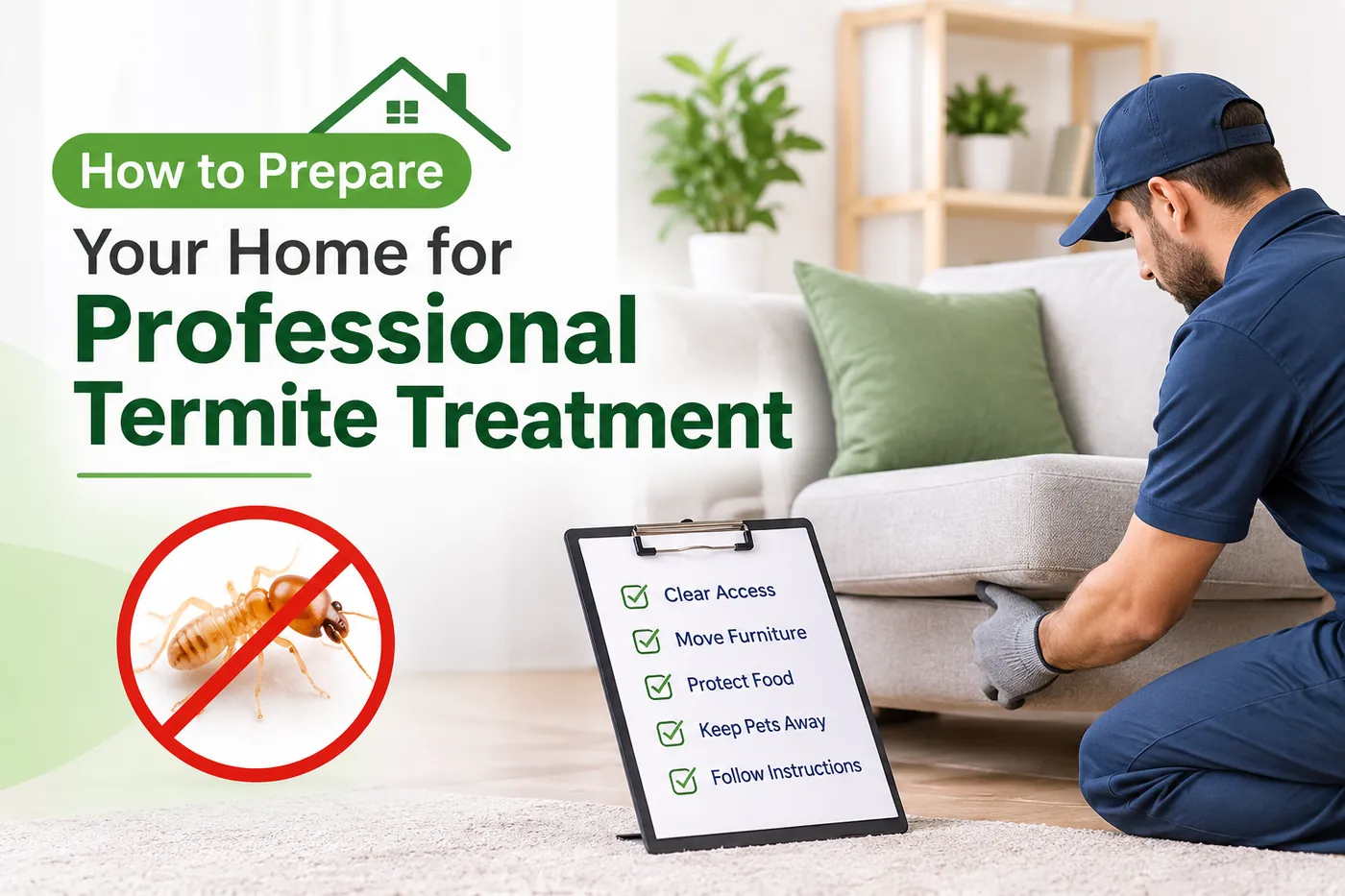
Finding termites in your Dubai home is stressful. Maybe you spotted mud tubes along a wall, a door frame that sounds hollow, or tiny wings near a window. You have booked a technician, and now a new question appears: what should you do before they arrive?
This guide explains how to prepare your home for professional termite treatment, step by step. It works for a villa in Arabian Ranches, an apartment in JLT or an older house in Al Qusais. You will learn what to move, what to cover, what to tell the technician and what to do after the visit. Good preparation helps the product reach every entry point, keeps your family safe and protects your investment. Trusted Pest Control Dubai teams such as Eco Guardians will always give instructions for your specific property, but the basics below apply almost everywhere.
Why Learning How to Prepare Your Home for Professional Termite Treatment Matters in Dubai
Termites are small, but they cause serious structural damage. They eat wood, paper and other plant-based materials from the inside, so the harm often stays hidden until it is expensive. In Dubai, irrigation, leaking pipes, humid bathrooms, planted gardens and air-conditioning condensation create the moisture that termites love. Villas with gardens and older buildings with wooden doors, skirting and false ceilings are common targets.
Knowing how to prepare your home for professional termite treatment makes the service faster, safer and more effective. A technician who can reach the base of every wall can treat the right spots the first time. A technician who has to move your sofa, search for wiring and wait for you to find the keys loses time, and treatment can be incomplete.
What You Gain From Good Preparation
- Better results: clear access means the termiticide reaches the entry points and the barrier is continuous.
- A shorter visit: less moving of furniture means less time in your home.
- Safer treatment: covered food, protected electronics and managed pets reduce exposure and accidents.
- Lower cost: you avoid repeat visits caused by blocked areas.
- Peace of mind: you know exactly what will happen and when you can return to normal life.
Know Your Enemy: Termite Types Found in Homes
Most infestations in homes come from two groups:
- Subterranean termites live in soil and travel up through the floor, walls and foundation. They build mud tubes to protect themselves. Most residential treatments target these.
- Drywood termites live inside the wood they eat, such as furniture, door frames and window frames. They need different, more targeted treatment.
The type of termite, the size of the colony and the extent of the damage decide which treatment you get. That treatment, in turn, decides how you prepare.
Termite Inspection and Treatment: Start With a Pre-Treatment Inspection
Preparation starts before the treatment day. A qualified specialist should carry out a pre-treatment termite inspection first. During the inspection the technician identifies the species, traces the extent of the infestation, checks moisture sources and finds the entry points. You then receive an estimate and a treatment plan.
What You Should Do Before the Inspection
- Take clear photos of damaged wood, mud tubes, wings and droppings.
- Write down where and when you noticed the signs.
- Note any recent renovation, plumbing repair or water leak.
- Do not spray insecticide or scrape off mud tubes. Mud tubes and damaged wood show where termites are active. Disturbing them can push termites into new areas and make the inspection harder.
Questions to Ask During the Inspection
- Which treatment method will you use, and why?
- Which rooms and outdoor areas will be treated?
- How long will the work take?
- How long should we stay away from treated areas?
- Can I see the product label and the Material Safety Data Sheet?
Write down the answers. They become your personal termite treatment instructions.
Match Your Preparation to the Treatment Method
How to prepare your home for professional termite treatment depends on the method your technician chooses. The table below gives a quick comparison.
| Treatment method | How it works | Preparation level | Typical effort |
| Drilling treatment (drill-fill-seal) | Small holes are drilled along wall and floor edges. Termiticide is injected into the soil below, then the holes are sealed. | Medium to high | Clear wall edges, empty low cupboards, show wiring and pipes |
| Liquid barrier or soil treatment | A trench or soil application around the perimeter creates a protective barrier. | Low to medium (mostly outdoors) | Clear the foundation edge, move pots and shrubs |
| Bait stations | Stations around the property attract termites, which carry bait back to the colony. | Low | Allow access to garden and perimeter |
| Fumigation (tent and gas) | The structure is covered and gas is released to reach hidden termites. | Very high | Move out, remove perishables, unplug appliances |
| Foam or spot treatment | Targeted product is applied to infested wood or small areas. | Low | Clear the specific area |
Your technician will confirm what applies to you. The sections below explain what each method usually needs.
Termite Drilling Treatment Preparation
Drilling is common in lived-in homes. The technician drills small holes through the floor, mainly along the junction where the floor meets the wall and around door frames. A diluted termiticide is injected into the soil beneath, and the holes are filled and sealed. For this method:
- Pull furniture, shoe racks and bookshelves away from the walls.
- Lift rugs and mats near the walls.
- Empty low cupboards, built-in wardrobes and modular kitchen units.
- Tell the technician where concealed wiring, water lines, drains and gas pipes run.
Liquid Barrier and Soil Treatment Preparation
A liquid-soil treatment creates a continuous barrier of termiticide around the building. A shallow trench may be dug, treated and filled in again. Inside the home you usually do little. Outside, clear the ground next to the foundation, move potted plants and decorative items, and cut back shrubs that touch the walls.
Bait Station Preparation
Bait stations are placed in the ground around the property. They need very little preparation. Just give the technician access to the garden and perimeter, and keep stations undisturbed once installed.
Termite Fumigation Preparation
Fumigation is the most extensive treatment, so termite fumigation preparation is also the most demanding. A tent covers the structure and gas is released to reach termites in hard-to-reach areas. You, your family and your pets cannot stay inside, and the process can take up to 72 hours. If your technician recommends it, you will need to prepare your home for fumigation by removing or sealing food, medication and hygiene products, turning off the gas and electrical appliances, opening all doors, drawers and cabinets, and taking out plants. The technician will give you an exact list.
How to Prepare Your Home for Professional Termite Treatment: 12 Proven Steps
Use these steps as your main plan. Adjust them with your technician’s advice.
Step 1: Confirm the Treatment Plan and Schedule
Ask your provider to confirm the method, the rooms to be treated, the time needed and the re-entry time. Decide who will be home on the day. A responsible adult should be present to guide the technician and answer questions about the property. Clear communication at this stage prevents most problems later.
Step 2: Clear Access to Walls and Floors
Clear access for termite treatment is the single most helpful thing you can do. As a rule of thumb, leave a clear strip of about two feet along the walls being treated, so the technician can kneel and work safely.
- Move sofas, beds, tables, shoe racks and bookshelves away from the walls.
- Roll up rugs, mats and carpets along wall edges.
- Take down mirrors, frames and anything leaning against a wall.
- Clear boxes, suitcases and bags from under beds and along walls.
If you want to know how to move furniture before termite treatment safely, work with a second person, lift rather than drag, and put items in the centre of the room or in a room that is not being treated. Cover them with plastic sheeting or a drop cloth.
Step 3: Empty Low Cupboards, Wardrobes and Kitchen Units
Built-in wardrobes, almirahs and modular kitchen units often stand directly on the area that needs drilling or inspection. Empty the bottom shelves and drawers so the technician can inspect and, if needed, treat inside or beside them. If something is too heavy or fixed in place, mention it when you book so the team can plan to work around it.
Step 4: Protect Food, Medication and Kitchen Items
Your kitchen needs special care. Protect food during pest control by following these tips:
- Store open food in airtight containers or inside the fridge.
- Place sealed packets in double bags if the technician asks.
- Move medication, baby formula and hygiene products to an untreated room.
- Put dishes, cutlery and utensils inside closed cabinets or cover them with clean plastic sheeting.
- Cover or store drinking water containers.
Perishable and unsealed items must be removed completely when fumigation is planned.
Step 5: Unplug and Cover Electronics and Appliances
Unplug computers, televisions, gaming consoles, small kitchen appliances and floor-level extension cords. Cover them with plastic sheeting or light drop cloths to protect them from dust. Also tell the technician which power point and which tap they may use for the drill and for mixing water.
Step 6: Pack Away Clothes, Bedding, Toys and Curtains
Put clothes, bedding, cushions, soft toys and children’s items in sealed closets, bags or plastic bins. Take curtains down if they touch the floor. Unwrap plastic-covered mattresses and furniture if fumigation is planned. Taking a few minutes to do this prevents contact with the product and keeps the treated area clear.
Step 7: Map Wiring, Water Lines, Drains and Gas Pipes
A drill bit can damage concealed electrical conduits and water lines. Most Dubai homes have wiring and plumbing inside walls and sometimes under floors, so this is one of the most important points to discuss with the technician. Show them:
- Low switch boards and floor-level sockets.
- Water lines running to bathrooms, kitchens, wash areas and tanks.
- Drainage points and the location of the overhead or underground tank.
- Any gas line entering or running through the property.
- Recent renovation, tiling or re-plumbing, which may not match older plans.
If you have villa plans or electrical and plumbing drawings, keep them handy. Your landlord or building management may also have them.
Step 8: Arrange Pet Safety During Termite Treatment
Pet safety during termite treatment starts with planning.
- Move dogs and cats to a room that is not being treated, or arrange for them to stay elsewhere.
- Take their bowls, water, bedding and toys with them.
- Turn off aquarium pumps and cover fish tanks securely.
- Move bird cages and small pets away from the work area.
- Ask your veterinarian if your pet has a health condition or you are unsure.
Keep pets away until the surfaces are dry and the recommended re-entry time has passed.
Step 9: Plan for Children, Pregnant Women, Elderly Family Members and People With Asthma
Drilling creates noise and dust, and the liquid is a pesticide. The simplest approach is to keep people away from the working area. Anyone who is pregnant, elderly or has asthma or other breathing problems may prefer to spend the day elsewhere. Check with your doctor if you are unsure. Children should stay out of treated rooms until holes are sealed and surfaces are dry, or as advised.
Step 10: Prepare the Outdoor Areas
Exterior preparation lets the team build a complete protective barrier.
- Trim shrubs, bushes and branches that touch or overhang the walls.
- Move potted plants, decorative items and garden furniture away from the foundation edge.
- Pull back mulch, gravel and wood chips from the base of the walls.
- Stack firewood, timber and cardboard away from the building.
- Clear gutters, drains and standing water.
- Unlock gates, garage doors and access hatches.
- Switch off or reposition irrigation near the foundation, if the technician asks.
Step 11: Inform Building Management, Neighbours and Your Landlord
In an apartment or community, tell building management or the owners’ association before the visit. Drilling can be loud, and some buildings have rules about working hours and equipment access. Let neighbours know about the noise. If you rent, speak to your landlord about responsibility and permission, and check your tenancy contract.
Step 12: Leave the Evidence Alone and Stay Available
Do not clean away mud tubes, spray store-bought insecticide or repair damaged wood before the visit. Keep the evidence, take photos and show it to the technician. On the day, stay reachable and walk the technician through the home before work starts.
Termite Treatment Checklist: A Room-by-Room Guide to Prepare Your Home for Professional Termite Treatment
Print this pre-treatment home checklist or save it on your phone.
| Area | What to do |
| Living room and majlis | Pull sofas and cabinets away from walls, roll up rugs, cover electronics, move decorative items |
| Bedrooms | Pull beds away from the walls, empty low drawers and wardrobe bases, pack bedding and clothes, clear under the bed |
| Kitchen | Empty low cabinets, store food and utensils in sealed containers, cover surfaces, unplug appliances |
| Bathrooms | Move toiletries and cleaning products, point out leaking taps or pipes |
| Maid’s room and storeroom | Clear boxes and stored items along walls, move suitcases |
| Balcony and terrace | Move pots and furniture, clear drains, tell the technician about shutters and frames |
| Garage and utility room | Move storage away from walls, unlock access doors, clear the perimeter |
| Garden and exterior | Trim shrubs, move pots and firewood, expose the foundation edge |
| Whole house | Secure pets, arrange for children, keep keys and access cards ready, switch off appliances |
Termite Treatment Safety Precautions for Your Family
Professional termite treatment is generally safe when the product is applied correctly and label directions are followed. Safety is also shared. You follow the preparation steps, and the technician follows the product label and method.
Reading the Product Label and Safety Data Sheet
Ask to see the product label, the safety data sheet and the active ingredient. A reliable company will explain what is being applied and where. If anyone feels unwell after a treatment, see a doctor and take the product details with you.
Keeping Children and Pets Safe
Keep children and pets away from treated rooms during drilling, injection and drying. Do not let them touch treated surfaces or play near sealed holes until the technician says it is safe. Wash hands after handling items that were in the treated area.
Ventilation and Air Quality
Termite treatment ventilation matters. Open windows where possible during and after the treatment, and ventilate rooms before moving furniture back. In Dubai’s summer heat, ask your technician how to balance ventilation with keeping the home cool, and whether the air-conditioning should be on or off.
Termite Treatment for Apartments in Dubai
Termite treatment for apartments needs a few extra steps, because you share walls, ducts and sometimes foundations with neighbours.
Who Is Responsible: Tenant or Landlord?
Responsibility depends on your tenancy contract and the cause of the problem. Do not assume. Check your contract and speak to your landlord or property manager early, and keep copies of photos, inspection reports and invoices.
Preparing a Small Space With Limited Storage
If you have little room, work in stages. Treat and prepare one room at a time. Stack items in the centre of a room with plastic sheeting over them, or temporarily use a storage unit or a friend’s home for bulky items. Prioritise the bottom of wardrobes, kitchen cabinets and wall edges.
Shared Walls and Common Areas
Termites can travel through shared walls, ducts and foundations. If other flats have the same problem, raise it with building management so common areas can be inspected too. If the external perimeter or common areas need treatment, the building’s permission is usually required.
Preparing a Dubai Villa: Garden, Majlis and Outdoor Spaces
Villas often have larger floor areas, more wood fittings and more outdoor space. This means preparation takes longer.
- Allow extra time. More rooms and longer wall lengths mean a longer visit.
- Protect valuable items. Move antiques, wooden furniture and carpets from the majlis and cover them.
- Check outdoor structures. Pergolas, wooden fences, boundary walls, garden sheds and planters can hide termites.
- Review the garden. Adjust irrigation, remove dead stumps and buried wood, and keep soil away from the base of the walls.
- Include staff. Brief domestic helpers and drivers so everyone follows the same instructions.
8 Common Mistakes That Make Termite Treatment Fail
Avoid these costly errors when you prepare your home for professional termite treatment:
- Not clearing the wall edges, so areas are skipped.
- Spraying household insecticide before the inspection.
- Forgetting to tell the technician where wiring, pipes and gas lines are.
- Leaving food, medication or pet items uncovered.
- Letting children or pets re-enter before the surfaces are dry.
- Wet-mopping treated edges too soon.
- Drilling, tiling or digging near treated areas shortly after the visit.
- Ignoring moisture problems such as leaking pipes or blocked drains.
After the Visit: Post-Treatment Termite Care, Re-Entry Time and Cleaning
Post-treatment termite care protects your investment. Follow your technician’s instructions exactly.
| When | What to do |
| Right after treatment | Check that every drilled hole is sealed. Point out any missed ones before the technician leaves. |
| Re-entry period | Keep family and pets out until the termite treatment re-entry time given by your technician has passed. |
| First hours | Ventilate the rooms before moving furniture back. |
| First days | Dust surfaces with a dry cloth. Avoid heavy wet-mopping along treated edges. |
| Following weeks | Avoid fresh drilling, tiling or digging along treated areas. Keep the service report and warranty safe. |
Sealed Holes and Floor Finishes
On tiles, marble or granite, sealed holes usually remain visible as small patches, and the colour may not match perfectly. Discuss hole positions before drilling. Drilling along grout lines or skirting can make marks less noticeable.
Keep Your Paperwork
Keep the service report, the product details and any warranty. Warranties usually exclude structural changes and failure to follow post-service instructions, so read the terms and conditions.
Choose the Right Time: Summer Heat, Ramadan and Your Schedule
Timing affects comfort and safety. In summer, ask your technician how to keep the home cool while ventilating. During Ramadan, discuss the visit times so the work does not disturb prayers, iftar or visitors. Avoid booking on days when children are home alone, and try to schedule the visit when a responsible adult is present. For villas and large homes, plan a full day. For apartments, a morning visit often gives you the rest of the day to ventilate.
How to Choose Professional Pest Control Services in Dubai
Termite control is an investment in your property. Choose a provider carefully.
- Approval and licensing: Check that the company is approved by Dubai Municipality and fully licensed and insured.
- Experience: Look for proven experience with termites in Dubai homes and buildings.
- Transparency: The provider should explain the products, method and safety instructions clearly.
- Written quotation and warranty: Ask for a clear scope, price and re-treatment guarantee.
- Follow-up: Look for monitoring, follow-up visits and annual inspections.
Eco Guardians provides professional pest control services in Dubai, from termite inspection and treatment to follow-up advice. Our technicians explain each step, share the preparation checklist for your property and answer your safety questions before work begins, so there are no surprises on the day.
Termite Prevention and Control: Build a Long-Term Termite Protection Plan
Treatment solves the current problem. Prevention keeps it solved. After the service, focus on termite prevention and control:
- Fix leaking pipes, taps and AC drains quickly.
- Keep soil, mulch and wood piles away from the foundation.
- Do not store cardboard and paper directly against the walls.
- Inspect door frames, skirting and wooden fittings regularly.
- Schedule annual inspections as part of your termite protection plan.
Many homeowners worry that termites will come back even after a professional visit. If that is your concern, read our detailed guide, Can Termites Return After Treatment? Prevention Tips That Work: 10 Proven Steps to Stop a Costly Comeback in Dubai. It explains the signs of reinfestation, why termites sometimes return and the habits that keep your home protected for the long term.
FAQ’s
These answers cover the most common questions about how to prepare your home for professional termite treatment.
1. Do I need to leave my home during termite treatment?
It depends on the treatment method and product used. Follow your pest control technician’s instructions about the required re-entry time.
2. Should I move furniture before termite treatment?
Yes, move furniture away from walls to give the technician clear access to affected areas.
3. Do I need to empty my cupboards and wardrobes?
Only if your technician requests it. Empty low cupboards or affected storage areas to ensure proper access.
4. Is termite treatment safe for children and pets?
Professional termite treatments are generally safe when applied correctly. Keep children and pets away until the recommended re-entry time has passed.
5. Should I cover or remove food before termite treatment?
Yes, store food, medications, and kitchen items in sealed containers or remove them from treatment areas.
6. How long after termite treatment can I clean my home?
Follow the technician’s instructions. Avoid wet-mopping treated areas until the recommended waiting period has passed.
Conclusion
Preparation is the quiet step that decides whether termite treatment works. Clear the walls, protect your food and electronics, show the technician your wiring and pipes, plan for children and pets, and follow the aftercare instructions. Each step takes a little time, but together they make the visit faster, safer and more effective.
If you are planning a service, use this guide on how to prepare your home for professional termite treatment as your checklist. Then ask your technician to confirm the details for your home. If you want expert help with inspection, treatment and a long-term plan, contact Eco Guardians and book your termite inspection today.





This Post Has 20 Comments
How far should I move furniture away from the walls before termite treatment?
Move furniture at least 2–3 feet away from walls, where possible, to give the termite technician clear access for professional termite treatment.
Do I need to leave my home during the termite treatment process?
It depends on the type of termite treatment used. Follow the termite technician’s instructions regarding whether you need to leave and when it is safe to return.
Should I empty all kitchen cupboards before the technician arrives?
Empty cupboards only if they are included in the termite treatment area or if your pest control professional recommends it.
How can I keep my children safe during professional termite treatment?
Keep children away from treatment areas and follow all safety instructions provided by your professional termite treatment technician.
Is it safe to keep my pets at home while termite treatment is being done?
It depends on the termite treatment method. Keep pets away from treated areas and follow your pest control professional’s safety recommendations.
Should I cover food and kitchen utensils before the treatment?
Yes, cover or remove exposed food and utensils near the treatment area to prepare your home safely for termite treatment.
Can I clean or wet-mop the floors immediately after termite treatment?
Avoid cleaning or wet-mopping treated areas until your termite technician confirms it is safe, as this may affect the termite treatment’s effectiveness.
What should I tell the technician about hidden pipes and electrical wiring?
Inform the termite technician about any hidden pipes, electrical wiring, or underground utilities before termite treatment begins to prevent accidental damage.
Do I need to remove potted plants before an outdoor termite treatment?
It depends on the treatment area. Move potted plants away if requested by your termite control technician to ensure safe and effective treatment.
How long should I wait before moving furniture back after the treatment?
Wait until the treated areas are completely dry and your termite treatment professional confirms it is safe to move furniture back.