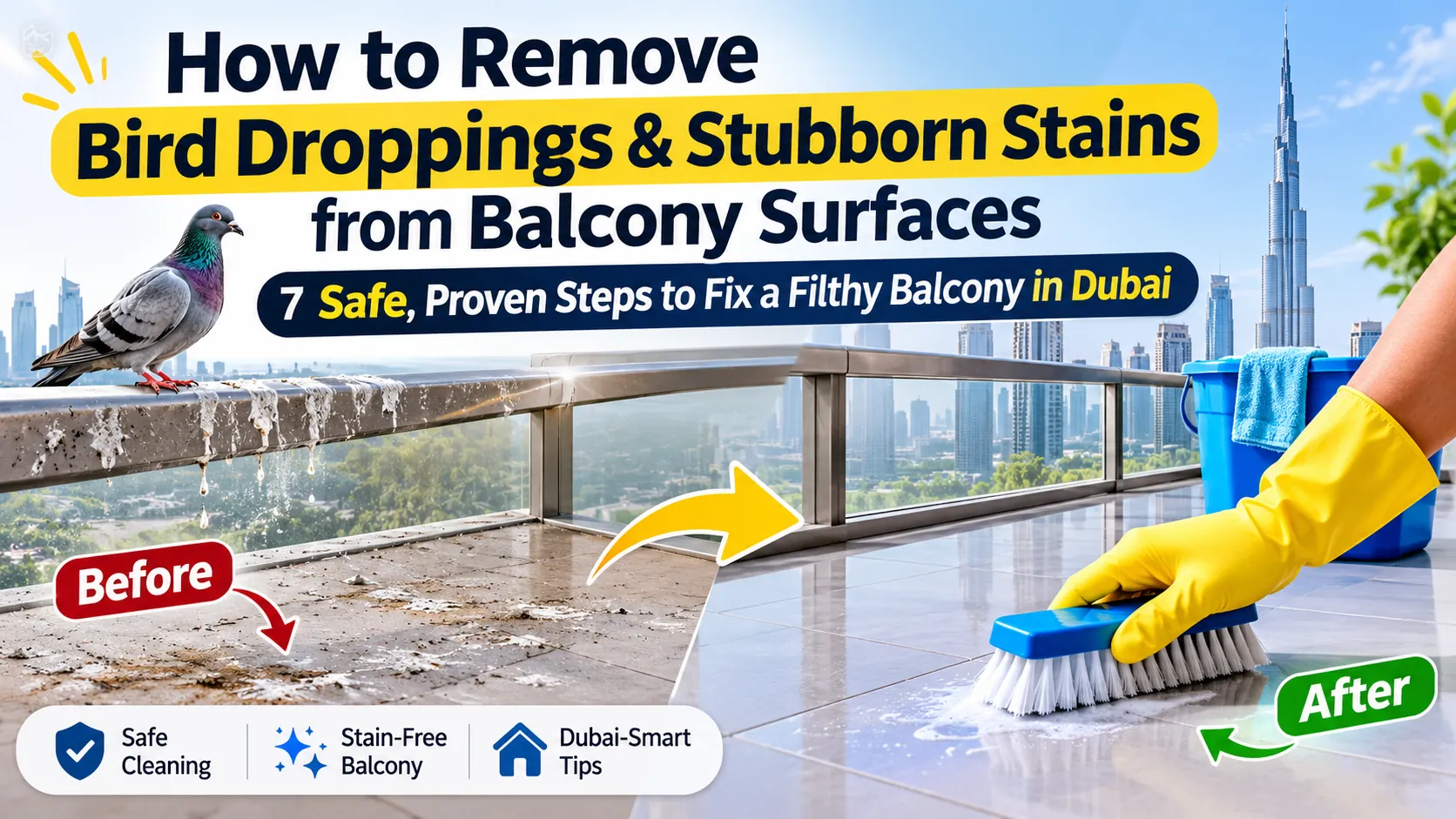
You step onto your balcony with a cup of coffee, ready to enjoy the Dubai skyline. Then you see it. White and grey streaks on the tiles, crusty patches on the railing, and a smell that hits you before you sit down. If that sounds familiar, you are in the right place. This guide shows you How to Remove Bird Droppings and Stubborn Stains from Balcony Surfaces: 7 Safe, Proven Steps to Fix a Filthy Balcony in Dubai, without damaging your tiles, grout, glass, or railings.
Pigeons, mynas, and other city birds love high-rise balconies. They offer shade, shelter, and a safe place to perch. The result is a pigeon mess on your balcony that gets worse every week. At Eco Guardians, we see this problem in apartments from Dubai Marina to Business Bay and in villas across Arabian Ranches. Our team has learned what works, what fails, and what quietly ruins a good surface. This guide shares those lessons in plain language, so you can clean with confidence. If you would rather leave it to experts, our professional Cleaning team is always ready to help.
By the end of this article, you will know how to clean bird poop from your balcony, how to treat stubborn stains, how to remove odors, and how to stop the birds from coming back.
Why Bird Droppings Are So Hard on Dubai Balconies
Bird droppings look harmless, but they are a tough mix of waste and chemistry. Understanding them makes cleaning much easier.
What Bird Droppings Are Made Of
Birds do not pass urine and feces separately. Both leave the body together. That is why droppings look white and chalky with a darker center. The white part is uric acid, a very concentrated compound. Droppings also contain ammonia, which can cause a bleach-like fading effect on some surfaces if left too long.
Because of this, droppings are acidic. Typical droppings sit around pH 3.5 to 4.5. That is strong enough to dull paint, etch natural stone, and leave yellow shadows on porous tiles.
How Dubai’s Heat Makes It Worse
Dubai’s climate turns a small problem into a stubborn one. In summer, balcony surfaces can get extremely hot. Heat bakes fresh droppings into a hard crust. Uric acid crystals bond to the surface and become almost cement-like. A dropping that wipes off in 30 seconds on day one can fuse to the tile after two or three days in the sun.
Dust and fine sand add another layer. They stick to wet droppings and create gritty, stained patches. Humidity in coastal areas also encourages mildew and a musty smell.
The Health Risks You Should Know
This is more than a cosmetic issue. Health experts note that dried droppings can carry bacteria such as E. coli and Salmonella. They can also carry fungi such as Histoplasma, which can cause lung infections when dried waste turns to dust and becomes airborne. You can read more about this fungus on the CDC’s histoplasmosis page.
For a small, fresh patch, the risk is low if you wear gloves and wash your hands. For thick, old layers, the risk is higher. That is why balcony hygiene and sanitation matter, especially if you have children, pets, or family members with lung or immune problems.
Safety First: Protect Yourself Before You Clean
Before you touch a single stain, set up safely. Safe cleaning of bird waste starts with protection.
Your Safety Checklist
- Wear waterproof gloves so you never touch droppings directly.
- Put on eye protection to avoid splashes.
- Use a mask if the droppings are dry or flaky.
- Keep children and pets away until the balcony is clean and dry.
- Keep your cleaning tools separate from kitchen items.
- Wash your hands well when you finish.
The Golden Rule: Keep Droppings Wet
Never dry sweep or wire-brush dried droppings. This turns crusts into airborne dust and spores. Always wet the area first, and keep it damp while you work. This one habit makes your cleaning safer and easier.
What You Need: Tools and Supplies
| Item | Purpose | Best For |
| Waterproof gloves and mask | Personal protection | All jobs |
| Plastic scraper | Lifts crusts gently | Tiles, stone, glass |
| Soft-bristle brush | Scrubs without scratching | Tiles, railings, furniture |
| Old toothbrush | Reaches grout lines | Grout and corners |
| Microfiber cloths | Wipes glass and metal | Glass panels, railings |
| Melamine sponge | Light scrubbing on stains | Tiles and painted surfaces |
| Spray bottle | Applies cleaning solution | All jobs |
| Garden hose or buckets | Rinsing | All jobs |
| Dish soap, white vinegar, baking soda | Natural cleaning solutions | Most surfaces |
| Bin bags | Safe disposal | All jobs |
How to Remove Bird Droppings and Stubborn Stains from Balcony Surfaces: 7 Safe, Proven Steps to Fix a Filthy Balcony in Dubai
Now for the main process. Follow these seven steps in order. They work on most balconies, and we explain how to adjust them for each surface later in this guide.
Step 1: Clear the Balcony and Prepare the Area
Start by removing furniture, plants, mats, and anything else on the floor. This gives you full access and stops cleaning water from soaking your belongings.
If the balcony has been unused for a while, check for nesting material such as twigs, feathers, or straw. In the UAE, certain birds and active nests may be protected, so if you find a nest with eggs or chicks, pause and seek advice before removing it. Our team at Eco Guardians can guide you on safe and responsible options.
Quick prep checklist:
- Move furniture and cushions indoors.
- Cover nearby plants with a sheet.
- Check where the water will drain.
- Wear your gloves, mask, and eye protection.
Step 2: Lift Loose Waste Without Smearing
For fresh droppings, gently lift as much as you can with a folded paper towel or a plastic scraper. Think of it as lifting frosting off a cake. Do not rub. Rubbing pushes the acid deeper into pores and spreads the stain.
Bag the waste, tie the bag, and put it in the bin. Do not rinse everything straight down the drain or onto the balcony below. This is also good manners in a shared building.
For dried droppings, do not scrape yet. Move on to Step 3.
Step 3: Soak and Soften the Stain
This step is the secret to removing dried bird droppings. Soaking softens the crust and begins to dissolve the uric acid, so you do not have to scrub hard.
The Basic Soak
Mix warm water with a little mild dish soap. Spray or pour it over the droppings until they are fully wet. Let it sit for 10 to 15 minutes. Re-wet the area if it dries out. In Dubai’s heat, this happens fast, so work in the early morning or late afternoon, or in a shaded part of the balcony.
The Vinegar Option
A half-and-half mix of white vinegar and water can break down uric acid very well. In side-by-side home tests, plain vinegar dissolved droppings with almost no scrubbing, while dish soap alone needed more effort and plain water barely helped. The only downside is the smell, which fades once the surface dries.
Important: Do not use vinegar on marble, limestone, travertine, or other acid-sensitive natural stone. Acid can etch and dull these surfaces.
The Baking Soda Boost
For crusted spots, make a paste with baking soda and a little water. Leave it for about 10 minutes. It adds gentle abrasion and helps lift the stain.
Step 4: Scrub Gently With the Right Brush
Once the droppings are soft, scrub with a soft-bristle brush or an old toothbrush. Use steady, controlled pressure. Do not gouge or dig.
- On tiles, scrub in small circles.
- On wood or composite decking, scrub with the grain.
- On grout, use a toothbrush along the line.
- On painted or coated surfaces, use a soft cloth or melamine sponge.
If the stain does not move, do not press harder. Repeat the soak instead. Professionals often repeat the process two or three times on old stains. It feels slow, but it protects the surface.
Step 5: Treat Stubborn Stains and Discoloration
Some marks stay behind after the droppings are gone. These are the stubborn balcony stains: yellow shadows, grey patches, and dark spots in grout.
Option A: Surface-Safe Cleaner
Use a general-purpose balcony or patio cleaner that is safe for your surface. Dilute it as the label says, apply it generously, and let it sit for 10 to 15 minutes. Then scrub gently and rinse. Always test a small hidden spot first.
Option B: Enzymatic Cleaner
Enzymatic cleaners break down organic waste and are often kinder to surfaces. They also help with odors. They are a good choice for porous tiles and outdoor stone.
Option C: Bleach Poultice (Last Resort, Stone Only)
For old yellow stains on sturdy stone, some stone-care guides describe a bleach poultice. A cloth soaked in diluted bleach is left over the stain, then rinsed away. Bleach can lighten stone unevenly and harm plants, so only use it carefully and after a test patch. Never mix bleach with vinegar or ammonia-based cleaners. The fumes are dangerous.
Step 6: Rinse, Dry, and Inspect
Rinse the whole area with clean water from a hose or bucket. Leftover soap or cleaner attracts dirt and can leave a sticky film.
Let the balcony air dry. Then inspect it twice: once while damp and again when fully dry. Some faint stains only show up after drying. If you see marks, repeat Steps 3 to 5 on that spot only. There is no need to redo the whole balcony.
Tip: Rinse water should flow toward the drain, not over the edge. Dripping dirty water onto a neighbor’s balcony is a common complaint in apartment buildings.
Step 7: Protect the Surface and Prevent Repeat Mess
Cleaning is only half the job. Birds return to places that smell like droppings, so a thorough clean resets the signal. Once your balcony is dry:
- Reseal natural stone or porous tiles if needed.
- Install bird deterrents (see our prevention section below).
- Make a quick weekly rinse part of your routine.
Cleaning Different Balcony Surfaces: A Quick Guide
Not every balcony is the same. Here is how to adjust your method.
| Surface | Safe Method | What to Avoid |
| Ceramic or porcelain tile | Soap soak, soft brush, vinegar mix (diluted) | Metal scrapers, harsh acids |
| Grout | Baking soda paste, toothbrush, enzymatic cleaner | Wire brushes, strong bleach |
| Marble, limestone, travertine | Stone-safe cleaner, blotting, resealing | Vinegar, acidic cleaners |
| Concrete | Soak, stiff brush, patio cleaner | Dry brushing |
| Glass panels | Damp cloth, glass cleaner, microfiber | Abrasive pads, razor blades |
| Metal railings | Warm soapy water, soft cloth | Pressure washers, scouring pads |
| Wood or composite decking | Mild soap, soft brush, with the grain | Heavy scraping, long chemical contact |
| Fabric cushions | Damp cloth, wash removable covers | Hard scrubbing |
Balcony Tile Cleaning
Tiles are the most common balcony surface in Dubai. Glazed ceramic and porcelain are quite tough, so the soak-and-scrub method works well. The weak spot is the grout. Grout is porous, so it absorbs droppings and stains. Use a toothbrush and baking soda paste along grout lines, and rinse well. A strong balcony grout stain removal routine keeps tiles looking new.
Bird Droppings on Glass Balcony Panels
Glass balconies look stunning, but droppings show up fast. Soften the waste with a damp cloth first. Dry wiping can scratch glass because bird droppings often contain tiny gritty particles. Then use glass cleaner or mild soapy water and a microfiber cloth. Finish with a clean, dry cloth to prevent streaks. This is how to handle cleaning balcony glass panels safely.
Bird Droppings on Metal Railings
Metal and powder-coated railings need a gentle hand. Acidic droppings can dull the finish and cause pitting. Soften the waste, wipe with warm soapy water, and dry with a soft cloth. Skip pressure washers and scouring pads. For stubborn spots, a baking soda solution works well. This keeps bird droppings on metal railings from becoming permanent marks.
Natural Stone Balconies
Stone is beautiful but sensitive. Use only stone-safe cleaners. Blot, do not scrape. After cleaning, consider resealing the surface. A good sealer acts as a barrier and slows future staining. If you are not sure what type of stone you have, ask a professional before you start.
Removing Bird Poop Odor From Your Balcony
A clean look is not enough if the smell lingers. Odors come from ammonia and organic residue that soaks into porous surfaces.
Steps for Odor Removal
- Remove all visible waste first.
- Wash with detergent and water, or an enzymatic cleaner.
- Rinse thoroughly so no residue remains.
- Let the balcony dry completely, ideally in sunlight and airflow.
- Repeat on porous areas like grout, which hold smells longest.
For bird poop odor removal on fabrics, wash removable covers according to the care label. Let them dry fully in the sun to prevent mildew and a musty smell. Dabbing foam upholstery cleaner on non-removable cushions can also help.
If a smell returns after a few days, droppings may have soaked into a hidden spot such as a drain, corner, or under a planter. Check those areas carefully.
Natural Cleaning Solutions vs. Commercial Products
Many Dubai residents ask which is better. The truth is that each has a place. Start with the mildest option and increase strength only when needed.
| Cleaner | Strengths | Limits |
| Warm water and dish soap | Gentle, cheap, safe on most surfaces | May need extra scrubbing; needs thorough rinsing |
| White vinegar and water (1:1) | Breaks down uric acid fast | Strong smell; unsafe on natural stone |
| Baking soda paste | Gentle abrasion for crusts | Can scratch soft finishes if over-scrubbed |
| Seltzer water | Mild fizz helps loosen stains | Often needs scrubbing afterward |
| Enzymatic cleaner | Targets organic waste and odors | Takes a little longer to work |
| Patio or balcony cleaner | Deeper cleaning on porous surfaces | Must match your surface; test first |
| Diluted bleach | Lifts old discoloration | Can fade stone and harm plants; last resort |
Good natural balcony cleaning solutions handle most fresh messes. For old, set-in stains, a quality balcony cleaning product designed for your surface usually gives better results.
Pressure Washing Your Balcony: Yes or No?
Balcony pressure washing is a hot topic. Some experts allow it on tough, sound surfaces after the droppings are soaked. Others warn that it can damage mortar, soft stone, and wood. It can also spray contaminated mist into the air and onto neighbors.
If you decide to use one, follow these rules:
- Pre-soak the droppings first.
- Use the widest fan setting.
- Stand several feet back.
- Keep the surface wet at all times.
- Never use it on old grout, loose mortar, hairline cracks, or glass fittings.
- Check your building rules. Many Dubai towers do not allow pressure washing on upper-floor balconies because of water runoff.
For most apartment balconies, a hose, brush, and patience are safer and just as effective.
7 Common Mistakes That Make Balcony Stains Worse
Even careful people slip up. Avoid these mistakes:
- Dry scrubbing. It makes dust and pushes acid deeper.
- Using strong chemicals too early. Start mild.
- Using metal tools. They scratch tiles, glass, and railings.
- Skipping the soak. Dwell time does the hard work.
- Mixing cleaners. Vinegar and bleach create harmful fumes.
- Ignoring the grout. Stains and smells hide there.
- Waiting too long. Fresh droppings are always easier to remove.
How to Stop Pigeons From Making Your Balcony Dirty Again
Prevention saves time, money, and effort. Pigeons repeat their habits, so the goal is to make your balcony less inviting.
Physical Deterrents
- Bird spikes on ledges, railings, and beams where birds like to perch.
- Bird netting across open balcony areas. It is one of the most reliable methods when installed properly.
- Reflective tape or hanging reflective objects that flash in the sun.
- Predator decoys, such as owl figures. Move them often, or birds learn to ignore them.
Habit Changes
- Remove food sources, including open bins, pet food, and spilled seeds.
- Do not leave standing water in trays or pots.
- Remove nesting materials as soon as you see them, unless a nest is active.
- Keep surfaces clean, since droppings attract more birds.
- Rotate your deterrents. Birds adapt to anything that never changes.
A Simple Balcony Maintenance Routine for Dubai
| Frequency | Task |
| Daily | Quick check; remove fresh droppings straight away |
| Weekly | Rinse tiles and wipe railings and glass |
| Monthly | Scrub grout and check deterrents |
| Every 6 months | Deep clean and inspect sealants |
A regular balcony maintenance in Dubai habit means you never face a huge cleanup. It also helps your Dubai balcony cleaning tips work longer.
When to Call a Professional Cleaning Service
DIY works well for light to moderate spotting. But some jobs are better left to experts. Call a professional if:
- Droppings cover large areas in thick layers.
- The balcony is near air intakes, windows, or an enclosed space.
- Someone at home has asthma, a lung condition, or a weak immune system.
- Stains are old and have not responded to your efforts.
- You have delicate natural stone or expensive glass.
- You cannot safely reach high railings or outer glass.
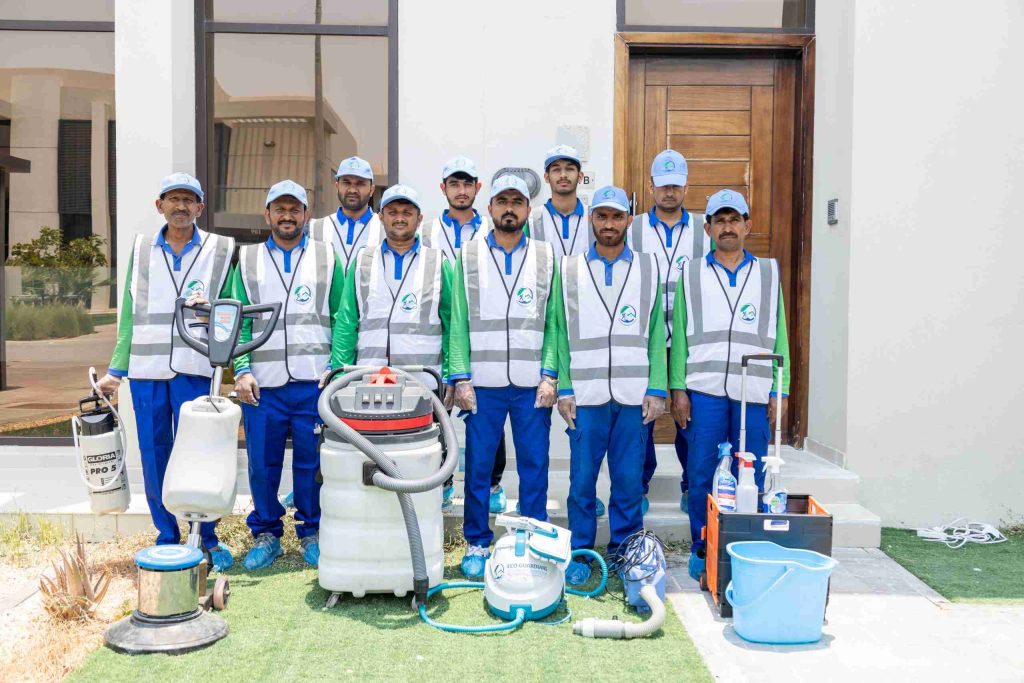
Professional crews bring protective gear, safe cleaners, and proper disposal methods. They also work faster and avoid damage. At Eco Guardians, our team offers professional balcony cleaning services in Dubai, including pigeon droppings cleanup in Dubai, disinfecting, and prevention advice. We use surface-safe products and proven methods that protect your tiles, glass, and railings.
DIY or Professional: Which Is the Right Choice for You?
Many homeowners wonder whether to clean the balcony themselves or hire someone. The answer depends on the size of the problem, your time, and your budget. We explored this question in depth in our previous guide, DIY Balcony Cleaning vs. Professional Balcony Cleaning: Which Is Better? The Ultimate Dubai Guide to 7 Costly Mistakes & Proven Results. It compares costs, risks, and results, so you can decide with confidence. If you have followed the steps above and still see stains or smell odors, that guide will help you decide whether it is time to bring in the pros.
FAQ’s
1. How do you remove dried bird droppings from balcony tiles?
Soak dried droppings with warm water and mild dish soap for 10–15 minutes, then gently scrub with a soft brush and rinse thoroughly.
2. What is the best way to remove stubborn stains from balcony surfaces?
Use a surface-safe cleaner, let it sit briefly, and scrub gently with a non-abrasive brush. Avoid harsh chemicals that may damage tiles, grout, or stone.
3. Is vinegar safe for cleaning bird droppings from balconies?
Diluted white vinegar can help clean some surfaces, but avoid using it on marble, limestone, or other acid-sensitive natural stones.
4. How can I remove bird droppings from balcony glass and railings?
Soften the droppings with a damp cloth, then use glass cleaner or mild soapy water and a microfiber cloth to remove residue without scratching.
5. How do I remove bird droppings stains and bad odors from my balcony?
Remove the waste, wash the affected area with detergent and water, rinse thoroughly, and allow it to dry completely to reduce lingering odors.
6. How can I prevent pigeons from making my balcony dirty again in Dubai?
Install bird deterrent spikes or netting where appropriate, remove food sources, keep surfaces clean, and avoid leaving standing water or nesting materials.
Conclusion:
A dirty balcony does not have to stay that way. With the right tools, a little patience, and the right method for each surface, you can restore your outdoor space and keep it fresh. Remember the key ideas: wear protection, keep droppings wet, soak before you scrub, choose the mildest effective cleaner, and finish with prevention. Now you know How to Remove Bird Droppings and Stubborn Stains from Balcony Surfaces: 7 Safe, Proven Steps to Fix a Filthy Balcony in Dubai, and you can put it into action today.
If the job feels too big, too risky, or too time-consuming, Eco Guardians is here to help. Contact our team for safe, thorough, and reliable balcony cleaning in Dubai, and enjoy your view again.