Quick Facts
| Detail | Info |
|---|---|
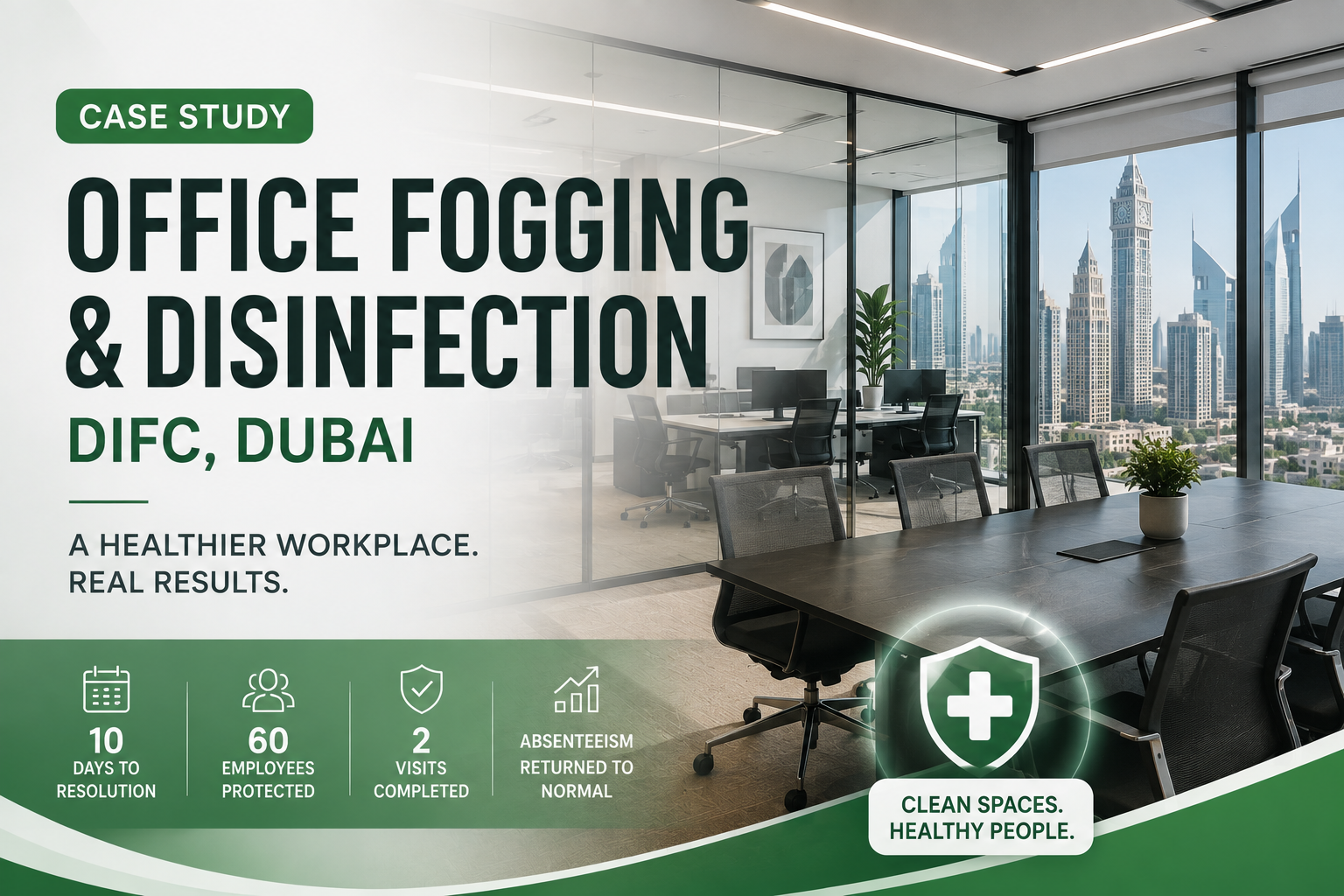
| Location | DIFC, Dubai (multi tenant corporate tower, one floor) |
| Property type | Corporate office, approximately 60 employees |
| Problem | Flu outbreak among staff, high absenteeism over several weeks |
| Duration of issue | 3 weeks, worsening with each week |
| Visits required | 1 initial visit, plus 1 follow up |
| Timeline to resolution | 10 days |
| Result | Absenteeism returned to normal levels within two weeks of treatment |
The Problem
A corporate office in DIFC experienced a wave of flu symptoms among staff over a three week period. What began as two or three sick days a week spread quickly. By the third week, nearly a fifth of the office was out sick at any given time. Management noticed the pattern lined up with high touch shared spaces: the meeting rooms, the shared kitchen, and the reception desk saw the heaviest use during the same period. The office had a standard daily cleaning routine, but this only covered visible surfaces and floors. It did not include targeted disinfection of shared equipment like keyboards, phones, or the coffee machine, which staff used constantly throughout the day.
Inspection and Assessment
Our team walked the full floor before recommending a treatment plan. Consequently, we identified three areas needing focused attention.
High Touch Surfaces Outside the Daily Cleaning Scope
Desks, doorknobs, light switches, shared keyboards, and conference room tables saw frequent contact but were not part of the office’s existing cleaning contract. These surfaces are exactly the kind the U.S. CDC’s guidance on cleaning and disinfecting identifies as priority targets during an illness outbreak, since they carry germs between people more directly than floors or walls.
Shared Equipment in the Kitchen and Breakroom
The shared coffee machine, refrigerator handles, and microwave buttons saw constant use by nearly every employee on the floor. None of these were part of routine daily cleaning, which typically focuses on general tidiness rather than targeted disinfection.
Air Circulation in Enclosed Meeting Rooms
The office’s smaller meeting rooms had limited ventilation and saw back to back use throughout the day. This matters because respiratory illness spreads more easily in enclosed, poorly ventilated spaces, which is consistent with general workplace health guidance from bodies like the World Health Organization.
Treatment Applied
Based on the assessment, our team carried out a two part treatment plan.
- Electrostatic surface disinfection. We used electrostatic sprayers to apply disinfectant across all high touch surfaces, including desks, doorknobs, light switches, keyboards, phones, and conference room tables.
- Fogging treatment for enclosed spaces. We fogged the meeting rooms and breakroom using equipment designed to reach surfaces that manual wiping typically misses, including the underside of tables and equipment crevices.
- Kitchen and shared equipment focus. We gave the shared kitchen area, including the coffee machine exterior, refrigerator handles, and microwave buttons, targeted attention beyond the standard cleaning routine.
- Follow up visit after 10 days. We returned to repeat the treatment and confirm no new outbreak signs had appeared.
We used disinfectant products that fall within the category the U.S. EPA’s List N covers for effectiveness against common pathogens, though we recommend confirming the exact product used on any specific job against the current List N directly, since product approvals are updated periodically.
Result
Absenteeism at the office returned to its normal baseline within two weeks of the first treatment. Staff reported the shared kitchen area in particular felt noticeably cleaner, and management noted no further outbreak pattern in the weeks that followed
Is Your Office Facing Something Similar?
Office illness outbreaks often follow the same pattern: routine cleaning keeps the space looking tidy, but it does not necessarily reach the surfaces employees touch most often throughout the day. Shared equipment like coffee machines, keyboards, and conference room tables can carry germs between staff long after the visible surfaces look clean. If your office has seen a spike in sick days, particularly one that seems to spread from person to person over a short period, it is worth scheduling a targeted disinfection assessment rather than waiting for daily cleaning to catch up on its own.
Related Services
Eco Guardians’ office disinfection service and fogging services cover the treatment described above. Our broader disinfection and sanitization services page outlines the full range of options for homes and businesses, and our guide on what to expect from professional office disinfection walks through the process in more detail. For offices that also need regular upkeep between disinfection visits, our monthly office cleaning service is worth pairing with a one time or recurring disinfection program. A full list of areas we serve is available on our locations page.
FAQ
Understanding the Service
What is the difference between regular office cleaning and disinfection? Regular cleaning removes visible dirt and keeps a space tidy. Disinfection specifically targets germs, viruses, and bacteria on surfaces, particularly high touch points that daily cleaning routines often miss.
How does fogging work compared to manual surface wiping? Fogging disperses a fine disinfectant mist that reaches crevices, undersides, and hard to access areas that manual wiping typically misses. It works best alongside, not instead of, targeted surface disinfection on desks and equipment.
How often should an office schedule professional disinfection? This depends on office size, foot traffic, and whether there has been a recent illness outbreak. Some offices schedule quarterly disinfection as a preventive measure, while others book it reactively after noticing a spike in sick days.
Practical Questions
Do employees need to leave the office during fogging treatment? Yes, typically. Fogging requires the treated area to be clear of people during application and for a short period afterward, so scheduling it outside working hours or during a planned closure usually works best.
Which areas of an office benefit most from disinfection during flu season? Shared kitchens, conference rooms, reception desks, and shared equipment like keyboards and phones tend to see the most benefit, since these are the surfaces most employees touch throughout the day.
Can disinfection completely prevent illness from spreading in an office? No single measure guarantees this. Disinfection reduces the germ load on shared surfaces, which lowers transmission risk, but it works best combined with basic measures like handwashing and staying home when sick.