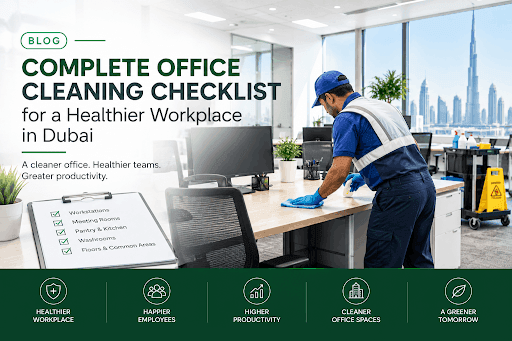
A clean office does more than improve appearances. Proper Office Cleaning helps create a healthier environment, supports employee comfort, and keeps shared spaces pleasant for staff and visitors.
Offices in Dubai often experience heavy foot traffic, dust buildup, and frequent use of shared facilities. As a result, regular workplace cleaning requires a clear routine rather than occasional surface cleaning.
This complete office cleaning checklist covers the main areas that should be cleaned daily, weekly, and periodically. It can help businesses create a more consistent cleaning routine and identify areas that are often overlooked.
Why a Regular Office Cleaning Routine Matters
Employees spend many hours each week at their workplace. During that time, they touch desks, keyboards, door handles, meeting room equipment, pantry surfaces, and washroom facilities.
Without a regular cleaning routine, dust, dirt, food residue, and general clutter can quickly build up. Shared surfaces may also require more frequent attention because multiple people use them throughout the day.
A structured Office Cleaning plan helps businesses maintain consistency. Instead of cleaning only when an area looks dirty, teams can follow a schedule based on how often different spaces are used.
Regular cleaning can also help with:
- Maintaining a professional appearance
- Reducing visible dust and clutter
- Keeping shared spaces more pleasant
- Supporting better workplace hygiene
- Improving the experience of employees and visitors
- Preventing neglected areas from becoming harder to clean
The exact cleaning needs of an office depend on its size, layout, number of employees, and daily activity. However, most workplaces benefit from dividing cleaning tasks into daily, weekly, and periodic routines.
Daily Office Cleaning Checklist
Daily cleaning focuses on areas that receive regular use. These spaces can become untidy quickly, especially in busy offices with employees, clients, and visitors.
Workstations and Common Surfaces
Desks should be kept reasonably clean and free from unnecessary clutter. Cleaning teams can wipe shared work surfaces, reception counters, and common tables according to the workplace routine.
High touch surfaces should also receive regular attention. These may include:
- Door handles
- Light switches
- Lift buttons
- Shared phones
- Printer and copier controls
- Reception counters
- Meeting room controls
Individual employees may also be responsible for keeping personal desks organised. However, shared surfaces usually need a consistent workplace cleaning process.
Floors and Walkways
Floors often collect dust, dirt, and debris throughout the day. Reception areas, corridors, entrances, and other high traffic spaces usually require daily sweeping, vacuuming, or mopping depending on the flooring material.
Cleaning staff should also check for visible spills and remove them promptly. This helps maintain the appearance of the office and reduces the chance of slips in busy areas.
In Dubai, dust can enter offices through entrances, windows, and frequent movement between indoor and outdoor spaces. Therefore, floor maintenance often needs more regular attention than businesses expect.
Pantry and Kitchen Areas
Office pantries can quickly become one of the busiest shared spaces. Food preparation and regular use of appliances make daily cleaning especially important.
The daily checklist should include:
- Wiping countertops
- Cleaning dining tables
- Removing food waste
- Emptying rubbish bins when needed
- Cleaning sinks
- Checking for spills
- Wiping frequently touched appliance surfaces
Employees should also avoid leaving food or dirty dishes for long periods. Clear workplace habits can make commercial cleaning routines more effective.
Weekly Workplace Cleaning Tasks
Weekly cleaning allows staff or professional cleaners to focus on areas that may not need attention every day but can collect dirt over time.
Meeting Rooms and Shared Equipment
Meeting rooms often contain tables, chairs, screens, remote controls, and other shared equipment. These areas should be cleaned regularly because they may be used by different employees and visitors throughout the week.
A weekly routine can include wiping furniture, cleaning glass surfaces, vacuuming carpets, and checking corners for dust buildup.
Shared equipment should also be inspected. For example, presentation remotes, conference tables, and commonly used controls may require careful cleaning according to the manufacturer’s instructions.
Windows and Glass Partitions
Glass doors and partitions can show fingerprints, dust, and smudges quickly. Weekly cleaning can help maintain a professional appearance, especially around reception areas and meeting rooms.
Interior glass surfaces should be cleaned with products suitable for the material. Large windows or external glass may require a different cleaning schedule depending on the building and access arrangements.
Dusting Less Obvious Areas
Some areas are easy to overlook during daily cleaning. Weekly cleaning should include checking:
- Shelves
- Cabinet tops
- Window sills
- Skirting areas
- Corners
- Decorative items
- Air vents where accessible
Dust can accumulate in these locations even when desks and floors appear clean. Regular attention helps maintain a more complete Office Cleaning routine.
Washroom Cleaning Checklist
Office washrooms require consistent cleaning because they are shared by multiple people every day. The cleaning frequency should reflect the number of employees and visitors using the facilities.
Daily tasks may include cleaning toilets, sinks, mirrors, floors, and frequently touched surfaces. Waste bins should also be checked and emptied when required.
Supplies should remain available throughout the day. These may include soap, toilet paper, hand towels, or other hygiene products used by the workplace.
A more detailed cleaning routine may also include checking tile surfaces, grout areas, dispensers, and fixtures.
Cleaning products should be used according to their instructions. Businesses should also ensure that cleaners follow appropriate safety procedures when handling cleaning chemicals.
Monthly and Periodic Commercial Cleaning Tasks
Some cleaning tasks do not need daily or weekly attention. However, they should still form part of a planned commercial cleaning schedule.
Deep Cleaning Carpets and Upholstery
Carpets and upholstered office furniture can collect dust and everyday debris over time. The right cleaning frequency depends on foot traffic, office use, and the type of material.
High traffic areas may require more frequent professional cleaning. Offices should also address visible stains as soon as possible because older stains can become more difficult to remove.
Cleaning Air Vents and Hard to Reach Areas
Some areas are difficult to reach during routine cleaning. These may include high shelves, ceiling fixtures, accessible vents, and spaces behind furniture.
Periodic cleaning helps prevent these areas from becoming long neglected. However, businesses should use trained professionals when a task requires specialist equipment or safe access procedures.
Storage Rooms and Forgotten Spaces
Storage rooms can become cluttered over time. Businesses should periodically review these spaces and remove unnecessary waste or unused items.
Cleaning should include floors, shelves, corners, and accessible surfaces. A more organised storage area can also make future workplace cleaning easier.
How to Create an Office Cleaning Schedule
A checklist works best when it becomes part of a regular schedule. Start by dividing the office into separate areas, such as workstations, meeting rooms, washrooms, pantry spaces, reception, and storage areas.
Then assign cleaning tasks based on how often each area is used.
A simple schedule may include:
- Daily tasks: High touch surfaces, floors, bins, pantry areas, and washrooms.
- Weekly tasks: Meeting rooms, glass partitions, detailed dusting, and shared equipment.
- Monthly tasks: Deep cleaning selected areas, storage spaces, and harder to reach surfaces.
- Periodic tasks: Specialist cleaning for carpets, upholstery, ducts, windows, or other areas based on workplace needs.
The schedule should also be reviewed regularly. If an office becomes busier or changes its layout, the cleaning routine may need adjustment.
Signs Your Office Cleaning Routine Needs Improvement
Even a regular schedule may leave gaps. Businesses should occasionally review the results of their cleaning routine.
Common signs include visible dust returning quickly, unpleasant odours, overflowing bins, dirty shared facilities, stained carpets, or frequently overlooked corners.
Employee feedback can also help identify problem areas. For example, staff may notice that the pantry requires more frequent cleaning or that a meeting room receives heavy daily use.
A good Office Cleaning routine should reflect how people actually use the workplace. Therefore, businesses should adjust their checklist instead of following the same schedule without review.
Final Thoughts
A healthier and more comfortable workplace starts with consistent cleaning habits. Daily maintenance, weekly tasks, and periodic deep cleaning all play different roles in keeping an office clean.
This office cleaning checklist can provide a useful starting point for businesses in Dubai. However, each workplace has different requirements based on its size, layout, staff numbers, and level of activity.
By following a clear workplace cleaning schedule and paying attention to frequently used areas, businesses can maintain a cleaner and more organised environment for employees and visitors.
FAQ
1. What should be included in an office cleaning checklist?
An office cleaning checklist should cover workstations, high touch surfaces, floors, washrooms, pantry areas, meeting rooms, bins, windows, and less frequently used spaces. Tasks should be divided into daily, weekly, and periodic cleaning schedules.
2. How often should an office be professionally cleaned?
The ideal frequency depends on office size, employee numbers, visitor traffic, and how the space is used. Busy workplaces may need daily routine cleaning, while specialist commercial cleaning tasks can be scheduled periodically.
3. What are the most important areas to clean in an office?
High traffic and shared areas usually require the most frequent attention. These include entrances, washrooms, pantry spaces, meeting rooms, shared desks, door handles, floors, and frequently touched equipment.
4. Why is regular workplace cleaning important?
Regular workplace cleaning helps control dust, dirt, clutter, and waste in shared spaces. It also helps maintain a more professional and comfortable environment for employees and visitors.
5. What is the difference between routine office cleaning and deep cleaning?
Routine office cleaning focuses on regular maintenance, such as floors, surfaces, bins, and washrooms. Deep cleaning involves more detailed work on areas that receive less frequent attention, including carpets, upholstery, difficult to reach spaces, and accumulated dirt.