Quick Answer
After rain in Abu Dhabi, mold risk rises quickly because indoor humidity can climb past the safe range even without a visible leak. The working threshold is straightforward: keep indoor relative humidity between 40 and 55 percent, and treat anything above 60 percent sustained for more than 48 hours as a real risk. The checklist below covers the areas that develop mold fastest after rain: bathroom grout, AC drainage lines, window and door seals, wardrobes, and any ceiling or wall area near plumbing or roofing. If a leak or drainage issue is the cause and you rent your home, Abu Dhabi’s tenancy framework through ADREC generally places maintenance responsibility on the landlord, so documenting the issue matters as much as cleaning it. Eco Guardians provides post-rain deep cleaning and mold treatment across Abu Dhabi.
Key Takeaways
- Keep indoor relative humidity between 40 and 55 percent. Sustained readings above 60 percent for more than 48 hours represent real mold risk, not just discomfort.
- A blocked AC drainage line is one of the most common, and most missed, causes of post-rain mold, since it can leak inside a wall cavity without an obvious sign.
- Bathroom grout is typically the first place mold establishes itself in UAE homes, given constant moisture exposure.
- Musty smell, sneezing, itchy eyes, and a mild night cough are early warning signs doctors in the UAE associate with mold and allergen exposure after rain, often before mold becomes visible.
- Under Abu Dhabi’s tenancy framework, AC drainage and structural maintenance generally fall to the landlord in rented properties, though this should be confirmed against your specific tenancy contract.
- A hygrometer is a worthwhile, low-cost tool for catching a humidity spike before mold actually develops.
Why Abu Dhabi Homes Are Especially Vulnerable After Rain
Abu Dhabi’s coastal humidity combines with sudden rain events to create a fast-moving risk window that many homeowners underestimate. Even a short rain spell can push outdoor humidity into the 70 to 75 percent range, and that moisture works its way indoors through open windows, wet surfaces tracked in, and AC systems working harder to manage the shift. Unlike a slow seasonal humidity increase, a rain event creates a sudden spike, and mold does not need weeks to start developing. Mold only needs a moisture source and a food source, such as dust, wood, or wallpaper glue, and both are already present in most homes.
The Humidity Threshold That Actually Matters
| Relative Humidity | Risk Level | Action |
|---|---|---|
| 40 to 55 percent | Safe range | Maintain with normal AC operation |
| 55 to 60 percent | Watch zone | Monitor closely, consider a dehumidifier in affected rooms |
| Above 60 percent, under 48 hours | Elevated | Address ventilation and AC settings promptly |
| Above 60 percent, sustained over 48 hours | Real mold risk | Investigate the source directly, do not wait |
A digital hygrometer, placed in a few key rooms rather than just one central area, is the single most useful tool for catching a problem before it becomes visible mold. High-risk zones such as bathrooms and closets often run several points higher than the main living area.
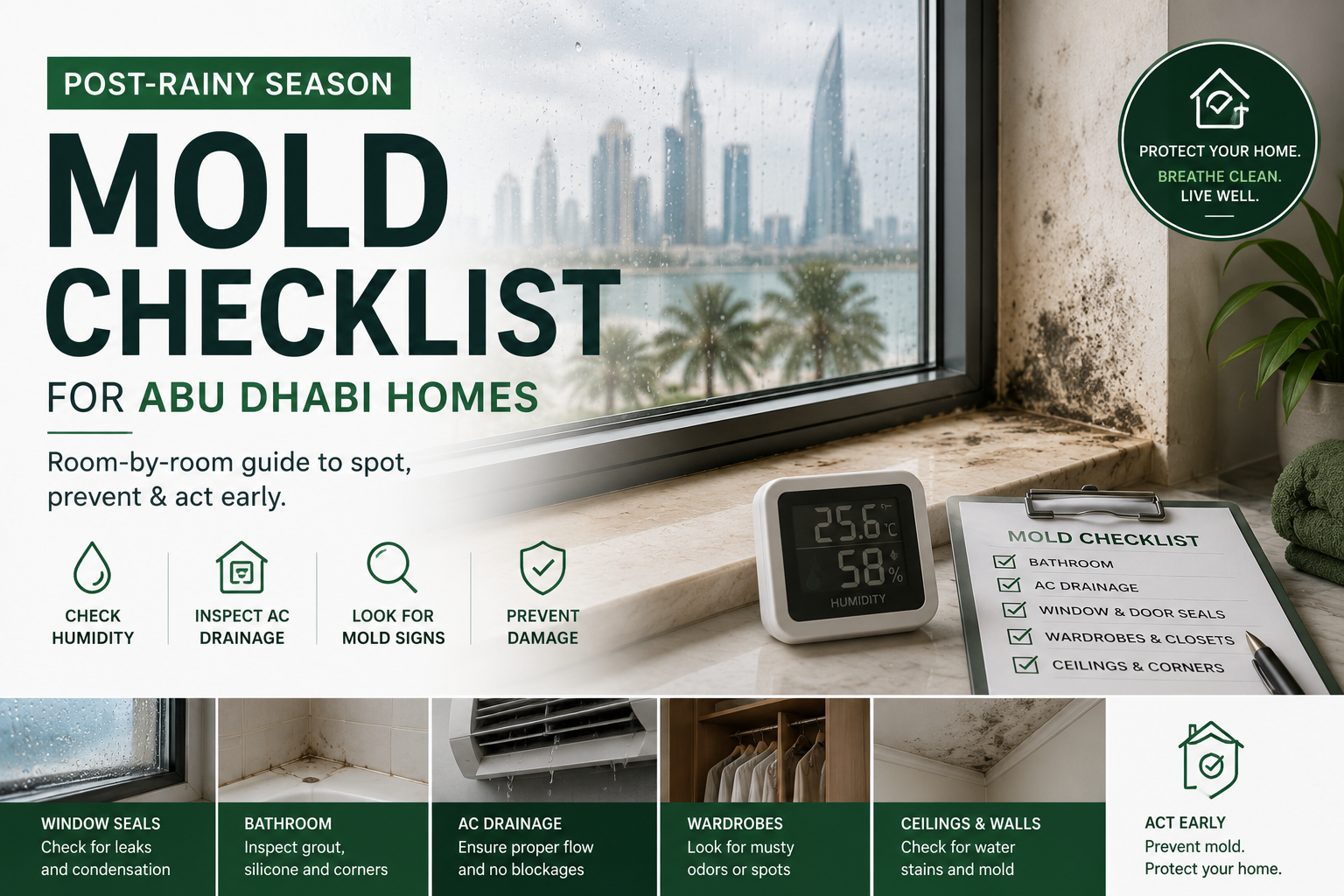
Room-by-Room Post-Rain Mold Checklist
Bathrooms
- Check grout lines for early discoloration, since grout is typically the first place mold establishes itself in UAE homes
- Run the exhaust fan after every shower and confirm it vents outdoors, not just into the ceiling void
- Wipe down tile and mirror condensation rather than letting it air-dry
AC Units and Drainage
- Check for water marks or dripping below the indoor AC unit, which usually indicates a blocked drainage line
- Confirm the AC condensate line drains outward properly rather than backing up into a wall cavity
- Have AC filters and coils inspected if humidity remains elevated despite normal operation
Windows and Doors
- Check seals and frames for trapped moisture or early mildew smell
- Wipe down any condensation that formed on glass during the rain event
- Inspect window tracks, which trap moisture and dust together
Wardrobes and Closets
- Check the back wall and floor of closets, especially those on exterior-facing walls, for a musty smell or visible spotting
- Avoid packing closets tightly, since airflow reduction increases local humidity
- Consider moisture-absorbing packets in closets that don’t get regular airflow
Ceilings and Walls Near Plumbing or Roofing
- Look for new discoloration, bubbling paint, or a soft feel when pressed gently
- Pay particular attention to areas below bathrooms on upper floors and near roof penetrations in villas
- Photograph any change for your own record, especially in a rented property
Kitchens
- Check under the sink and around the dishwasher and washing machine connections for slow leaks that rain can worsen
- Confirm the kitchen exhaust fan is functioning and vented outdoors
Warning Signs Your Body Notices Before You See Mold
UAE doctors have flagged that indoor allergens, including mold spores and dust mites, become more active in humid spaces after rainfall, and that symptoms often appear before residents connect them to their home. According to a general practitioner quoted by Khaleej Times, early signs include frequent sneezing, a runny nose, itchy eyes or throat, and a mild cough at night, alongside a musty smell in parts of the home. If these symptoms appear or worsen specifically indoors and ease when you’re elsewhere, it’s worth treating that pattern as a signal to inspect for mold rather than assuming general allergies.
Beyond comfort, the CDC notes that mold exposure can trigger or worsen respiratory symptoms and allergic reactions in sensitive individuals. See the CDC’s overview of mold and health effects.
Who Is Responsible: You or Your Landlord?
This is the part most mold guides skip entirely, and it matters in Abu Dhabi specifically because tenancy here runs through a structured registration system. The Abu Dhabi Real Estate Centre (ADREC) registers Abu Dhabi tenancy contracts through Tawtheeq, and general UAE tenancy law places major maintenance items, including AC systems, plumbing, and structural issues, on the landlord unless a lease specifically states otherwise. In practice, this means:
- If mold traces back to an AC drainage fault or a building leak, this is typically a landlord maintenance issue, not a tenant cleaning issue
- If mold results from day-to-day habits, such as not running exhaust fans or overloading closets, it’s more reasonably treated as a tenant responsibility
- Documenting the issue with photos and a written notice to your landlord or property manager protects you either way, and is worth doing before any cleanup begins
Always check your specific tenancy contract, since responsibilities can be adjusted by agreement even where general practice leans a particular way.
DIY Cleanup vs. Professional Treatment
| Situation | DIY Appropriate? | Why |
|---|---|---|
| Small surface mold on grout, under 1 square foot | Yes, with proper ventilation and protective gloves | Manageable with a diluted vinegar or mold-specific cleaner |
| Musty smell with no visible mold yet | Partially, start with humidity control and ventilation | Early intervention can prevent visible growth |
| Mold behind or inside a wall, ceiling, or AC unit | No | Requires professional assessment, since the extent is not visible |
| Recurring mold in the same spot after cleaning | No | Indicates an unresolved moisture source that needs proper diagnosis |
| Large area, over roughly 3 square feet | No | Broader remediation and drying equipment is typically needed |
Why Choose Eco Guardians for Post-Rain Mold Treatment in Abu Dhabi
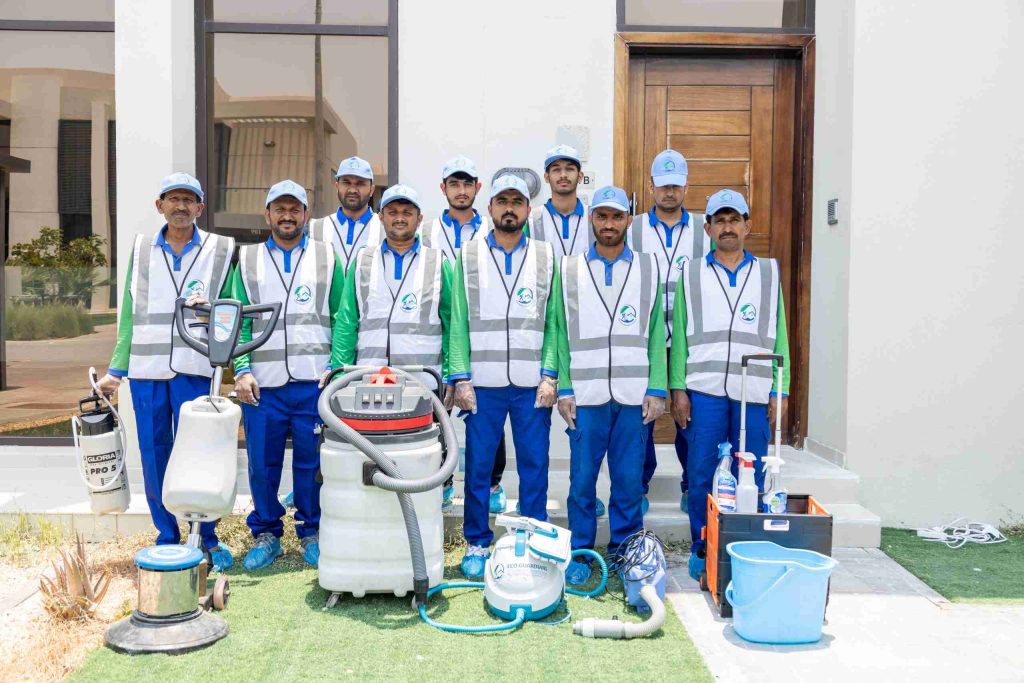
Eco Guardians is a Dubai Municipality-approved cleaning company with over 10 years of experience and 60,000+ customers served across Dubai, Sharjah, Abu Dhabi, and Ajman. Post-rain mold issues are typically addressed alongside a few related services:
- Deep cleaning services, useful for a full property refresh after a rain event
- AC duct cleaning, directly relevant when a blocked drainage line is the underlying cause
- Water tank cleaning, since stored water systems are also affected by humidity and contamination risk after heavy rain
Book a post-rain inspection with Eco Guardians or call +971-56-752-6970.
Frequently Asked Questions
Humidity and Detection
What humidity level causes mold in Abu Dhabi homes? Mold risk becomes significant when indoor relative humidity stays above 60 percent for more than 48 hours. The safe target range for daily living is 40 to 55 percent.
How quickly can mold develop after rain in Abu Dhabi? Mold does not need weeks to start. Given the right moisture and a food source such as dust or wood, visible growth can begin within a few days of sustained elevated humidity.
Can I have mold without seeing it? Yes. A musty smell, worsening allergy symptoms indoors, or condensation that won’t clear are all signs of a possible mold problem before it becomes visually obvious, particularly inside AC units, wall cavities, or behind furniture.
Cause and Responsibility
What usually causes mold after rain in Abu Dhabi apartments? A blocked AC condensate drainage line is one of the most common causes, since it can leak moisture into a wall cavity without any visible dripping in the room itself.
Who is responsible for mold caused by an AC leak in a rented Abu Dhabi property? Under general UAE tenancy practice, AC system maintenance typically falls to the landlord, since it is treated as a major maintenance item rather than routine tenant upkeep. Always confirm against your specific tenancy contract.
Does Abu Dhabi Real Estate Centre handle mold or maintenance disputes directly? ADREC governs tenancy contract registration through Tawtheeq and provides the regulatory framework for tenancy disputes, though you should check the specific maintenance obligation against your individual lease terms.
Practical Cleanup
Can I clean mold myself, or do I need a professional? You can often clean small, surface-level mold on grout or tile safely with proper ventilation and a mold-specific cleaner. Mold behind walls, inside AC units, or covering a larger area needs professional assessment.
Is bleach safe and effective for cleaning mold? Bleach can kill surface mold on non-porous surfaces like tile, but it is not effective on porous materials such as grout or drywall, where mold roots can remain beneath the surface. A dedicated mold-removal product is generally more effective.
How do I stop mold from coming back in the same spot? Recurring mold in the same location almost always means the underlying moisture source remains unresolved, not that the cleaning went wrong. Treat this pattern as the clearest signal to book a professional inspection.
Prevention
Should I run my AC on ‘dry’ mode after rain? Yes, if your unit has this feature. Dry mode reduces indoor humidity more effectively than standard cooling mode, which is particularly useful in the days immediately following a rain event.
Do I need a dehumidifier in Abu Dhabi if I already have AC? Not always, but it helps in specific high-risk rooms such as bathrooms, closets, or ground-floor rooms with less airflow, especially if your AC struggles to bring humidity below 55 percent on its own.
How often should AC drainage lines be checked in Abu Dhabi? Checking before and after the rainy season is a reasonable minimum, though homes with a history of drainage issues benefit from more frequent inspection, particularly ahead of any forecasted heavy rain.
References
- U.S. Centers for Disease Control and Prevention: Mold and Health Effects
- U.S. Environmental Protection Agency: A Brief Guide to Mold, Moisture, and Your Home
- Abu Dhabi Real Estate Centre (ADREC): Official tenancy and regulatory information