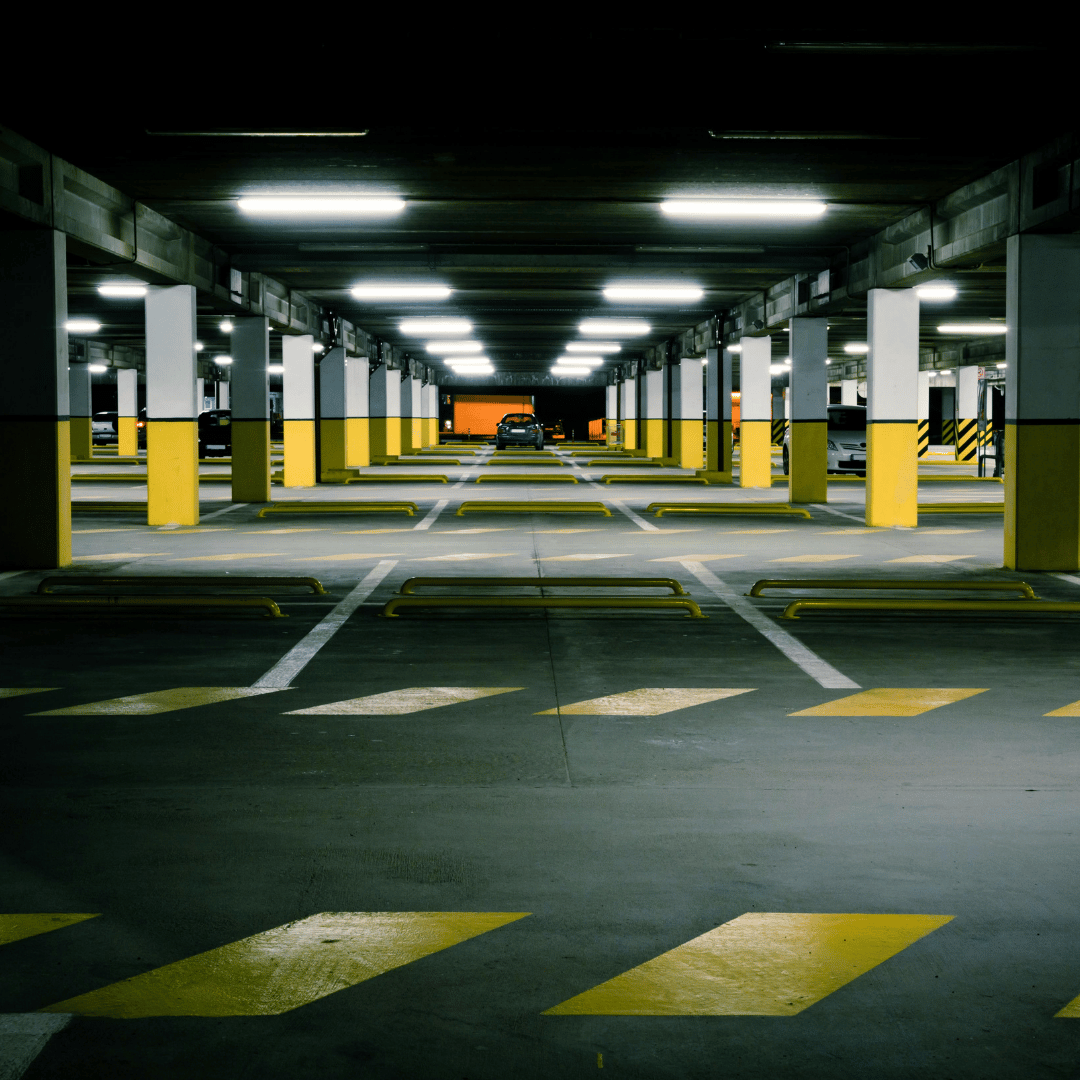
Shared basement parking areas take a beating that most residents never see. This case study covers a parking area cleaning job Eco Guardians completed in the basement of a residential tower in JVC. It walks through years of built-up oil stains, the safety concerns they created, and how our team restored the floor without needing to repave it.
Quick Facts
| Detail | Info |
|---|---|
| Location | JVC (Jumeirah Village Circle), Dubai |
| Property type | Residential tower, basement parking level, approximately 15,000 sq ft |
| Problem | Widespread oil stains, grease buildup, slippery surface near parking bays |
| Duration of issue | Several years of gradual buildup, never professionally deep cleaned |
| Visits required | 2 |
| Timeline to resolution | 4 days |
| Result | Oil stains removed, slip risk reduced, floor restored without resurfacing |
The Problem
A building management company overseeing a residential tower in JVC received repeated complaints from residents about the basement parking area. Oil stains had built up under multiple parking bays over several years, since the space had never had a full professional deep clean. In several spots, the concrete had darkened permanently from repeated oil drips. Beyond appearance, residents also flagged a safety concern. During Dubai’s rainy season, water tracked in from outside mixed with the oil residue, and the floor became noticeably slippery near several bays. As our garage deep cleaning services page notes, this combination of grease and moisture is one of the most common hazards in shared parking areas, and it tends to get worse the longer it goes untreated.
Inspection & Diagnosis
Our team walked the entire basement level before starting any treatment, mapping out every affected bay and access route. Three issues stood out:
- Deep-set oil staining. Years of gradual dripping had let oil soak into the concrete’s surface pores, not just sit on top of it. This is why routine sweeping and mopping hadn’t removed it.
- Slip hazard near drainage points. Areas where water naturally pooled during rain had the highest concentration of oil residue, creating a compounding slip risk exactly where residents needed solid footing.
- No prior sealant on the concrete. The original floor had never been sealed after construction, which meant oil and grime had nothing to stop them from penetrating deep into the surface.
What Industry Standards Recommend
Our approach followed guidance from recognized facilities and parking industry bodies. The International Parking & Mobility Institute (IPMI), the global authority on parking facility standards, recommends scheduled deep cleaning and resealing for concrete parking surfaces to prevent long-term staining and structural wear. This matched exactly what this basement level needed, since it had gone years without either.
The U.S. Occupational Safety and Health Administration (OSHA) also identifies oil and grease buildup on walking surfaces as a leading slip-and-fall hazard in facilities with vehicle traffic. This confirmed the safety concern residents had raised was a legitimate risk, not just a cosmetic complaint.
Treatment Applied
Based on the inspection findings, our team carried out a two-visit treatment plan:
- Pressure washing with degreasing agents. We used industrial-grade degreasers combined with high-pressure washing to lift oil that had penetrated the concrete surface.
- Spot treatment for the darkest stains. Bays with the heaviest, longest-standing stains received an additional targeted chemical treatment to pull out oil that pressure washing alone couldn’t fully remove.
- Drainage point clearing. We cleared and cleaned the drainage channels where oil and water had been pooling together, removing the compounding slip hazard at its source.
- Concrete sealant application. On the second visit, once the surface was fully clean and dry, we applied a protective sealant to prevent future oil absorption and make future cleaning easier.
Result
The basement parking level came out visibly restored, with the majority of oil staining lifted from the concrete surface. The slip hazard near the drainage points was eliminated, confirmed by a follow-up walk-through after the next rain event. Building management reported no further resident complaints about the parking area in the following weeks.
Is Your Building’s Parking Area Overdue for a Deep Clean?
Basement and shared parking areas rarely get the same cleaning attention as lobbies or common areas, even though they see constant vehicle traffic and oil exposure. Left untreated, oil buildup doesn’t just look bad. It creates a genuine slip hazard, especially where water collects near drainage points or entry ramps.
If your building’s parking area has visible oil staining, hasn’t been professionally cleaned in over a year, or residents have mentioned a slippery surface, it’s worth scheduling an inspection. Catching it early usually means the difference between a deep clean and a full concrete resurfacing job later.
Related services: Garage Deep Cleaning Dubai · Deep Cleaning Services Dubai · Maintenance & Technical Services · Monthly Office Cleaning — useful for buildings that need a recurring maintenance schedule, not just a one-off clean · General Cleaning Services Dubai · Areas We Serve — see all Dubai, Sharjah, and Abu Dhabi neighborhoods we cover.
FAQ
How often should a building’s basement parking area be deep cleaned? Most facilities benefit from a full deep clean at least once a year, with more frequent spot cleaning for high-traffic bays, depending on vehicle volume and how quickly oil buildup appears.
Can old oil stains be removed from concrete without resurfacing? In most cases, yes. Industrial degreasing combined with pressure washing and targeted spot treatment can lift oil that has penetrated the surface, without needing to repave or resurface the concrete.
Why does oil buildup make a parking area more slippery in the rain? Oil residue on concrete becomes significantly more slippery when mixed with water, especially near drainage points where the two naturally combine. This creates a slip hazard that isn’t as obvious when the floor is dry.
Does sealing a parking area floor actually prevent future stains? Yes. A protective sealant stops oil from soaking into the concrete’s surface pores, which makes future spills easier to wipe away and significantly reduces long-term staining.
Is basement parking cleaning different from residential garage cleaning? The core process is similar, but basement parking areas usually involve a larger scale, multiple drainage points, and coordination with building management or multiple residents, which requires more planning than a single residential garage.