
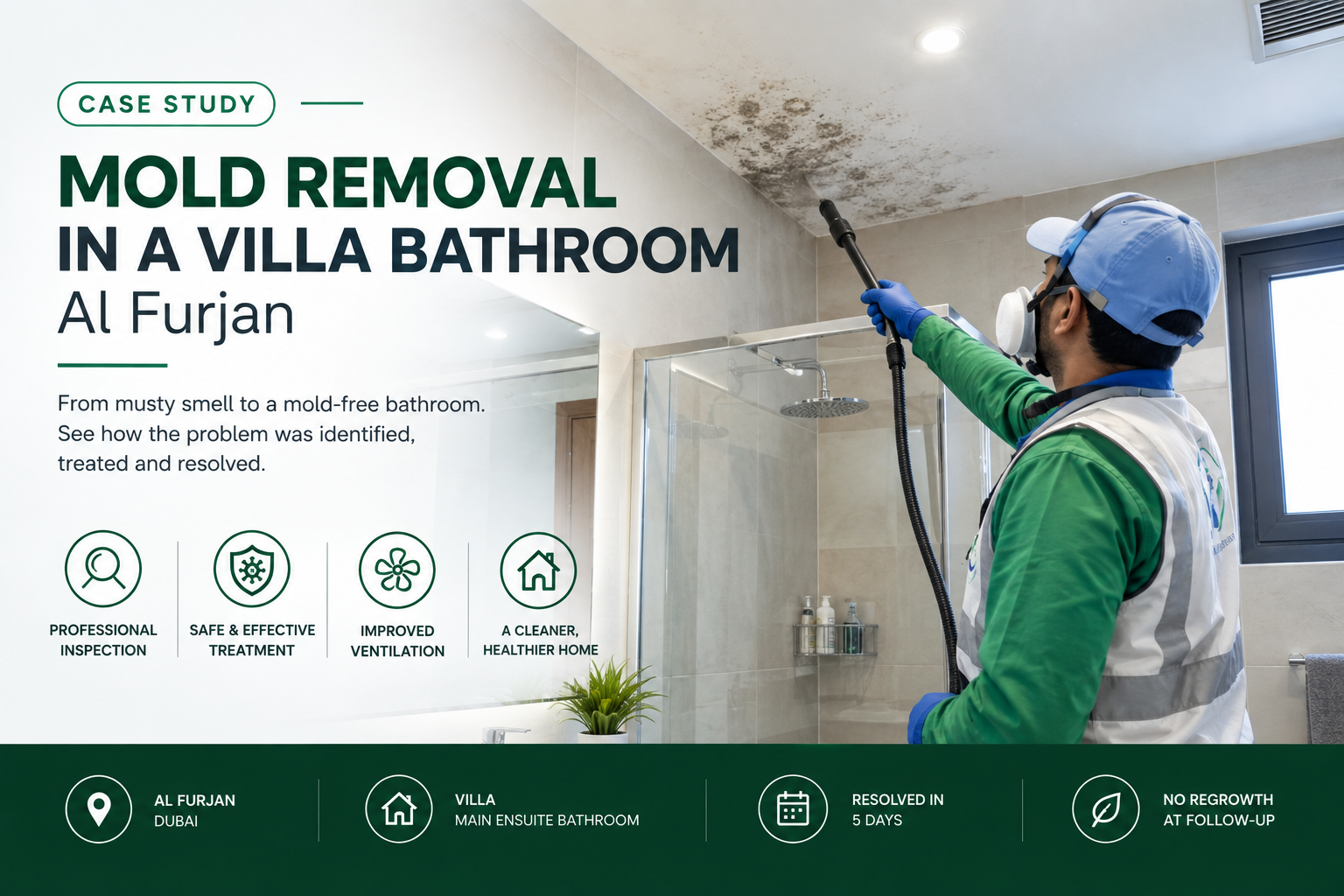
Quick Facts
| Detail | Info |
|---|---|
| Location | Al Furjan, Dubai |
| Property type | Villa, main ensuite bathroom |
| Problem | Recurring musty smell, dark patches near the shower ceiling |
| Duration of issue | Roughly 2 months, worsening after each shower use |
| Visits required | 1 remediation visit, plus a follow-up check |
| Timeline to resolution | 5 days |
| Result | No regrowth at follow-up, odor fully resolved |
The Problem
A family in Al Furjan noticed a musty smell in their main ensuite bathroom. It got stronger every time someone showered. Dark patches had also started forming on the ceiling directly above the shower enclosure. The family had wiped the visible patches away twice already. The marks returned within a couple of weeks each time. This pattern is one of the clearest signs that a visible spot is not the actual source of the problem. Marks reappearing after a surface wipe usually mean something deeper is going on.
Inspection and Assessment
Our team inspected the bathroom, the extractor fan, and the ceiling cavity above the shower area.
Poor Ventilation Behind the Ceiling Patch
The bathroom’s extractor fan was undersized for the room and vented into a narrow, poorly sealed duct run. Moisture from daily showers had nowhere to properly escape. This let humidity build up in the ceiling cavity directly above the shower.
Confirming It Was Mold, Not Just Staining
The patches felt slightly damp and carried a distinct musty smell. This pointed toward mold rather than ordinary dust or soot staining. We cover this exact distinction in our earlier guide on black marks and their causes, including how to tell mold apart from simple ghosting around vents. The diagnostic approach is similar even though this case involved a bathroom ceiling rather than an AC vent.
Treatment Applied
Based on the assessment, we carried out a structured remediation process.
- Containment. We sealed off the work area to prevent spores from spreading to the rest of the villa during removal.
- Removal of affected material. We removed and treated the contaminated ceiling section rather than only cleaning the visible surface. Surface cleaning alone does not address mold growing behind or within a material.
- Treatment of the extractor duct. We cleaned and resealed the duct run. This improved airflow out of the bathroom going forward.
- Disinfection and drying. We disinfected the treated area and confirmed it was fully dry before closing up the ceiling section. Our mould removal service follows this same inspection, containment, removal, and disinfection sequence on every job. It is never just a surface treatment.
Result
At the follow-up visit, the treated area showed no regrowth and no musty smell. The family reported the bathroom no longer carried any lingering odor after showers. The improved extractor airflow also reduced visible condensation on the mirror and tiles.
Is Your Bathroom Showing Similar Signs?
A damp smell that returns after cleaning, or a ceiling patch that keeps reappearing, usually means the moisture source has not been addressed. It does not mean the cleaning was done incorrectly. According to the U.S. EPA’s guidance on mold, controlling moisture is the key step in preventing mold from returning. Mold will regrow on a cleaned surface if the underlying dampness stays unresolved. If your bathroom shows a similar pattern, inspect the extractor fan and ventilation path alongside any cleaning.
Related Services
Poor bathroom ventilation sometimes overlaps with AC related humidity issues elsewhere in a villa. Our AC duct cleaning services address this separately when ductwork itself is contributing to moisture problems.
FAQ
Why does mold keep coming back after I clean it myself? Surface cleaning removes visible mold but does not fix the moisture source feeding it. Without addressing ventilation or a leak, mold typically regrows within weeks.
How can I tell if a bathroom ceiling patch is mold or just dust? Mold usually feels damp and carries a musty smell. Dust or soot marks typically feel dry and gritty. A professional inspection gives a definitive answer either way.
Is bathroom mold dangerous to breathe in? It can trigger allergic reactions and respiratory irritation in sensitive individuals. Anyone with persistent symptoms near an affected area should consult a doctor.
Can better ventilation alone prevent bathroom mold? In many cases, yes, especially when poor airflow was the main contributing factor. An undersized or poorly vented extractor fan is a common cause.
How long does professional mold remediation take? For a single bathroom, remediation often takes a few days, including containment, removal, treatment, and confirming the area is fully dry.