If you live in Dubai, your AC ducts should typically be professionally inspected every year and cleaned every 12 to 24 months, depending on your property’s location, occupancy, indoor air quality, pets, renovation history, and maintenance routine. Homes exposed to construction dust, heavy traffic, or residents with allergies may require more frequent cleaning. Regular AC duct cleaning helps improve indoor air quality, supports efficient airflow, reduces dust circulation, and contributes to a healthier indoor environment.
Unlike many other regions, Dubai’s climate creates unique challenges for air conditioning systems. Air conditioners operate for most of the year, continuously circulating air through ductwork that gradually collects dust, sand particles, allergens, and other airborne contaminants. Without regular maintenance, these particles can affect the cleanliness of indoor air and reduce the overall efficiency of the HVAC system.
Why Is AC Duct Cleaning More Important in Dubai?
Dubai experiences high temperatures for much of the year, making air conditioning an essential part of everyday life. Most residential and commercial buildings rely on central air conditioning systems that operate for extended periods, often around the clock during summer.
Several environmental factors make duct cleaning particularly important in the UAE:
- Frequent airborne dust and desert sand
- Ongoing construction activities across many communities
- High humidity during certain months
- Long operating hours of HVAC systems
- Closed indoor environments with limited natural ventilation
These conditions allow fine particles to settle inside ductwork over time. Every time the AC operates, some of these particles may continue circulating throughout the property.
According to the U.S. Environmental Protection Agency (EPA), indoor air can contain various pollutants depending on building conditions, ventilation, and maintenance practices. Clean HVAC systems are one part of maintaining good indoor environmental quality.
What Exactly Is AC Duct Cleaning?
AC duct cleaning is the professional process of removing accumulated dust, debris, and other contaminants from the air distribution system of a building.
A complete cleaning service generally includes:
- Supply air ducts
- Return air ducts
- Air vents and diffusers
- Grilles and registers
- Air handling unit (AHU)
- Blower compartment
- Drain pans
- Selected HVAC components where applicable
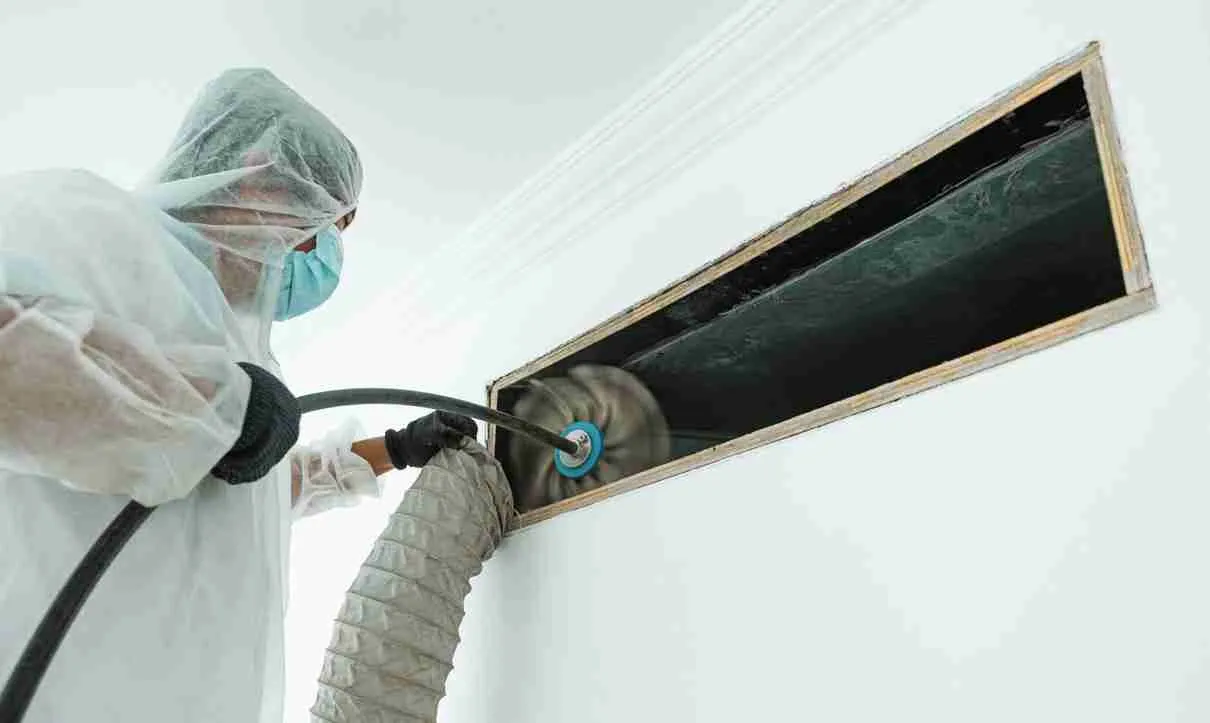
Professional companies typically use high-powered negative air vacuum systems together with rotary brushes, compressed air tools, and HEPA filtration equipment to remove contaminants without allowing them to spread throughout the property.
The objective is not simply to clean visible vents. A professional service addresses the complete airflow system that distributes conditioned air throughout the building.
What Builds Up Inside AC Ducts?
Many homeowners assume that ductwork remains clean because it is hidden behind ceilings and walls. In reality, ducts gradually collect a variety of airborne materials.
Common contaminants include:
Household Dust
Every home naturally produces dust from fabrics, skin cells, paper fibers, and outdoor particles brought indoors through doors, windows, and ventilation systems.
Desert Sand
Dubai’s desert environment contributes extremely fine sand particles that can enter buildings even when windows remain closed. HVAC systems continuously draw in and circulate these particles.
Pet Hair and Dander
Homes with pets often accumulate additional hair, dander, and microscopic allergens that become trapped inside duct systems.
Construction Debris
After renovations or nearby construction, fine gypsum dust, cement particles, wood dust, and insulation fibers may enter the HVAC system if adequate protection was not used during the project.
Mold Growth
If moisture develops inside portions of the HVAC system due to condensation or drainage problems, mold can grow on suitable surfaces. Proper inspection is necessary before any remediation work is performed.
Insect Debris
In some situations, insects may enter unused or poorly sealed duct systems, leaving behind debris that affects cleanliness.
How Dirty AC Ducts Can Affect Indoor Air Quality
Indoor air quality depends on several factors, including ventilation, humidity, filtration, occupancy, cleaning practices, and HVAC maintenance.
When contaminants accumulate inside ductwork, the HVAC system may continue circulating microscopic particles throughout occupied spaces.
This can contribute to:
- Increased dust settling on furniture
- Dust accumulation around supply vents
- Unpleasant odors when the AC starts
- Reduced airflow from vents
- Additional strain on HVAC components
People with allergies, asthma, or respiratory sensitivities may notice that poor indoor air quality aggravates their symptoms, although multiple environmental factors can contribute. Maintaining clean HVAC systems is considered one element of good indoor environmental management.
What Are the Signs Your AC Ducts Need Professional Cleaning?
Many homeowners wait until they experience obvious problems before considering duct cleaning. However, several early warning signs indicate that professional inspection may be beneficial.
1. Excessive Dust Returns Quickly
If surfaces become dusty again within a day or two after cleaning, your HVAC system may be recirculating accumulated particles through the ductwork.
2. Dust Around Air Vents
Dark rings or visible dust deposits around ceiling vents often indicate that airborne particles are continuously passing through the system.
3. Persistent Musty Odors
A musty smell when the AC starts may indicate moisture issues, microbial growth, or accumulated contaminants somewhere within the HVAC system.
4. Reduced Airflow
If certain rooms receive noticeably weaker airflow than others, blockages, heavy dust accumulation, or duct leakage may require professional inspection.
5. Increased Allergy Symptoms Indoors
If occupants consistently experience sneezing, itchy eyes, or nasal irritation indoors that improves outside the property, it may be worthwhile to inspect both the HVAC system and indoor environmental conditions.
6. Recent Renovation Work
Construction and renovation projects generate significant amounts of fine dust. Even when precautions are taken, particles often find their way into duct systems.
7. You Have Never Cleaned the Ducts
If your property is several years old and the duct system has never been professionally cleaned, scheduling an inspection is a sensible preventive step.
How Often Should AC Ducts Be Cleaned?
There is no universal schedule that applies to every property. The ideal frequency depends on several factors.
| Property Type | Suggested Inspection | Typical Cleaning Frequency |
|---|---|---|
| Apartment | Every 12 months | Every 18–24 months |
| Villa | Every 12 months | Every 12–24 months |
| Office | Every 6–12 months | Every 12–18 months |
| Restaurant | Regular inspections | As operational needs require |
| Clinic | Follow facility maintenance plan | According to regulatory and operational requirements |
Properties located near construction sites, major roads, or areas with high dust exposure may require more frequent cleaning.
Likewise, households with pets, smokers, young children, elderly residents, or individuals with allergies often benefit from shorter maintenance intervals.
Does AC Duct Cleaning Reduce Energy Consumption?
A clean duct system alone does not guarantee major energy savings. However, excessive dust buildup can restrict airflow and place additional strain on HVAC equipment.
When combined with:
- clean air filters,
- properly maintained coils,
- balanced airflow,
- and routine HVAC servicing,
a clean duct system helps the air conditioning system operate more efficiently.
The U.S. Department of Energy notes that proper HVAC maintenance, including clean filters and efficient airflow, contributes to improved system performance and energy efficiency.
Professional AC Duct Cleaning Process: What Happens During the Service?
Many homeowners wonder what actually happens when they book a professional AC duct cleaning service. A reputable company does much more than vacuum the air vents. The goal is to clean the entire air distribution system without allowing dust and contaminants to spread throughout the property.
A professional AC duct cleaning service typically follows these steps:
1. Initial HVAC Inspection
The process begins with a thorough inspection of the HVAC system. Technicians examine:
- Supply and return air ducts
- Air handling unit (AHU)
- Air vents and grilles
- Filters
- Access panels
- Drain pan
- Blower compartment
This assessment helps identify dust buildup, airflow restrictions, signs of moisture, damaged insulation, or other issues that may require attention.
2. Protecting the Property
Before cleaning begins, furniture and flooring near the work area are protected to minimize dust and disruption. Professional technicians also seal vents as needed to maintain negative pressure during the cleaning process.
3. Creating Negative Air Pressure
One of the most important steps is connecting a high-powered vacuum system to the duct network. This creates negative pressure inside the ducts, ensuring that loosened debris is captured rather than released into indoor spaces.
4. Removing Dust and Debris
Using specialized rotary brushes, compressed air tools, and flexible cleaning equipment, technicians dislodge accumulated dust, dirt, and debris from the duct walls while the vacuum system continuously extracts contaminants.
5. Cleaning Air Vents and Grilles
Supply and return vents are removed, cleaned, and reinstalled after dust and debris have been eliminated.
6. Cleaning Accessible HVAC Components
Where included in the scope of work, technicians may also clean accessible components such as:
- Air handling unit (AHU)
- Blower compartment
- Drain pan
- Diffusers
- Registers
These components play an important role in maintaining efficient airflow throughout the HVAC system.
7. Final Inspection
After cleaning is complete, technicians inspect the system again to confirm that visible dust and debris have been removed and that airflow has been restored.
Simple Ways to Keep Your AC Ducts Cleaner for Longer
Professional cleaning is important, but everyday maintenance also helps reduce dust accumulation.
Here are several practical tips:
- Replace HVAC filters on schedule.
- Keep air vents free from furniture and obstructions.
- Vacuum your home regularly using a HEPA-filter vacuum cleaner.
- Schedule annual HVAC inspections.
- Address water leaks immediately to prevent moisture buildup.
- Keep doors and windows closed during dust storms whenever possible.
- Maintain recommended indoor humidity levels to discourage mold growth.
These small maintenance habits can improve HVAC performance and help keep indoor air cleaner between professional services.
Real Example: Why Regular AC Duct Maintenance Matters
A family living in a Dubai villa noticed that despite cleaning their home several times each week, furniture quickly became covered with a layer of fine dust. Several family members also complained of frequent sneezing while indoors.
During a professional HVAC inspection, technicians found significant dust accumulation inside sections of the ductwork and heavily clogged air filters. After a complete duct cleaning, filter replacement, and routine HVAC servicing, the family reported noticeably less dust settling throughout the home and improved airflow from several rooms.
While every property is different, this example demonstrates how regular HVAC maintenance can contribute to a cleaner indoor environment.
Frequently Asked Questions
Is AC duct cleaning worth it in Dubai?
Yes. Because Dubai experiences frequent dust, sand, and extended air conditioner use, periodic duct cleaning can help maintain cleaner airflow, improve HVAC efficiency, and support better indoor air quality.
How long does AC duct cleaning take?
The duration depends on the size of the property and HVAC system. Most residential homes can be completed within several hours, while larger villas and commercial properties may require additional time.
Can dirty AC ducts affect allergies?
Dust and other airborne particles circulating through HVAC systems may contribute to indoor allergens. Individuals with allergies or respiratory sensitivities may benefit from maintaining a clean HVAC system as part of an overall indoor air quality strategy.
Does AC duct cleaning remove mold?
If mold is present, it should first be professionally identified. Cleaning methods depend on the source of moisture and the extent of contamination. Simply cleaning visible areas may not resolve the underlying issue.
Is AC duct cleaning messy?
Professional companies use negative-pressure vacuum systems and containment methods to minimize dust release during the cleaning process.
Can I clean my AC ducts myself?
Homeowners can clean accessible air vents and replace filters, but cleaning the internal duct network requires specialized equipment and trained technicians.
How can I tell if my ducts are dirty?
Common indicators include excessive indoor dust, musty odors, reduced airflow, visible dust around vents, and recent renovation work.
How often should air filters be replaced?
Replacement schedules vary by manufacturer and filter type. Many residential filters should be inspected monthly and replaced every one to three months, depending on usage and environmental conditions.
Final Thoughts
Your HVAC system works continuously to keep your home comfortable throughout the year. Like any mechanical system, it performs best when maintained regularly.
Professional AC duct cleaning is not something that needs to be performed every few months, but neither should it be ignored for many years. Periodic inspections, routine HVAC servicing, timely filter replacement, and professional duct cleaning when needed all contribute to cleaner indoor air, improved airflow, and better long-term system performance.
For homeowners and businesses across Dubai, investing in preventive HVAC maintenance today can help reduce unnecessary repairs, improve comfort, and create a healthier indoor environment for everyone who uses the space.
References
- U.S. Environmental Protection Agency (EPA) – Indoor Air Quality
- National Air Duct Cleaners Association (NADCA) – HVAC Cleaning Guidelines
- American Society of Heating, Refrigerating and Air-Conditioning Engineers (ASHRAE) – Indoor Air Quality Standards
- U.S. Department of Energy – Maintaining Heating and Cooling Systems