
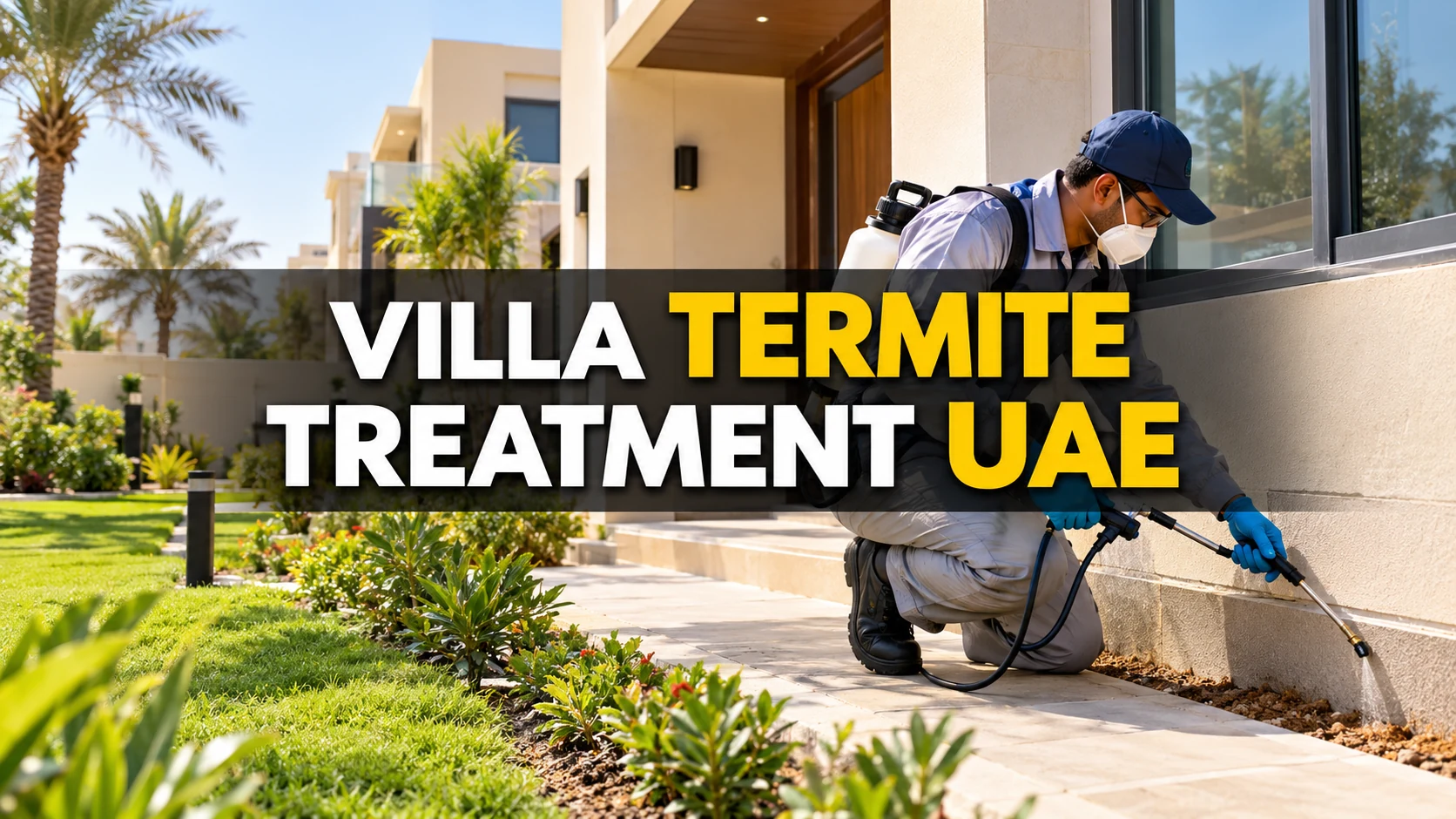
Termites rarely announce themselves. By the time a door frame sounds hollow or paint starts to bubble, a colony may have been feeding inside your villa for months. This is why knowing how to protect your villa from termites: a complete UAE guide matters long before the first warning sign appears. Prevention is safer for your family, kinder to your budget and far less disruptive than repairing timber, cabinetry and finished interiors afterwards.
This guide explains why villas in Dubai and across the UAE are exposed, how to recognise the early warning signs of termites, the 12 most effective prevention steps, what professional termite control involves, what termite treatment costs in Dubai and how often you should schedule an inspection. Whether you own, rent, invest in or are renovating a villa, you will find practical, actionable advice here. If you would rather have an expert assess your property, the specialists at Eco Guardians offer Pest Control Dubai services built around safe, municipality-approved methods.
Why Villas in the UAE Need a Termite Protection Plan
Many homeowners assume that a desert country is too dry for termites. In reality, termite prevention UAE is a genuine concern because irrigated gardens, air-conditioning systems, bathrooms and coastal humidity create pockets of moisture around almost every villa. Combined with a hot humid climate that allows year-round activity, these conditions make termites a permanent risk rather than a seasonal one.
Protecting your villa is not about a single spray. It is a system: control moisture, remove hidden access routes, inspect vulnerable timber, and maintain a professional barrier where needed. The sections below show how each part fits together.
Why Are Villas More Exposed to Termites Than Apartments?
Villas have direct ground contact, gardens, perimeter walls, service ducts and multiple wet areas. A colony can travel through expansion joints, pipe penetrations, cracks in concrete or concealed voids. Those routes simply do not exist in the same way in an upper-floor apartment, which is why apartment pest control focuses mostly on shared walls and furniture, while villa pest control must cover the soil, the foundation, the garden and the building envelope.
What Conditions Do Termites Need?
Termites need three things: cellulose-based materials to eat, moisture to survive and a protected route from the soil to the structure. They do not need an untidy home. A spotless villa with a leaking pipe behind a vanity unit can be just as attractive as a neglected one. This is why moisture control is at the heart of every sound prevention plan.
What Can Termites Feed on Inside a Villa?
Termites feed on any cellulose-based material. Common targets include:
- Door frames, skirting boards and window frames
- Wardrobes, kitchen cabinets and built-in joinery
- Wooden furniture, decorative wall panels and parquet flooring
- Cardboard storage boxes, books and paper-backed finishes
- Garden sleepers, decking, fencing, pergolas and trellises
Where Does Moisture Come From in a Dry Climate?
Even in a dry climate, localised dampness is common. Irrigation systems, AC condensation, plumbing leaks, shower areas, outdoor taps and planters all create moisture near the structure. That localised damp is usually what makes one villa vulnerable while a neighbouring one is not. It is also why moisture control to prevent termites deserves priority over almost every other measure.
Termites in the UAE: Know Your Enemy
Two main groups matter to UAE homeowners. Understanding them helps you choose the right protection.
| Type | Where It Lives | How It Enters | Typical Signs |
| Subterranean termite | Underground colonies in soil | Mud tubes, cracks, expansion joints, pipe penetrations | Mud tubes on walls, damp soil contact, hollow timber |
| Drywood termite | Inside dry timber and furniture | Flying swarmers, infested wood brought indoors | Frass (tiny pellets), small holes, discarded wings |
Subterranean termites in UAE gardens are the main concern for villa foundations, because the colony lives in the soil and can forage across a large area. Drywood termites, by contrast, can live inside wooden furniture without any soil contact, so they can arrive with imported furniture or timber. Both are wood-destroying insects, and both can cause serious structural damage if ignored.
Signs of Termite Infestation in Villas: Early Warning Signs You Should Never Ignore
Termite detection starts with knowing what to look for. The signs of termite infestation in villas are subtle, which is why regular inspections matter. Learn these termite signs and check them every few months.
Termite Mud Tubes on Walls
Termite mud tubes on walls, foundations and garden walls are the clearest sign of subterranean activity. These pencil-thin tunnels protect termites from light and dry air as they travel between soil and wood. Look along the base of exterior walls, garage walls, service areas and inside cabinets near plumbing. If you find a tube, do not wipe it away before an inspection, because it helps a technician trace the route.
Hollow-Sounding Wood and Timber Damage
Tap door frames, skirting boards, wardrobes and window frames. Hollow-sounding wood suggests that termites have eaten the inside while leaving a thin outer layer. Termite damage to wooden structures is often invisible from the surface, so crumbling timber, soft spots or sagging floors and ceilings are late-stage signs.
Discarded Wings and Swarming
A termite swarm happens when winged reproductives leave the colony to start a new one. Discarded wings near windows, doors, light fixtures and vents are a strong sign that a colony is nearby. Flying insects are not always termites, so photograph the wings or save a sample for identification.
Other Evidence of Termite Activity
- Bubbling or peeling paint that looks like water damage
- Sticking doors and windows, caused by moisture and warped frames
- Frass, tiny wood-coloured pellets near small holes or tunnels
- Small holes in timber, drywall or wooden furniture
- Termites in villa walls, indicated by a papery or hollow sound when tapped
- Musty odours around damp, enclosed areas
How Long Can Termites Be Active Before I Notice?
A termite infestation can stay hidden for months. A problem rarely starts with an obvious hole in the wall; it usually begins below ground, behind built-in cabinetry or inside a timber door frame. By the time paint bubbles or wood sounds hollow, termites may already have been active for a long time. Early detection and regular inspections are your best defence.
How to Prevent Termites in Villas: 12 Proven Steps
These termite prevention tips for homeowners form the core of any plan to protect your home from termites. Some are free, some are inexpensive, and all of them reduce risk.
1. Fix Leaks and Plumbing Problems Quickly
A slow leak under a sink, a dripping outdoor tap or an overflowing AC drain line can sustain termite activity. Inspect bathroom vanities, kitchens, utility rooms, water-heater connections and irrigation points regularly. Dry the area, repair the source and check nearby wood for soft spots or mud traces. If a leak is inside a wall or beneath flooring, call a professional rather than covering the damage.
2. Redirect Irrigation and AC Condensation
Overwatering keeps soil damp near the foundation. Adjust sprinklers so they do not soak walls, door thresholds or outdoor timber, and review schedules as seasons change. Make sure AC condensation drains away from the structure and does not pool beside the wall. Repeated damp paving, algae or water stains are a maintenance priority.
3. Improve Drainage and Grade the Soil
Poor drainage allows water to collect against the foundation. Grade the soil so that it slopes away from the villa, clean gutters and downspouts where fitted, and redirect downspouts away from the walls. Good damp-proofing and moisture management around the perimeter make the soil less inviting.
4. Eliminate Wood-to-Soil Contact
Direct wood-to-soil contact is one of the easiest ways for termites to reach timber. Keep fences, posts, door frames, decking supports and planters raised above the soil. Where possible, leave a visible clearance gap between landscaping material and the villa wall so that mud tubes cannot hide.
5. Reduce Mulch and Control Landscaping
Here are the main landscaping tips to prevent termites:
- Reduce mulch and keep it away from the base of walls
- Do not pile soil, decorative stones or planters against exterior finishes or cover weep holes
- Trim plants and tree branches that touch the building
- Avoid raised beds against the villa wall
- Remove dead stumps, roots and fallen branches
These small changes improve airflow, help soil dry out and make inspection easier.
6. Store Firewood, Timber and Cardboard Away from the House
Elevate wood and store firewood away from the villa, ideally on racks off the ground. Do the same with unused timber, pallets and garden sleepers. Replace cardboard boxes in garages and storerooms with sealed plastic bins, especially where storage touches an external wall.
7. Seal Cracks and Entry Points
Seal cracks around pipes, service ducts, cable entries, wall joints and expansion joints using suitable materials. Pay special attention to pipe penetrations in kitchens, bathrooms and garages. Sealing reduces access, but do not cover suspected mud tubes or damaged timber before they are assessed, because the evidence helps a technician identify the extent of the problem.
8. Improve Ventilation in Enclosed Spaces
Storerooms, under-stair cupboards, service areas and poorly ventilated bathrooms can retain moisture. Improve ventilation, use a dehumidifier where needed and avoid packing boxes tightly against walls. If a room has repeated condensation or mould, solve the cause first, whether it is a plumbing defect, failed waterproofing or an AC drainage fault.
9. Use Termite-Resistant Building Materials
When repairing, building or renovating, choose termite-resistant building materials such as treated lumber, metal, concrete, fibre cement or composite decking for areas close to the ground. In crawl spaces or basement-style areas with bare earth, polyethylene sheeting can limit humidity rising from the soil. Resistant materials reduce risk, but they do not remove the need for inspection.
10. Protect Wooden Furniture and Built-In Joinery
Wondering how to prevent termites in wooden furniture? Keep it away from damp walls and floors, allow airflow behind wardrobes, inspect the underside and rear of pieces, and avoid storing items in humid areas. Treat any imported or second-hand furniture with caution and inspect it before bringing it inside, since drywood termites can arrive in infested timber.
11. Be Careful During Renovations and Landscaping Projects
Renovation can open new pathways when flooring, wall finishes, plumbing or garden levels change. Before installing wood flooring, wall panels, decking or a pergola, ask how the material will be separated from soil and protected from moisture. After excavation, paving changes or landscaping, inspect the perimeter again, because new planters and raised soil levels can hide areas that were once easy to check.
12. Schedule Regular Professional Inspections
The most valuable inspection is often the one that finds no active infestation but highlights moisture, timber contact and access risks. A professional assessment each year, combined with follow-up visits where needed, is the cornerstone of long-term termite protection for homes.
Best Termite Prevention Methods: Professional Treatments Explained
DIY steps lower risk, but they cannot reach a colony in the soil or deep inside wood. Professional termite control services UAE homeowners rely on usually combine several methods, chosen according to the species, construction type and evidence of activity. These are the best termite prevention methods used by licensed pest control companies.
Soil Treatment for Termites and Chemical Barriers
Soil treatment for termites creates a chemical barrier in the soil around the villa. A liquid termiticide is applied along the perimeter, beneath slabs where accessible, and around entry points such as pipe penetrations. These termite barriers for buildings stop subterranean termites from crossing into the structure. This is also the core of termite protection for foundations.
Baiting Systems and Bait Stations
Bait stations are installed in the ground at intervals around the property. Termites feed on the bait and carry it back to the colony, which can eliminate it over time. The stations also double as a monitoring system, helping to catch new termite activity before it reaches the building. A baiting system suits villas where liquid treatment is difficult, such as properties with extensive paving or landscaping.
Localised and Wood Treatments
Where activity is confined to a door frame, cabinet or piece of furniture, a localised treatment targets the affected timber. Wood treatment may also be applied preventively to vulnerable joinery, decking and pergolas. This anti-termite treatment is often combined with soil treatment for full protection.
Pre-Construction Termite Treatment
For new builds, pre-construction termite treatment applies a barrier in the soil before slabs and foundations are completed. It is far easier and cheaper to protect a building at this stage than to retrofit later. If you are building or buying off-plan, ask the contractor what termite proofing is included and request documentation.
Comparing the Main Termite Protection Options
| Method | How It Works | Best For | Considerations |
| Soil treatment (liquid termiticide) | Chemical barrier in soil around foundation | Subterranean termites, perimeter protection | Needs access to soil; periodic re-checking |
| Bait stations | Termites carry bait back to the colony | Villas with paving or landscaping limits | Slower; relies on ongoing monitoring |
| Localised treatment | Targets infested timber or furniture | Isolated activity, drywood termites | Does not stop soil-based colonies on its own |
| Pre-construction treatment | Barrier before the slab is poured | New builds | Must be done at the right construction stage |
| Termite proofing materials | Resistant lumber, metal, composite | Renovations, decking, pergolas | Reduces risk; does not replace inspections |
No method gives an absolute guarantee, which is why professional monitoring and a documented treatment plan are important.
Termite Inspection Dubai: What to Expect and When to Schedule
A termite inspection Dubai homeowners can trust is thorough and documented. For villas, termite inspection for villas should cover the exterior, the interior and the garden.
What a Professional Inspection Covers
- Foundation edges, weep holes, expansion joints and boundary walls
- Service ducts, pipe penetrations and meter areas
- Door frames, skirting boards, wardrobes and kitchen cabinets
- Wooden decking, pergolas, fencing, trellises and garden sleepers
- Moisture hotspots such as bathrooms, AC drain lines and irrigation points
- Roof void or storage spaces that share walls with the exterior
A qualified provider should explain where activity or risk was found, what treatment is appropriate, what preparation is required and how the villa will be monitored afterwards.
When Should I Schedule a Preventive Inspection?
Book an annual termite inspection for villas as a baseline. Arrange an extra inspection:
- Before buying, renting or selling a villa
- Before and after renovation, landscaping or excavation
- If a neighbour has confirmed termites, since colonies do not respect property lines
- After a plumbing leak or flooding event
- If you see wings, mud tubes, bubbling paint or hollow-sounding wood
When Should I Call a Professional?
Call a professional immediately if you find mud tubes, discarded wings, hollow or crumbling timber, sagging floors or ceilings, or any structural damage. Do not remove damaged materials or spray over evidence before an inspection unless there is a safety concern. Professional assessment ensures that you treat the whole colony and not just the termites you can see.
Termite Treatment Cost in Dubai: What Affects the Price?
Homeowners often ask about termite treatment cost in Dubai. There is no fixed price, because every villa is different. A professional inspection is the only reliable way to get an accurate quotation.
| Cost Factor | Why It Matters |
| Villa size and plot area | Larger perimeters need more product and time |
| Severity of the infestation | Active colonies need more intensive treatment |
| Treatment method | Soil treatment, baiting and localised treatment are priced differently |
| Access to soil | Heavy paving or landscaping can complicate treatment |
| Pre-construction vs existing building | New builds are usually simpler to treat |
| Contract type | One-time visits differ from annual contracts with follow-up visits |
| Documentation | A termite certificate and warranty add value and confidence |
How to Avoid Being Oversold
- Ask for an inspection report with photos before agreeing to treatment
- Request a written treatment plan listing the method, products and areas covered
- Compare two or three licensed pest control companies
- Confirm that the company is municipality-approved
- Ask what follow-up visits and warranty are included
Remember that early prevention is nearly always cheaper than structural repairs. Costly repairs to cabinetry, flooring and door frames, together with a loss of property value, can far exceed the price of an inspection and preventive plan. Many property insurance policies do not cover termite damage, so check your policy and assume you may be responsible for the hidden damage.
DIY Termite Control vs Professional Pest Control Services
DIY termite control is tempting, especially for tenants who want a quick fix. Home remedies and DIY sprays may kill the termites you see, but they rarely reach the colony. Surface spraying can even push termites away from the treated area, making the problem harder to trace while damage continues elsewhere.
| Factor | DIY Sprays and Home Remedies | Professional Termite Control |
| Reaches the colony | Rarely | Designed to reach the whole colony |
| Long-term protection | Short term | Barrier, bait and monitoring |
| Documentation | None | Termite certificate and treatment plan |
| Safety | Variable and easy to misuse | Controlled products and trained technicians |
| Cost over time | Repeated purchases and hidden damage | Higher upfront, lower overall risk |
DIY has a place in prevention: sealing cracks, fixing leaks, trimming plants and tidying storage. For active infestation, however, professional pest management is the safer and more cost-effective choice.
Eco-Friendly, Family- and Pet-Safe Termite Prevention Methods
Families with children and pets often worry about chemicals. The good news is that modern eco-friendly termite prevention methods place the focus on moisture control, material choices, targeted application and monitoring. Professional treatments should be applied by licensed technicians using municipality-approved products and clear safety guidance.
To keep your home family- and pet-safe:
- Choose a licensed pest control company and ask for product information
- Ask which areas will be treated and how long to stay out of them
- Keep children and pets away during application as advised
- Use baiting systems or targeted treatments where suitable
- Combine treatment with preventive maintenance so fewer chemicals are needed over time
At Eco Guardians, safety is part of the plan. Technicians explain each step, the products used and the aftercare, so you can make an informed decision.
Termite-Proofing a House: Renovations, New Builds and Landscaping
Termite-proofing a house works best when it is part of the project, not an afterthought.
Renovating an Existing Villa
Before installing wood flooring, wall panelling, built-in wardrobes, decking or a pergola, ask your contractor to separate timber from soil and moisture. Use treated or termite-resistant materials, seal gaps around new plumbing and request an inspection after the works are complete.
Buying a New or Resale Villa
Request a termite inspection at handover or before purchase. Ask for previous treatment records, the termite certificate and details of any warranty. A documented history supports property value and gives peace of mind.
Smart Landscaping Choices
Plan gardens so that irrigation does not wet the walls, planters sit away from the foundation and timber features are raised and treated. Stone or gravel near the walls can reduce moisture compared with deep organic mulch. Good landscaping helps inspectors see the foundation clearly.
Renting or Letting a Villa: Who Is Responsible?
Responsibility for termite treatment in a rented villa depends on the tenancy contract and the cause of the problem. Landlords usually look after structural and building-related issues, while tenants are typically responsible for day-to-day care. Check your lease and, if unclear, document the problem with photos and an inspection report and share it with the landlord promptly. Landlords benefit from regular inspections too, because termites discovered at move-out can lead to disputes and vacancy. A documented treatment history supports resale value and rental confidence.
Termite Protection Calendar for UAE Villa Owners
| Frequency | Task |
| Monthly | Check irrigation, AC drains, taps and under-sink areas for leaks |
| Every 3 months | Inspect door frames, skirting boards, cabinets and outdoor timber |
| Every 6 months | Review landscaping, trim plants, clear stored wood and cardboard |
| Yearly | Book a professional termite inspection and review the treatment plan |
| After renovation or flooding | Arrange an extra inspection |
This preventive maintenance routine takes little time and substantially reduces risk.
Why Choose Eco Guardians for Termite Control in Dubai?
As a local pest control company, Eco Guardians understands how Dubai’s climate, construction styles and landscaping affect termite risk. Our approach to termite control Dubai and termite treatment Dubai homeowners need includes:
- A detailed inspection of the foundation, walls, timber and garden
- A tailored treatment plan, whether soil treatment, baiting or localised treatment
- Licensed technicians and municipality-approved methods
- Family- and pet-safe procedures with clear aftercare advice
- Documentation, termite certificates and follow-up visits
- Honest advice on cost, so you do not pay for unnecessary work
You can learn more about our full range of Pest Control Dubai services, from villa pest control to apartment pest control, on our website. To confirm that a pest control provider is licensed, you can also review the guidance published by Dubai Municipality.
Protect Your Whole Property: Related Villa Maintenance Advice
Termite protection is one part of looking after a villa. Renovations and repainting often involve exactly the moments when moisture, timber and wall finishes are exposed, so it pays to choose reliable contractors. If you are planning to refresh your villa after termite repairs, read our earlier guide, How to Choose the Best Painting Company in Dubai for Your Villa: 7 Proven Steps to Avoid Costly Scams. It explains how to check licences, compare quotations and protect your home from poor workmanship, so that your investment in a well-maintained villa lasts.
FAQ’s
1. How Can I Protect My Villa from Termites in the UAE?
Protect your villa by fixing water leaks, improving drainage, keeping wood away from soil, and scheduling regular termite inspections and preventive treatments. Combine these habits with a professional barrier or baiting system for long-term protection.
2. What Are the Early Signs of Termites in a Villa?
Common signs include mud tubes, hollow-sounding wood, discarded wings, damaged wooden frames, bubbling paint and termite droppings (frass). If you notice any of them, arrange a professional inspection quickly.
3. How Much Does Termite Treatment Cost for a Villa in Dubai?
It depends on the villa’s size, infestation severity and treatment method. A professional inspection is recommended for an accurate quotation, and a written treatment plan helps you compare providers fairly.
4. What Attracts Termites to Villas in the UAE?
Moisture, leaking pipes, damp soil, untreated wood and wood debris near the property can attract termites and increase infestation risks. Irrigation and AC condensation are common hidden sources.
5. What Is the Best Termite Prevention Treatment for Villas?
The best treatment depends on the property and termite species. Professional soil treatments, baiting systems and targeted wood treatments can help prevent infestations, and a licensed inspector can recommend the right combination.
6. How Often Should I Inspect My Villa for Termites?
Inspect your villa at least once a year and arrange an immediate inspection if you notice termite activity, wood damage or moisture problems.
Conclusion
The essence of how to protect your villa from termites: a complete UAE guide is simple: control moisture, keep wood away from soil, seal entry points, monitor vulnerable areas and invest in professional inspections. Termites can cause hidden damage for months, so early detection and early intervention are always cheaper than repair. Start with the damp corner, leaking line or timber stack you have been meaning to fix, and then book a professional assessment.
If you suspect termite activity, or simply want long-term protection, contact Eco Guardians for a thorough termite inspection and a treatment plan tailored to your villa.





This Post Has 10 Comments
What is the best way to protect a villa from termites in Dubai?
What are the early warning signs of termites in a villa?
Can termites damage villa foundations and wooden doors?
Does excess moisture attract termites to villas?
How often should I arrange a termite inspection for my villa?
Is professional termite treatment better than DIY solutions?
Can landscaping and garden maintenance help prevent termites?
Are termites common in Dubai villas despite the hot climate?
Can termite treatment prevent future infestations completely?
When should I contact a pest control company about termites?