Pre-Construction vs Post-Construction Termite Control in Dubai is one of the most important property decisions you can make, yet most people make it too late. A builder who skips soil protection before the pour, or a homeowner who ignores a few harmless looking mud tubes, can end up paying many times more than a simple preventive plan would have cost. This guide explains Pre-Construction vs Post-Construction Termite Control in Dubai in plain language: how each approach works, when each is the right choice, what affects the price, and how to protect your investment.
Dubai may look like a desert city, but Dubai climate and termites are closer partners than most people expect. Irrigated gardens, leaking pipes, AC condensate, landscaping and constant building work give subterranean termites everything they need. Whether you are a developer breaking ground, a family building a home, or an owner who has just spotted damage, understanding Pre-Construction vs Post-Construction Termite Control in Dubai will help you act at the right time and in the right way.
Quick Answer: Pre-Construction vs Post-Construction Termite Control in Dubai
Pre-construction vs post-construction comes down to timing. If the slab has not been cast, pre-construction anti-termite treatment is the best option. If it has, postconstruction anti-termite treatment is the only route.
Pre-construction treatment gives the strongest coverage (full footprint vs. perimeter) and is usually the more cost-effective choice.
Post-construction treatment works on any existing building but involves disruption (none vs. drilling) and may not reach under the middle of the building.
The best-protected properties use a layered or combined approach: soil protection at build stage, then regular inspection.
Eco Guardian provides termite treatment in Dubai for both stages, starting with an inspection and a written plan.
Why Pre-Construction vs Post-Construction Termite Control in Dubai Matters
Termites feed on cellulose, which means wood, paper, cardboard and many building materials. They usually work out of sight, so by the time an owner notices a problem, the structural damage can already be serious. Choosing the right approach early is what separates a small preventive job from an expensive repair project.
How Dubai Climate and Termites Interact?
The heat outside does not stop termites; it simply pushes them underground or inside buildings where it is cooler and more humid. In Dubai the risk factors include:
- Irrigation lines, lawns, planters and palm trees that keep soil damp beside walls.
- Plumbing and AC leaks that create hidden moisture.
- Disturbed soil on construction sites and new builds.
- Timber, pallets and cardboard left on site or buried in the backfill.
- Imported furniture and timber that can carry drywood termites.
- Termite Types Found in Dubai.
Subterranean termites live in the soil and reach a building through cracks, joints and gaps. They are the main reason for soil protection before construction. Drywood termites live inside timber and furniture and need different treatment. Because termite colonies can be large and hidden, a proper inspection should always identify the species and the extent of termite activity (current vs. historic).
Termite Signs in Dubai Villas
If you own or rent a house, watch for these termite signs in Dubai villas:
- Mud tubes on foundation walls, skirting or door frames
- Hollow-sounding wood when you tap doors, frames or cabinets
- Discarded wings near windows or lights
- Bubbling paint or peeling wallpaper without an obvious leak
- Small wood pellets beneath furniture
- Hidden colonies in walls suggested by clicking sounds or soft plaster
Termites vs. Flying Ants
People often panic when winged insects appear after rain or irrigation, but flying ants (confused with termites) are a frequent false alarm. Termites vs. flying ants can be told apart by body shape: termites have a straight waist, straight antennae and wings of equal length, while ants have a pinched waist, bent antennae and unequal wings. If you are unsure, book a termite inspection Dubai visit rather than guessing.
Pre-Construction Anti-Termite Treatment in Dubai: How It Works
Pre-construction anti-termite treatment (also called termite prevention before construction) is carried out while the building is being built. The goal is to create or form a continuous barrier between the soil and the structure so that termites cannot enter from below.
Staged Treatment and the Treatment Window
This is the part many people underestimate. It is not a single visit. Staged treatment means each application lands in a specific part of the build programme, and the final treatment window closes permanently once the concrete is poured. Typical stages include:
Blinding: treatment of the excavated and prepared base before the blinding layer Foundation and pile caps: treatment of trenches and the soil around foundations and pile caps
Plinth and backfill: treatment of the plinth area and the backfill as it is placed against foundations
Under-slab treatment: the final levelled surface treated just before the membrane and slab
Service penetrations and expansion joints: each pipe, duct and joint is treated individually
Perimeter treatment: an external protective zone created after final grading
How Soil Treatment Works
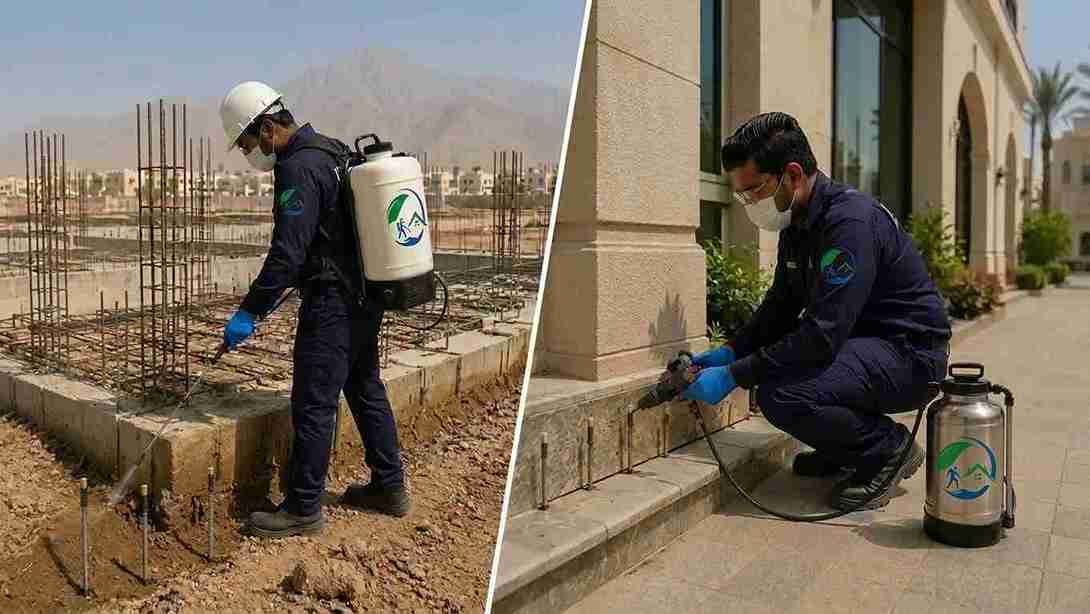
To treat the soil, a licensed pest control technician dilutes an approved termiticide and applies it to the soil at a calculated rate. This soil treatment, sometimes called soil poisoning, forms a chemical barrier that repels or eliminates termites trying to cross it. It is the heart of termite barrier treatment on new projects.
- Physical Barriers and Resistant Materials
- Chemical protection can be backed up with extra layers:
- Metal sheets / mesh barriers (physical barrier) installed under slabs and around pipe entries
- Treated or resistant timber for roofs, doors and joinery
- Bait stations / baiting systems at the perimeter as a monitoring layer
- Good drainage so water moves away from walls
Benefits and Limits of Pre-Construction Treatment
Full access to the soil under the whole building, including areas no one can reach later.
Disruption (none vs. drilling): none, because there is no finished building yet.
Lower long-term cost and better protection from day one.
A clear treatment record for handover.
Limit: the barrier can weaken over time if soil is disturbed, so regular inspection is still needed.
Limit: it does not protect against drywood termites in furniture brought in later.
Post-Construction Anti-Termite Treatment in Dubai: How It Works
Post-construction anti-termite treatment is for buildings that already exist, whether they are new or decades old. It can be preventive when no activity is seen, or corrective when an infestation has been found. Once the slab is cast, the ground below can only be reached from above, so the methods change.
Core Post-Construction Methods
Diamond drilling: small holes are drilled through concrete slabs at intervals so termiticide can be injected into the soil below
Sub-tile injection: treatment through tile joints and gaps to limit damage to finishes Hollow wall treatment: termiticide is injected into hollow brick walls and voids.
Perimeter trenching and rodding: a treated zone is rebuilt around the foundation
Termite bait stations installed around the property to monitor and reduce activity Borate-based wood treatment for affected timber
After drilling, injecting, sealing, making good, the holes are filled and surfaces restored. A good provider will also treat the affected joinery, timber fittings and wooden beams and clear mud tubes so any recolonisation is visible. Treating the barrier without the timber, or the timber without the barrier, is why some jobs seem to work and then fail months later.
What Post-Construction Treatment Can not Do?
- It cannot fully reproduce the coverage of a pre-pour treatment under the middle of the slab
- It cannot rebuild damaged timber or repair structural damage; treatment stops the colony, repair is separate
- It is more invasive, so occupants may need to move furniture and allow drilling access
Retrofit Possible or Not?
Here is the simplest way to see the difference. Pre-construction treatment has no retrofit: the window closes at the pour. Post-construction treatment is always available. That is why a retrofit possible or not question answers itself once you know where your project stands.
Pre-Construction vs Post-Construction Termite Control in Dubai: Side-by-Side Comparison
The table below compares Pre-Construction vs Post-Construction Termite Control in Dubai across the factors that matter most.
| Factor | Pre-Construction Termite Control | Post-Construction Termite Control |
| When | Before and during the pour | Any time after the slab is cast |
| Purpose | Prevention | Prevention or extermination |
| Factor | Pre-Construction Termite Control | Post-Construction Termite Control |
| Coverage (full footprint vs. perimeter) | Whole building footprint | Perimeter, wall bases and joints |
| Delivered as | Staged against the build programme | Usually one visit plus follow-up |
| Disruption (none vs. drilling) | None | Drilling, then making good |
| Retrofit possible or not | No, the window closes at the pour | Always available |
| Damage risk | None at the time | Existing damage may be present |
| Typical client | Developers, main contractors, self-builders | Villa owners, buyers, tenants, facility managers |
| Cost position | Lower per square metre | Higher with labour and repairs |
Prevention vs Extermination
Prevention vs. extermination is the heart of the matter. Pre-construction work builds resilience into the structure. Post-construction work responds to a problem or reinforces a building that was never protected. Neither is a one-time, forever fix, which is why a layered or combined approach is so effective.
Cost: Upfront Cost vs. Repair Cost
Nobody can quote a fair price without seeing your property, so the honest answer to “how much does it cost?” is that it depends. What matters more is how the costs behave over time.
What Affects Termite Treatment Cost in Dubai?
- Built-up area and plot size
- Treatment type: soil barrier, baiting, wood treatment or a mix
- Severity of infestation for existing buildings
- Access: tiled floors, paving and landscaping
- Product choice and warranty length
- Number of follow-up visits
- Separate repair work
- Upfront Cost vs. Repair Cost
Pre-construction treatment is a small line in the project budget. It is cost-effective because the soil is open, there are no walls to drill and no tenants to disturb. Postconstruction treatment involves drilling, injecting, patching and repeat visits. If termites have already caused harm, termite damage repair cost is added on top, sometimes exceeding the treatment itself. Upfront cost vs. repair cost is therefore the comparison that usually favours prevention, and a lower long-term cost is the reward for acting early.
How to Get an Accurate Quote
- Ask for a site inspection, not just a phone price
- Ask for the method and product in writing
- Check what the warranty covers and whether follow-up visits are included Compare scope, not only price
7 Proven Ways to Stop Costly Termite Damage in Dubai
These seven steps apply to both sides of Pre-Construction vs Post-Construction Termite Control in Dubai and turn the theory into action.
Treat the Soil Before the Pour
For new builds, specify termite prevention before construction at design or early-works stage, not when the ground is already levelled and the concrete is booked for tomorrow.
Add a Physical Barrier and Resistant Materials
Use metal sheets / mesh barriers (physical barrier) where the design allows, and choose treated or resistant timber for roofs, doors and joinery.
Secure Coordination with the Main Contractor
Good coordination with main contractor teams means each treatment lands in an existing window instead of creating a new one. Agree stages, access and sign-off at the start.
Schedule Regular Inspection and Early Detection
Annual inspection, monitoring and early detection catch problems while they are small. Villas with large gardens, timber features or an infestation history may need more frequent checks.
Control Moisture
Fix leaks, keep irrigation away from walls, maintain drainage and avoid soil or mulch touching exterior finishes. Without moisture, termites struggle to establish.
Use a Layered or Combined Approach
Combine a pre-construction barrier with termite bait stations and periodic perimeter treatment. This protects against disturbed soil, damaged barriers and colonies arriving from neighbouring plots.
Keep the Paperwork
A termite treatment certificate, a written warranty and per-stage records protect your property value and make handover and resale smoother.
Pre-Construction vs Post-Construction Termite Control in Dubai for Different Audiences
Different readers face different problems. Use this table to find yourself.
| Who You Are | Best Fit | Main Concern | What to Do First |
| Developers | Pre-construction | Handover, compliance | Plan termite control for developers across the programme |
| Self-builders | Pre-construction | Missing the window | Brief the contractor before excavation |
| Who You Are | Best Fit | Main Concern | What to Do First |
| Main contractors | Pre-construction | Schedule and rework | Fix stage dates and access |
| Villa owners | Post-construction | Active damage | Book an inspection |
| Villa buyers | Inspection first | Hidden defects | Order an inspection report |
| Facility managers | Post-construction plus monitoring | Resident complaints | Set up annual checks |
| Warehouse owners | Both | Stock and downtime | Survey and tailored plan |
Termite Control for Developers
For developers, the priority is a documented plan across every phase. Termite control for developers works best when each stage produces a treatment record / handover pack / project file entry that buyers and consultants can rely on. Missing the treatment window, or poor communication with main contractors, is the usual source of problems.
Termite Treatment for Villas and Self-Builders
Self-builders and families building a home are often anxious about getting it right once. Termite treatment for villas under construction should be booked before excavation, with clear explanations and safe products. For finished homes, villa owners should treat early signs seriously and avoid DIY sprays that only reach what is visible.
Termite Inspection Before Buying a Villa
A termite inspection before buying a villa is cheap insurance, especially in older districts with mature landscaping. The inspection report shows whether damage is current or historic, which strengthens your negotiating position and protects resale value. Villa buyers should ask the seller for any past termite treatment certificate and warranty records.
Termite Treatment for Commercial Buildings, Towers and Warehouses
Commercial buildings and towers have ground-floor areas, podiums, basements, landscaped decks and shafts where termites can enter. Facility managers and tenants are usually the first to notice complaints. Termite treatment for commercial buildings is best run as an annual plan with scheduled reports.
For warehouses, termite treatment for warehouses must also deal with timber pallets, cardboard and housekeeping. Large floors, reinforced concrete columns and expansion gaps need a site survey and a tailored plan, not spray-and-go. Many sites also need support against rodents and mosquitoes (secondary site pests), so one provider for allround pest control Dubai can simplify things.
Termite Treatment for Construction Sites
Termite treatment for construction sites means more than soil treatment. Clear roots, timber scraps and cardboard before pouring, store timber off the ground and never bury formwork in the backfill. Treat every service penetration and expansion joint, and protect the base of reinforced concrete columns where they meet the slab.
Rules, Documentation and Licensed Technicians
Dubai’s construction environment is regulated, and good practice expects documented protection for new buildings. Rules can vary by project and community, so confirm requirements for your plot with your consultant, developer or the relevant authority, such as Dubai Municipality, before work starts. In all cases, make sure the work follows UAE pest control regulations and is carried out by licensed pest control technicians using approved products.
Documents to Ask For:
- Warranty (written) stating the period and what it covers.
- Written guarantee terms on the quote, not just a verbal promise.
- Inspection report with photos and findings.
- Termite treatment certificate for each treatment.
- Treatment record / handover pack / project file for developers and contractors.
- Questions to Ask About a Termite Warranty.
- Is the termite warranty period written on the quote?
- What does it cover: re-treatment, and under what conditions?
- Is a follow-up inspection included during the period?
- For pre-construction work, is a record issued for every stage?
Choosing a Provider: What Good Looks Like
The method matters, but so does the company applying it. A poorly applied treatment, pre or post, can fail early.
Green Flags
Valid licence and licensed pest control technicians.
Inspection first, quote second.
A tailored plan, not spray-and-go.
Clear reports and written terms.
A proven track record; some established firms point to 40 years of experience as a trust signal, so ask any provider how long they have worked on similar projects, Safe products and where suitable eco-friendly termite treatment options
Red Flags
A price quoted without inspection
Vague answers about products used
No written agreement
Pressure to sign immediately
How Eco Guardians Helps
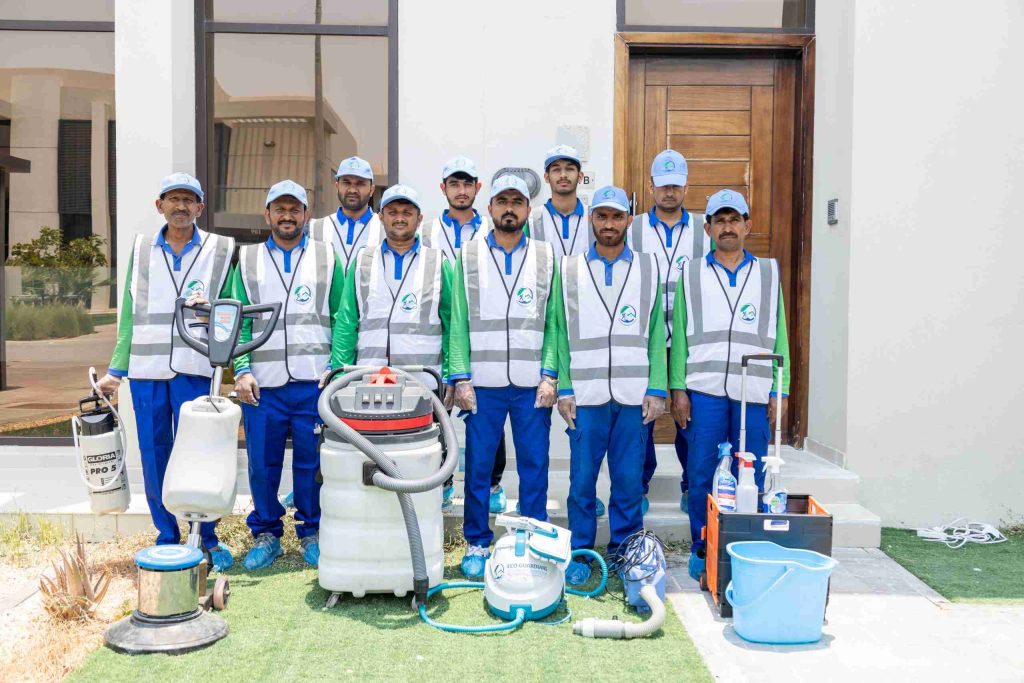
Eco Guardians offers anti-termite treatment Dubai property owners can rely on, from pre-construction anti-termite treatment at build stage to post-construction antitermite treatment for homes and businesses already in use. Whether you need termite control Dubai wide or simply termite control near you, the team starts with an inspection, explains what it finds, and recommends a plan that fits your property type, soil and surroundings.
- Site or property inspection and clear findings.
- Barrier, baiting, wood treatment or a combination.
- Follow-up inspection and re-treatment where needed.
- Documentation, including a termite treatment certificate and written warranty terms.
Aftercare: Keeping Termites Away for Good
Termite control does not end when the technician leaves.
- Routine Checks.
- Inspect walls, skirting, door frames and foundation edges every few months.
- Look for mud tubes, wings and hollow-sounding timber.
- Book a professional inspection at least once a year.
- Moisture and Housekeeping.
- Repair leaks quickly and redirect irrigation.
- Keep timber, pallets and cardboard away from buildings.
- Inspect second-hand furniture before bringing it indoors.
- Keep soil and mulch off exterior wall finishes.
- Why Aftercare Protects Value.
Regular checks give you peace of mind and investment protection. A clean record of treatments and inspections supports property value and resale value, and it makes any future claim under a termite warranty much easier.
Common Myths About Termite Control in Dubai
“Dubai is too dry for termites.” Irrigation and leaks provide all the moisture they need. “New buildings cannot get termites.” Untreated soil and buried timber can invite them from day one.
“One treatment lasts forever.” Protection depends on the product, soil, water and later disturbance.
“DIY sprays are enough.” They rarely reach hidden colonies in walls and can push termites elsewhere.
“Termite damage is always visible.” Most of it happens out of sight.
Protect Your Dubai Property from Other Pests
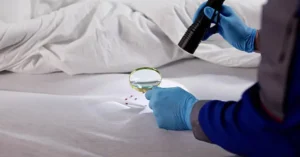
Termites are not the only pests that can threaten your property’s comfort and cleanliness. If you are also dealing with bed bugs, explore our guide on Bed Bugs Control in Dubai: 10 Proven Ways to End Nightmare Bites. It covers effective treatment methods, prevention tips, and practical ways to tackle bed bug infestations with help from Eco Guardians.
FAQ’s
What is the difference between pre-construction and post-construction termite treatment in Dubai?
Pre-construction treatment protects the soil before the slab is cast, while postconstruction treatment is applied to a finished building. Eco Guardians provides both.
Is pre-construction termite treatment better than post-construction treatment?
Yes, for new builds, because it gives fuller coverage at a lower cost. Eco Guardians recommends it for every new project.
How much does pre-construction and post-construction termite treatment cost in Dubai?
It depends on property size, treatment method, access and severity of infestation. Eco Guardians provides a written quote after inspection.
Can termites be treated effectively after a building has been constructed?
Yes, through drilling, injection, baiting and wood treatment. Eco Guardians inspects first, then recommends the right method.
How long does pre-construction and post-construction termite protection last in Dubai?
It depends on the product, soil, moisture and warranty terms. Eco Guardians states the warranty period in writing.
Conclusion
Pre-Construction vs Post-Construction Termite Control in Dubai is ultimately a question of timing. If the slab has not been cast, treat the soil now and secure a documented, staged plan. If the building is already standing, start with an inspection and choose the method that fits what is found. In both cases the winners are the owners who combine a layered or combined approach with regular monitoring, good moisture control and written records.
If you are planning a project or worried about signs of termite activity in your villa, tower,
warehouse or office, the team at Eco Guardians can inspect your property and recommend a clear, practical plan. Act before the treatment window closes or the infestation spreads, and protect your property, your budget and your peace of mind.