Quick Answer
Kitchen exhaust duct cleaning in Dubai sits under two separate authorities at once. Dubai Municipality covers it as a food hygiene requirement. Dubai Civil Defence covers it as a fire safety requirement, since grease buildup in ductwork is a recognized fire hazard. Most sources point to NFPA 96 as the technical benchmark inspectors and insurers reference. Cleaning frequency generally ties to cooking volume and fuel type, not one fixed number for every kitchen.
Key Takeaways
- Kitchen exhaust cleaning compliance involves two different authorities. Dubai Municipality handles food hygiene. Dubai Civil Defence handles fire safety.
- NFPA 96 is a US standard for commercial cooking ventilation. It is widely used across Dubai as a technical reference point.
- Cleaning frequency is not one fixed number. High volume kitchens using solid fuel or heavy frying typically need attention more often.
- Grease trap cleaning is a separate requirement from duct and hood cleaning. It falls under Dubai Municipality’s Local Order No. 8 of 2002.
- Documentation matters as much as the cleaning itself. Inspectors and insurers generally expect a service report, not just a completed job.
Two Regulators, One System
Restaurant kitchen exhaust systems in Dubai answer to two different regulatory concerns. This is easy to miss if you only think of this as a hygiene issue.
Dubai Municipality: Food Hygiene
Dubai Municipality’s food safety framework requires clean, hygienic kitchen environments. Grease and residue inside ductwork can affect indoor air quality if contaminated air recirculates. This ties exhaust cleanliness directly to food hygiene standards, not just appearance.
Dubai Civil Defence: Fire Safety
Dubai Civil Defence treats grease buildup in kitchen ductwork as a recognized fire hazard. Restaurant kitchens generate constant grease laden air. Unclean ductwork gives a fire an easy path into the building’s structure. This is why fire safety inspections check exhaust cleanliness separately from food hygiene inspections.
The Technical Standard Most Providers Reference
Multiple industry sources point to NFPA 96 as the technical benchmark widely used in Dubai. This is the U.S. National Fire Protection Association’s Standard for Ventilation Control and Fire Protection of Commercial Cooking Operations. It sets out cleaning frequency guidance by cooking volume and fuel type. It also covers acceptable grease deposit thresholds and documentation practices. NFPA 96 is not a Dubai government document itself. Multiple providers still describe their Dubai compliance work as following it, alongside Dubai Municipality and Dubai Civil Defence requirements. Some sources also reference HVCA TR19, the UK’s equivalent standard, used in a similar capacity.
How Often Should Cleaning Happen?
No single fixed number applies to every kitchen. Frequency depends on how much grease a kitchen actually generates.
| Kitchen Type | Commonly Reported Frequency |
|---|---|
| High volume, solid fuel cooking (charcoal, wood) | Monthly to quarterly |
| Wok cooking or high grease cuisine | Every 3 months |
| Standard commercial kitchen, moderate volume | Every 3 to 6 months |
| Hood and filter cleaning, high volume kitchens | Every 4 to 6 weeks |
| Lower volume operations | Every 2 to 3 months |
These figures come from multiple industry sources reporting consistent ranges. They do not come from a single official Dubai Municipality document specifying exact numbers for every kitchen type. Your specific frequency should reflect your actual cooking volume and fuel type. Set this in consultation with your service provider, and document it for inspection purposes.
Hood Cleaning vs Duct Cleaning: Not the Same Task
Kitchen hood cleaning addresses the visible capture zone. This includes the canopy, baffles, filters, and plenum. Duct cleaning addresses the internal ductwork carrying grease laden air to the exterior exhaust point. Both are part of the same exhaust pathway. They typically run on different schedules, since the hood and filters accumulate visible grease faster than the ductwork further along.
Grease Traps: A Related but Separate Requirement
Grease trap cleaning is often confused with duct and hood cleaning, but it covers a different part of the kitchen. Local Order No. 8 of 2002 requires every commercial kitchen’s private sewerage connection to include a properly specified grease trap. This trap separates fats, oils, and grease from wastewater before it reaches the public sewer. Cleaning frequency for grease traps depends on trap size and how much FOG your kitchen produces. Dubai Municipality also requires this work to go through a contractor registered specifically for grease trap waste removal, not just any cleaning company. Our restaurant kitchen deep cleaning case study from Al Quoz shows how this connects to a real kitchen job, where grease trap buildup was a central issue.
Checklist: Staying Compliant
- Confirm your cleaning frequency matches your actual cooking volume and fuel type, not a generic default.
- Request a documented service report after every cleaning, with before and after evidence where possible.
- Confirm your provider addresses hood, filters, and full duct runs, not just the visible capture zone.
- Verify your grease trap contractor holds the specific waste removal registration.
- Keep cleaning records accessible for both Dubai Municipality and Dubai Civil Defence inspections.
- Confirm your fire suppression system stays unobstructed by grease, since this gets checked separately.
What Happens If You Fall Behind
Multiple sources describe consistent consequences for non compliant kitchens. These include failed inspections, fines, and compliance notices. Serious cases can bring operational suspension or licence renewal difficulties. Insurance implications also came up across several sources. An insurer may question a claim after a kitchen fire if exhaust cleaning records are missing. We could not confirm exact fine amounts against one single official Dubai Municipality or Dubai Civil Defence document. Treat any specific figure from any source, including this one, with some caution, and confirm directly with the relevant authority if precision matters for your business.
Related Services
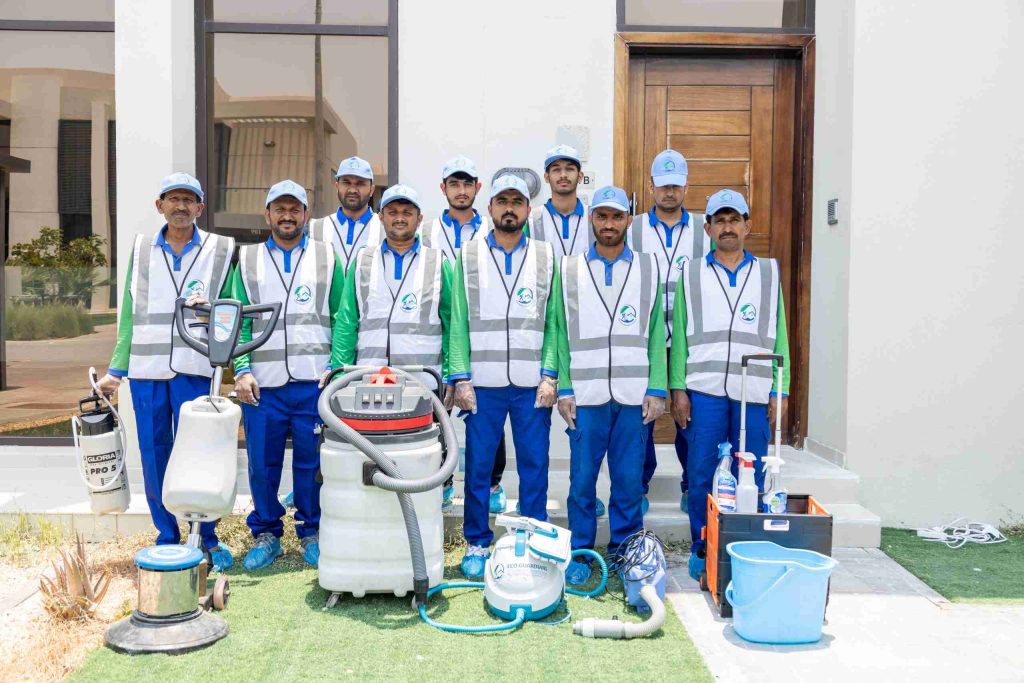
Eco Guardians’ restaurant deep cleaning and kitchen deep cleaning services cover the grease, hood, and duct issues in this guide. Our disinfection and sanitization services page addresses related hygiene needs. Our guide on Dubai Municipality rules for pest control follows a similar regulatory structure, worth reading alongside this one. A full list of areas served is available on our locations page.
FAQ
Is kitchen exhaust cleaning legally required for restaurants in Dubai? Yes, based on consistent reporting across multiple sources. Both Dubai Municipality and Dubai Civil Defence treat clean kitchen exhaust systems as a compliance requirement, not an optional upgrade.
What is NFPA 96 and does it apply in Dubai? NFPA 96 is a U.S. fire protection standard for commercial cooking ventilation. It is not a Dubai government regulation itself, but many Dubai providers use it as the technical benchmark for exhaust cleaning work.
Are grease trap cleaning and duct cleaning the same requirement? No. Grease traps handle wastewater separation under Local Order No. 8 of 2002. Duct and hood cleaning address airborne grease in the exhaust system, a separate part of the kitchen.
How often does a restaurant need kitchen exhaust cleaning in Dubai? This depends on cooking volume and fuel type. Reported ranges run from every 4 to 6 weeks for high volume hood cleaning to every 3 to 6 months for full duct systems in standard kitchens.
Does a small cafe need the same cleaning schedule as a large restaurant? Not necessarily. Lower volume operations generally see less grease accumulation. This can allow a longer interval, though it should still be based on actual output, not assumed automatically.
What documentation should I keep for inspections? A service report from each cleaning, ideally with before and after evidence, helps demonstrate compliance to inspectors. It can also support an insurance claim if a fire incident occurs.
Can I use any cleaning company for grease trap waste removal? No. Dubai Municipality requires this work to go through a contractor registered specifically for grease trap waste removal.
What happens during a typical kitchen exhaust cleaning job? A thorough job starts with inspecting the hood, filters, duct runs, fan housing, and rooftop exhaust point. Cleaning follows, tailored to the grease found. Documentation covers what was cleaned and any issues identified.