Quick Answer
A bad AC smell almost always points to one of five causes: mold/mildew (musty, damp smell — the most common cause in Dubai’s humidity), a clogged condensate drain (rotten egg/sewage smell), dead pests inside the ducts (strong decaying smell), electrical faults (burning smell — treat this as urgent), or a refrigerant leak (chemical smell). In Dubai’s climate, mold from humidity and moisture buildup causes the large majority of cases. Most odors are fixed with filter cleaning, coil cleaning, and drain line clearing — but a burning smell means you should switch off the unit and call a professional immediately, not wait for a scheduled service.
Key Takeaways
- Musty/damp smell = mold or mildew — Dubai’s humidity makes this the most common cause by far
- Rotten egg/sewage smell = clogged condensate drain line, often mixed with stagnant water and bacteria
- Decaying smell = a dead pest trapped inside the ductwork
- Burning smell = potential electrical fault — turn off the unit immediately and call a professional; don’t wait
- Chemical smell = possible refrigerant leak — needs professional handling, not DIY
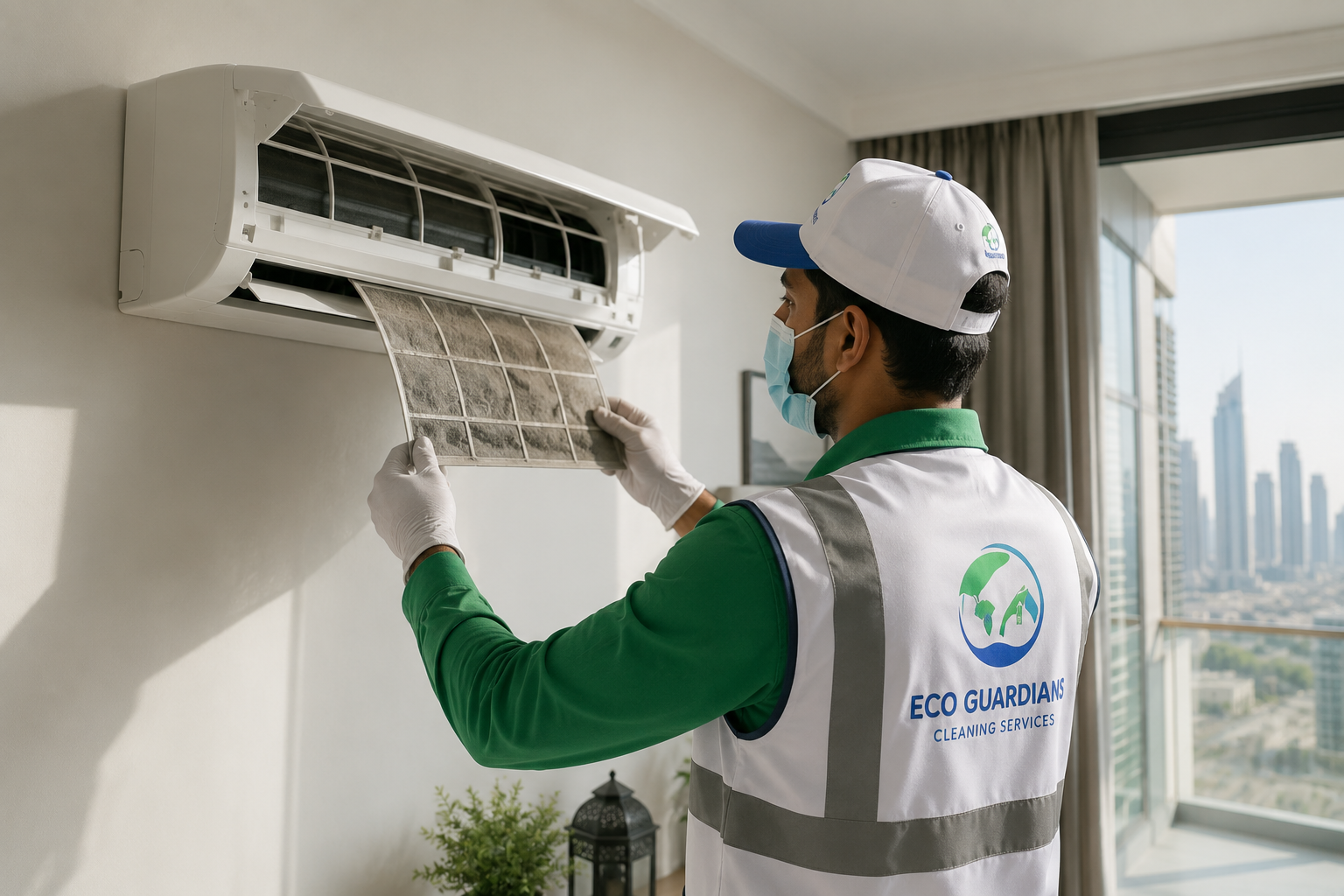
- Dubai’s dust means AC filters should be changed every 30–45 days, not the 90-day standard used in less dusty climates
- A pre-summer deep clean (April/May) prevents most odor issues before peak AC season begins
Smell-by-Smell Diagnostic Table
Use this table to identify what your AC’s smell is actually telling you before deciding whether it’s a DIY fix or a call-a-professional situation.
| Smell | Likely Cause | Urgency | DIY or Professional? |
|---|---|---|---|
| Musty, damp, “wet towel” | Mold/mildew on coils or in ducts | Moderate — treat within days | DIY filter clean; professional coil/duct clean for full resolution |
| Rotten egg, sewage | Clogged condensate drain, bacteria buildup | Moderate | DIY drain flush possible; professional if it persists |
| Strong decaying/rotting smell | Dead pest trapped in ductwork | Moderate–High | Professional (duct access usually required) |
| Burning, hot plastic | Electrical fault, overheating component | High — stop use immediately | Professional only — do not attempt DIY |
| Chemical, sharp/sweet | Refrigerant leak | High | Professional only — refrigerant handling requires certification |
| Musty only on startup | Moisture sitting on coils while AC was off | Low–Moderate | DIY (run fan-only mode periodically); professional if it persists |
Why Is This So Common in Dubai Specifically?
Dubai’s combination of extreme heat, high humidity, and near-constant AC use (often April through October) creates conditions that simply don’t exist in cooler, drier climates. Warm, moist air passing over cold evaporator coils constantly produces condensation — and when that moisture doesn’t fully evaporate between cycles, it creates exactly the damp environment mold needs to grow. On top of that, Dubai’s desert dust clogs filters far faster than manufacturers’ generic guidelines assume, which restricts airflow and worsens moisture buildup even further. This is a genuinely regional problem, not a universal one — advice written for temperate climates consistently understates how often Dubai homes need attention.
The 5 Causes, Explained
1. Mold and Mildew (Most Common in Dubai)
Mold grows on evaporator coils and inside ductwork wherever moisture lingers. The U.S. CDC notes that mold exposure can cause a range of health effects, including respiratory symptoms, worsened asthma, and allergic reactions in sensitive individuals — see the CDC’s overview of mold and health effects. This is why a musty AC smell shouldn’t be dismissed as cosmetic, especially in homes with children, elderly residents, or anyone with asthma or allergies.
2. Clogged Condensate Drain Line
The condensate line carries moisture away from your AC unit. When it clogs with dust, biofilm, or small debris — common in Dubai’s dusty environment — water stagnates and starts producing a sulfur-like or sewage odor as bacteria develop in the standing water.
3. Dead Pests in the Ductwork
Small insects or rodents occasionally enter duct systems through gaps or vents and become trapped. This produces a strong, unmistakable decaying odor that mold alone doesn’t cause — and it typically requires duct access to resolve, not just filter cleaning.
4. Electrical Faults (Treat as Urgent)
A burning or hot-plastic smell can indicate overheating wiring, a failing motor, or an electrical component fault. This is the one AC smell that isn’t just an air-quality issue — it’s a potential safety issue. If you notice this smell, switch off the unit at the breaker and contact a professional before running it again.
5. Refrigerant Leaks
A sharp, slightly sweet or chemical smell can indicate a refrigerant leak. This requires certified professional handling — refrigerant should never be handled or topped up without proper certification, both for safety and environmental compliance reasons.
Apartment vs. Villa: Does the Cause Differ?
| Factor | Apartment | Villa |
|---|---|---|
| Duct system | Often shared with building system | Independent, unit-specific |
| Common cause | Building-wide drainage or shared duct issues | Individual coil/filter maintenance lapses |
| Who to contact first | Building management, then a specialist if unresolved | Your own AC/duct cleaning provider directly |
| Typical resolution time | Can be slower (coordination with management) | Faster, since you control scheduling directly |
If you live in an apartment and the smell seems to come from shared vents rather than your own unit, it’s worth raising it with building management alongside booking an independent inspection — the source may not be isolated to your unit alone.
What to Do Before Calling a Professional (Checklist)
- ☐ Turn off the unit if the smell is burning or chemical — don’t wait
- ☐ Check and clean/replace the filter (Dubai recommendation: every 30–45 days)
- ☐ Run fan-only mode for 15–20 minutes to help dry out internal moisture
- ☐ Check visible vents for obvious debris or dust buildup
- ☐ Note when the smell occurs — constantly, only at startup, or only in certain rooms — this helps a technician diagnose faster
- ☐ If the smell persists after filter cleaning, book a professional duct and coil inspection
Expert Tip: Prevent It Before Summer Starts
The most effective single habit for Dubai homes is scheduling a pre-summer deep clean in April or May, before the AC starts running near-continuously through the hottest months. This clears any moisture, dust, or early mold growth accumulated over cooler months before the system is put under sustained load — it’s far easier to prevent buildup than to remove it once summer humidity sets in.
How Often Should AC Systems Be Serviced in Dubai?
Regular, scheduled maintenance — not just reactive cleaning when a smell appears — is the most reliable way to prevent odor issues altogether. Servicing at least twice a year (before and after peak summer) is the general guidance most Dubai HVAC and cleaning providers recommend, with more frequent filter checks given the region’s dust levels. For general indoor air quality principles behind why this matters, the U.S. EPA’s guidance on maintaining HVAC systems is a useful reference point — see the EPA’s guide to improving indoor air quality.
Is a Smelly AC a Health Risk?
It can be, depending on the cause. Musty odors tied to mold growth are the main concern — as referenced above, the CDC links indoor mold exposure to respiratory symptoms and worsened asthma in sensitive individuals. Burning and chemical smells carry a different kind of risk (electrical/safety and refrigerant exposure respectively) and should be treated with more urgency than a comfort issue.
Why Choose Eco Guardians for AC Odor Problems in Dubai
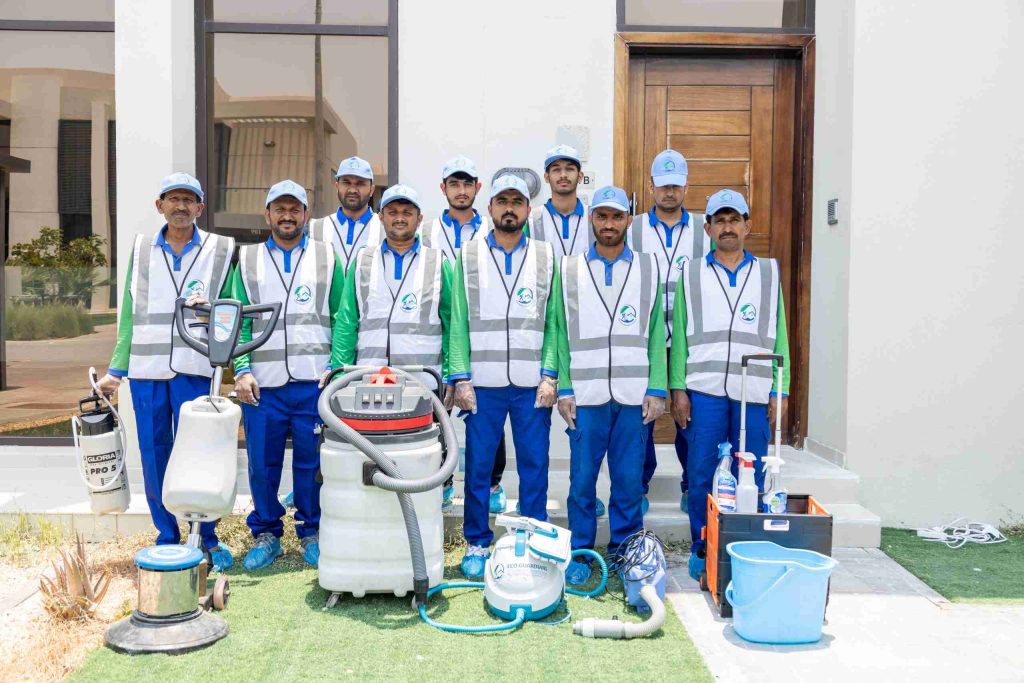
Eco Guardians is a Dubai Municipality–approved cleaning company with over 10 years of experience across Dubai, Sharjah, Abu Dhabi, and Ajman. Our AC duct cleaning service addresses the root causes behind most bad AC smells — dust, mold, and debris buildup inside ducts and vents — using professional-grade equipment suited to Dubai’s dust and humidity conditions.
AC odor issues are often connected to other maintenance needs worth addressing together:
- Deep cleaning services — for a full property refresh alongside duct servicing
- Pest control — if a dead pest inside ductwork is the suspected cause
- Office disinfection — for commercial spaces where AC odor affects shared workspaces
Book a free AC duct cleaning assessment with Eco Guardians or call +971-56-752-6970.
Frequently Asked Questions
Why does my AC smell bad when I first turn it on? This usually happens because moisture sits on the evaporator coils while the AC is off, allowing mold spores to build up. When the unit starts, that moisture and any accumulated mold spores get blown into the room, causing a brief musty smell that often fades after a few minutes.
Is it safe to keep running an AC that smells bad? It depends on the smell. Musty odors are generally not an immediate safety issue but should be addressed for air quality reasons. Burning or chemical smells are different — switch off the unit and call a professional rather than continuing to run it.
Why does my AC smell like rotten eggs? This typically indicates a clogged condensate drain line where stagnant water has allowed bacteria to build up, producing a sulfur-like smell.
How often should I change my AC filter in Dubai to prevent bad smells? Every 30–45 days is recommended in Dubai, compared to the 90-day standard often quoted for less dusty climates — the region’s dust and sandstorms clog filters significantly faster.
Can a dirty AC filter alone cause a bad smell? Yes — a clogged filter restricts airflow and traps moisture, which accelerates mold growth on nearby components, even if the rest of the system is otherwise clean.
Why does my AC smell bad only in certain rooms? This often points to a localized duct blockage, a room-specific vent issue, or mold growth isolated to that section of ductwork, rather than a system-wide problem.
Does AC smell mean I need duct cleaning or just filter cleaning? If cleaning or replacing the filter doesn’t resolve the smell within a day or two, the cause is likely deeper in the ducts or coils, which requires professional duct cleaning rather than filter maintenance alone.
Why does my AC smell like burning plastic? This can indicate an overheating electrical component or motor issue. Turn off the unit immediately and contact a professional — this is a potential safety issue, not just an odor problem.
Can AC smell affect my health? Musty, mold-related odors can trigger respiratory symptoms, especially in people with asthma or mold allergies, according to CDC health guidance on mold exposure. Persistent exposure is worth addressing rather than masking with air fresheners.
Why does my apartment AC smell different from my villa AC problem? Apartments often share duct systems with the building, so the cause may originate outside your unit, while villas have independent systems where the cause is almost always isolated to your own AC.
How long does it take to fix a smelly AC professionally? Most duct and coil cleaning services take a few hours, depending on system size and how extensive the buildup is.
Will running the fan-only mode help with AC smell? Yes, temporarily — running fan-only mode helps dry out lingering moisture on coils, which can reduce musty startup smells, though it won’t resolve deeper mold or drain issues on its own.
Does Dubai’s sandstorm season make AC smell worse? Yes — sandstorms push extra dust into filters and vents rapidly, which can worsen existing moisture-related odor issues and is a good trigger point to book a check-up.
This guide is reviewed and updated periodically by the Eco Guardians team to reflect current AC maintenance standards for Dubai’s climate. For a professional inspection, visit ecoguardians.ae or explore Eco Guardians‘ full range of services.
References
- U.S. Centers for Disease Control and Prevention — Mold and Health Effects
- U.S. Environmental Protection Agency — Improving Indoor Air Quality